A Detailed Guide to the Plant Characteristics and Growth Habits of Boston Ivy
Boston ivy (Parthenocissus tricuspidata) is a deciduous woody vine in the grape family (Vitaceae) and the genus Parthenocissus. Also known as Japanese ivy or wall creeper, it is very common on walls, rocks and old trees in China. Its stems bear branched tendrils, and the tips of the tendrils carry sticky adhesive discs that cling firmly to wall surfaces and stone, so even without a trellis it can climb all the way up to great heights.
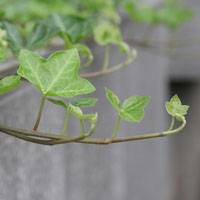
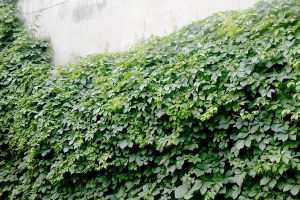
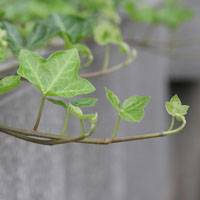
The leaf shape of Boston ivy is highly variable: leaves on young plants are often three small leaflets, while those on mature plants are mostly single leaves with coarse serrated edges. In spring and summer the foliage is dense and deep green, and after autumn arrives it gradually turns orange-red or bright red, as if the whole wall has been dyed, creating a striking ornamental effect. Combined with its fast growth and strong covering ability, it is often used to beautify walls, fences and pergolas.
In terms of adaptability, Boston ivy prefers a warm, humid environment, and it is also fairly cold-tolerant and drought-tolerant. It is not demanding about soil and can grow in both shaded and sunny spots, though it grows more vigorously in a position with ample light and good drainage. Propagation is mainly by cuttings and layering, which are simple to do and have a high survival rate, and transplanted plants also recover relatively easily.
As a commonly used material for vertical greening, Boston ivy can provide shade and lower temperatures, reduce noise and trap dust, making it very helpful for improving the micro-environment around courtyards and buildings. Some people worry that it will damage walls, but in fact the adhesive discs mainly serve to attach the plant and generally do not drill into brick crevices. Still, if the wall is old and has a crumbly, loose texture, it is best to check the condition of the wall before planting.