Characteristics, Common Varieties and Main Uses of Paulownia
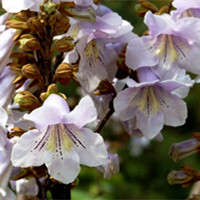
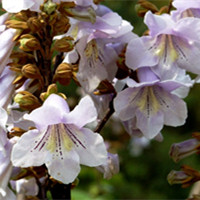
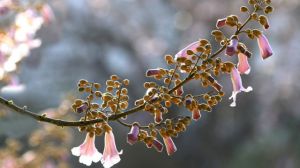
Paulownia is the collective name for deciduous trees of the genus Paulownia in the family Paulowniaceae. It originated in China and is widely distributed in North China, Northwest China, East China and other regions, and is also known among the public by other names such as white paulownia and hollow paulownia wood. Its trunk is straight, its crown is broad, and its leaves are large and heart-shaped. In early spring it blooms before the leaves emerge, with strings of pale purple or white bell-shaped flowers opening in clusters, giving a very striking ornamental effect.
The most prominent characteristics of paulownia are its fast growth rate and strong adaptability, along with fairly good drought tolerance and no strict requirements for soil. It is often used as a street tree, a courtyard greening tree species and a farmland shelterbelt tree. Common species include Paulownia tomentosa, Paulownia fortunei, Paulownia elongata and Paulownia catalpifolia. When planting, suitable varieties can be selected according to local climatic conditions.
Paulownia wood is light and soft in texture, with straight grain, and is not prone to warping, cracking or deformation, while also performing well in moisture resistance and heat insulation. It is a commonly used material for making furniture, instrument soundboards, packaging boxes and plywood. At the same time, paulownia has a long flowering period and a large number of flowers, making it an important nectar source plant. Intercropping of crops and paulownia also helps improve the field microclimate, balancing both ecological and economic value.
Many people confuse paulownia with Chinese parasol tree, but in fact the two are not the same kind of tree. The Chinese parasol tree belongs to the family Sterculiaceae, and its flowers are small and yellow-green; paulownia flowers are large and conspicuous, mostly pale purple, and the tree shape and leaves are also clearly different. Before viewing or planting them, it is best to distinguish the two clearly first.