An Introduction to the Characteristics, Varieties and Care of the Norfolk Island Pine
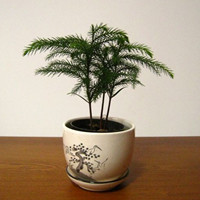
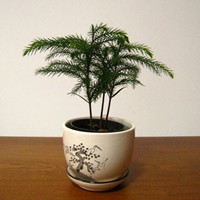
The Norfolk Island pine is the collective name for evergreen trees of the genus Araucaria in the family Araucariaceae. It is native to the warm regions of the Southern Hemisphere, including Australia, New Guinea and South America, and is now widely cultivated around the world. Its trunk is straight and upright, with lateral branches growing in whorls and spreading out flat in layer after layer, so that the whole crown forms a neat, pointed tower shape. Seen from a distance its lines are smooth and flowing, giving it high ornamental value.
There are quite a few species within the genus Araucaria. Among the commonly cultivated ones are the Norfolk Island pine (Araucaria heterophylla), the bunya pine (Araucaria bidwillii) and Cunningham's pine (Araucaria cunninghamii). Among them, the Norfolk Island pine has neatly arranged branches and leaves and deep green foliage, making it a common variety for indoor potted plants; Cunningham's pine has a tall and dignified tree form and is mostly used for garden and street planting; the bunya pine is characterised by relatively broad leaves.
In terms of use, young Norfolk Island pines are suitable for growing in pots. They can be placed in the living room, study or at the entrance to add a tropical feel to a space, and are also often used to decorate for holidays. Mature plants are mostly used as specimen or row plantings in parks and courtyards, where their tower-shaped outline is very striking. In addition, its wood has straight grain and also has some value for use in its native regions.
For care, the Norfolk Island pine likes a warm, humid climate and plenty of light, and can also tolerate a certain amount of semi-shade. It is best planted in loose, fertile, well-drained soil. It is not tolerant of severe cold, so in cold regions it should be moved indoors in winter or given protection against the cold. During the growing season, keep the potting soil moist but not waterlogged. When the air is dry, mist the leaves to keep the foliage green and glossy.
In day-to-day care, if the leaves turn yellow, the tips dry out or the leaves drop, it is mostly related to overwatering, insufficient light or air that is too dry. Adjusting the placement and watering frequency in time will improve matters. In addition, the plant should be kept away from heating vents, and the pot should be turned regularly so that all sides receive light evenly, which will make the plant's shape more upright and full.