Nandina is an evergreen shrub with high ornamental value
Nandina (Nandina domestica) is an evergreen shrub of the genus Nandina in the family Berberidaceae, and a typical woody plant. Its stems are upright and its form is elegant, so it is often mistaken for bamboo, though in fact it is not related to bamboo at all. Among the general public it also has other names such as Nantianzhu, Hongpazi and Tianzhuzi, with slight variations from place to place.
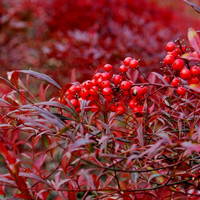
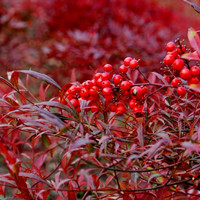
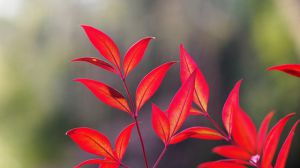
In appearance, the leaves of nandina are compound and pinnate, with narrow, glossy leaflets; when the low temperatures of autumn and winter arrive, the foliage turns a vivid red, giving it strong ornamental appeal. In summer it produces clusters of small white flowers, after which it bears spherical red fruits that hang in clusters on the branches and can remain there until winter. It should be noted that the whole nandina plant contains alkaloids and is somewhat toxic; the fruits in particular must not be eaten by mistake, and extra care should be taken in homes with young children or pets.
As for varieties, besides the common red-fruited type, there is also the yellow-white-fruited 'Yuguo' nandina, as well as red-leaved nandina varieties prized for their foliage color. The red-leaved nandina turns an even more intense red in cool seasons; when identifying it, you can focus on how brilliant the red of the leaves is and how long it lasts, then combine that with plant form and fruit color for an overall judgment, and it will not be easy to misidentify.
Nandina prefers a warm, humid, semi-shaded environment and is suited to loose, fertile, well-drained soil. It dislikes strong direct light and prolonged drought, and also dislikes waterlogged potting soil. In daily care, it can be placed in a spot with plenty of diffused light; keep the soil slightly moist during the growing season, provide some shade in summer, and protect it from the cold in winter. With beautiful leaves and striking fruits, it can be enjoyed in all four seasons, making it suitable both for planting as a feature in courtyards and for growing as a bonsai or using as a cut-flower accent; it is a popular ornamental plant in landscaping and home decoration.