Characteristics of Woody Plants and an Introduction to Common Species
Woody plants is the collective term for plants whose stems are lignified and that can grow for many years, as opposed to annual or biennial herbaceous plants. The stems of these plants contain well-developed xylem, which keeps thickening as the years go by; their above-ground parts generally do not die back in winter, and their lifespans are generally longer than those of herbaceous plants.
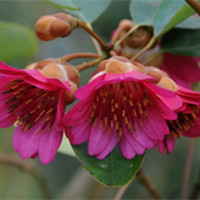
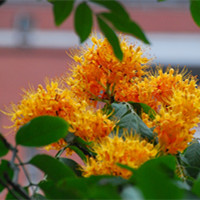
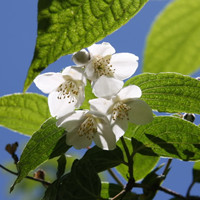
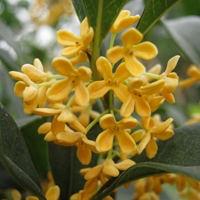
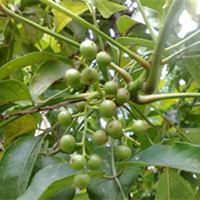
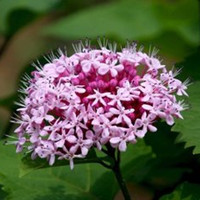
Based on plant form, woody plants are usually divided into two major categories: trees and shrubs. Trees have a distinct trunk and a tall stature, such as the Bishop wood (Bischofia polycarpa), the Hong Kong rose (Rhodoleia championii), and the Wuxia flower (Saraca dives). Shrubs lack a distinct trunk and mostly send up branches from the base, with a relatively short stature; the mock orange (Philadelphus) is a common ornamental shrub, while the osmanthus (Osmanthus fragrans) combines the forms of both a small tree and a shrub. There are also subshrubs, whose stem base is lignified while the upper part is more herbaceous.
Woody plants have secondary growth capacity, so their stems can thicken year after year; their root systems are relatively deep, and their adaptability to the environment is also stronger. Based on leaf lifespan, they can further be divided into evergreen and deciduous types: the osmanthus is evergreen in all four seasons, while the mock orange and the Bishop wood shed their leaves in autumn and winter.
In landscaping, woody plants are used very widely, whether as street trees, shade trees, flowering shrubs, or courtyard accents; some species also have value for timber, fruit, spices, or medicinal use. For example, the osmanthus is often used to make flower tea, pastries, and the like. When cultivating them at home, you should choose suitable tree species according to the local climate, pay attention to light and drainage, and prune at the right time, so the plants will grow better.