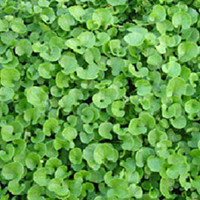
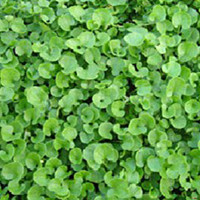
Dichondra, also called small moneywort, is a common creeping groundcover plant
Dichondra is a perennial creeping herbaceous plant of the genus Dichondra in the family Convolvulaceae, named for its round leaves that resemble horse hooves. Its stems are slender and soft, creeping along the ground, and adventitious roots readily form at the nodes; the leaves are small, mostly kidney-shaped or nearly round, and the overall plant is low and compact. Among the general public it also has other names such as small moneywort, jaundice herb, and pouch grass, with slightly different names from place to place.
Dichondra likes warm, humid environments, has a certain tolerance for shade and for being trampled, and is not demanding about soil, growing even better in loose, fertile, well-drained spots. It is relatively common in areas of China south of the Yangtze River, mostly growing in moist places such as hillside grasslands, roadsides, and field edges, and its adaptability is fairly strong.
In landscaping, dichondra is often used as a groundcover plant and can replace part of a lawn; once it forms a turf, its coverage is high and its leaf color is emerald green, making it very suitable for placement under tree shade, on slopes, or in courtyards. At the same time, it is also a traditional medicinal plant, and the whole plant can be used medicinally; among the general public it is mostly used for clearing heat and draining dampness, and if it is to be used as medicine, it is recommended to do so under professional guidance.
When caring for dichondra, keep the soil moist, water promptly during summer droughts, and appropriately add some diluted fertilizer during the growing season to make the leaf color even deeper green. It is afraid of waterlogging, so pay attention to drainage during the rainy season to avoid root rot. Usually, weeds should also be removed promptly, and overly dense or overly tall parts should be pruned appropriately, which makes it easier to keep the coverage neat and the ornamental effect good.