An Introduction to Common Orchid Varieties and How to Care for Them
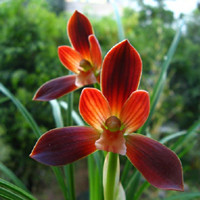
Orchids are the collective name for plants in the family Orchidaceae, one of the largest and most diverse families among the monocotyledons, with wild species widely distributed across tropical and subtropical regions around the world. Flowers in this group have unusual shapes and rich colors, and many species also carry a delicate fragrance and a long ornamental period, which has long made them favorites among flower enthusiasts.
Common orchids can be broadly divided into two main groups: Chinese orchids and tropical orchids. Chinese orchids include traditional types such as Cymbidium goeringii, Cymbidium faberi, Cymbidium ensifolium, Cymbidium sinense and Cymbidium kanran, while tropical orchids commonly include Phalaenopsis, Cymbidium hybrids, Dendrobium, Cattleya and Oncidium. In addition, wild orchids such as Pogonia and Bletilla striata also have some ornamental value.
Most orchids prefer a warm, humid, semi-shaded environment and dislike direct strong sunlight and waterlogging in the pot. Their roots are mostly fleshy, so bark, sphagnum moss, leaf mold and other loose, breathable media are best for cultivation. For routine watering, it is best to let the medium dry out between waterings, apply dilute fertilizer frequently during the growing season, and propagate mainly by division; when conditions are suitable, seedlings can also be raised by sterile sowing and similar methods.
Orchids are well suited to pot cultivation for decorating rooms and courtyards, and Phalaenopsis, Dendrobium and others are also common cut flower materials; some species, such as Gastrodia elata and Bletilla striata, can also be used medicinally. Common diseases during care include stem rot and anthracnose, while pests are mostly scale insects and red spider mites; keeping the environment well ventilated and promptly removing diseased leaves helps reduce the occurrence of pests and diseases.
Related Reading