Elderberry is a woody plant with both ornamental and medicinal value
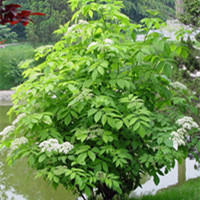
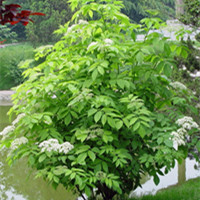
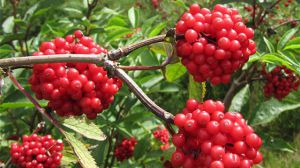
Elderberry (Sambucus) is a deciduous shrub or small tree of the genus Sambucus, a typical woody plant. It is widely distributed in China, mostly growing on forest edges, hillsides, roadsides or in thickets. The plant is generally several meters tall, with odd-pinnately compound leaves whose leaflets have finely serrated edges. In late spring and early summer it produces dense clusters of small yellowish-white flowers, and by autumn it bears small red or dark purple berries, giving it good ornamental value.
Among the general public it has quite a few alternative names, such as Gongdao Lao, Qianqian Huo, Xugu Mu, and Maniao Sao. The name Qianqian Huo comes from its extremely strong ability to propagate from cuttings; a branch stuck into the soil readily takes root. The name Jiegumu (elderberry) comes from its traditional use in treating bruises, injuries and joint and muscle discomfort, so the name lives up to its reputation.
When ripe, the fruit of elderberry is brightly colored and contains components such as anthocyanins; it is often processed into jam, juice or used to make wine. However, eating the raw fruit of some varieties may cause gastrointestinal discomfort, so it is generally recommended to cook or process it before eating. Its flowers have a delicate fragrance, and both flowers and fruit are ornamental, so it is also often used as a landscaping feature in courtyards and parks.
In terms of cultivation, elderberry is highly adaptable, being both cold-hardy and drought-tolerant. It is not demanding about soil, prefers a sunny environment, and can also tolerate partial shade. Propagation is mainly by cuttings, though it can also be grown from seed or by division, and the branches have a high survival rate. Day-to-day management is relatively low-effort, making it very suitable for planting in courtyards, along roadsides and in green spaces.