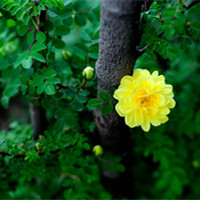
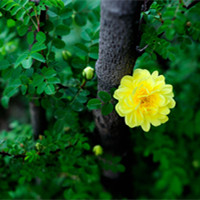
Rosa xanthina has golden-yellow flowers and is a cold-hardy, drought-tolerant ornamental shrub
Rosa xanthina (yellow rose) is a deciduous shrub in the genus Rosa, family Rosaceae, and a typical woody plant; in various places it is also often called yellow rose and thorny rose, among other names. Its plant height is generally around two to three meters, its branchlets are slender and bear prickles, and its leaves are pinnately compound. It enters its flowering period every spring, when the flowers are bright golden-yellow and very striking when they bloom in masses; it is a common ornamental flowering tree in northern regions.
Rosa xanthina is native to northern China and has strong adaptability. It likes a sunny environment, is both cold-tolerant and drought-tolerant, and is not strict about soil, growing normally even on rather poor land, though it grows better in loose, well-drained soil. Because it tolerates pruning and is easy to establish, it is often planted in courtyards, along roadsides and at the edges of lawns, and can also be used as a hedge; it also helps to some extent with soil and water conservation.
In terms of care, Rosa xanthina is managed rather extensively. When planting, choose a sunny position; during the growing season keep the soil moist but not waterlogged, and pay attention to drainage during the rainy season. After flowering, the spent flowers and overly dense or weak branches can be pruned appropriately so that more flowers are produced the following year; carry out renewal pruning every few years, removing aged branches, to keep the plant shape full. It is commonly propagated by division, cuttings or sowing, and the survival rates are all fairly high.
Besides its ornamental value, Rosa xanthina flowers early and produces a large quantity of blooms, adding color to gardens in early spring, and when in flower it often attracts bees to gather nectar. Its fruit turns reddish-brown when ripe and stays on the branches for a long time, so it also has ornamental effect. It should be noted that its branches bear sharp thorns, so when planting it is best to avoid areas where children often play, and care should be taken to protect yourself when pruning.