Characteristics of Red-twig Dogwood and Key Points for Winter Viewing and Care
Red-twig dogwood (Cornus alba) is a deciduous shrub in the dogwood family, named for its brightly red branches, and in various places it is also often called red-stem dogwood, liangzi wood, and other names. Its branches are smooth, its leaves are opposite, it bears small yellow-white flowers in summer, and in autumn it produces small drupes that are milky white tinged with blue; overall the plant has a clean and natural form.
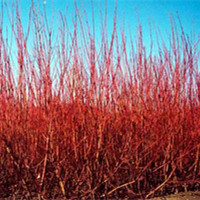
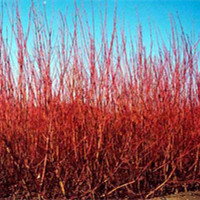
The most striking ornamental feature of red-twig dogwood is its branches. Its older perennial branches are darker in color, while the new growth is very bright red; especially after the leaves fall in autumn and winter, the bare red branches stand out sharply against white snow or an evergreen background, making it a rare stem-ornamental plant for winter, often dotting the edges of water, roadsides, and lawns.
In cultivation, red-twig dogwood likes light and also tolerates a little shade, has fairly strong cold hardiness, and is not strict about soil, but it grows better in moist, fertile soil, and routine management is relatively worry-free. To keep the branch color bright, the key is regular heavy pruning and renewal, because the vividly red parts are mostly concentrated on one-year-old new growth, while older branches gradually darken as the years go by.
Propagation is most commonly done by cuttings and sowing, and division and layering also root easily. Once established, it is highly adaptable and suitable for group plantings in courtyards, parks, and similar sites; paired with evergreens in winter, or planted by a sun-facing wall beside snow, the red branches set off against the snow create a particularly outstanding ornamental effect.