An Introduction to the Characteristics, Habits, and Landscaping Applications of Syzygium hancei
Syzygium hancei is an evergreen tree of the genus Syzygium in the family Myrtaceae. It is relatively common in South China, with natural distributions in Guangdong, Guangxi, Hainan, Fujian, and other places. It prefers a warm, humid climate and mostly grows in low-altitude mountainous areas, hills, and forest margins. It has strong adaptability and is one of the commonly used tree species in landscaping in the south.
In appearance, Syzygium hancei has a rounded crown, fine, dense branches and leaves, and glossy leathery leaves, and it remains evergreen throughout the year. When it blooms, small, densely clustered white flowers appear on the branches, and after flowering it produces small spherical fruits whose color gradually deepens as they mature, giving it a certain ornamental effect during the fruiting period.
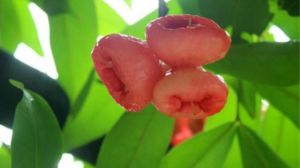
Many people easily confuse it with the related Syzygium cumini and Syzygium samarangense. Syzygium samarangense is the wax apple commonly seen on the market, with noticeably larger fruit, and it is mainly cultivated as a fruit. By contrast, the fruits of Syzygium hancei and Syzygium cumini are relatively small, and in cultivation more emphasis is placed on their ornamental and landscaping functions. Although the three belong to the same genus Syzygium, their appearance and uses differ from one another.
In terms of application, Syzygium hancei has strong sprouting ability and tolerates pruning well. It is suitable for use as a garden ornamental tree, hedge, or street tree, and can also be pruned into topiary trees and bonsai. It has a beautiful tree form, relatively simple maintenance and management, and good adaptability to the urban environment, so it can often be seen in parks and roadside green spaces in South China.