An Introduction to the Characteristics, Alternative Names, and Landscape Application Value of the Southern Magnolia
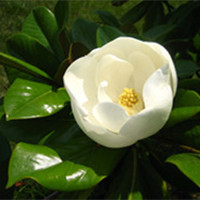
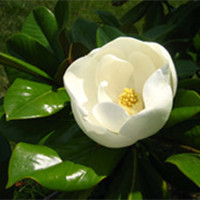
The southern magnolia (Magnolia grandiflora) is an evergreen tree in the genus Magnolia of the family Magnoliaceae. Because its flowers resemble lotus blossoms when they open, it is also called the lotus magnolia. It has a tall, upright tree form, with thick, leathery leaves that are dark green and glossy on the upper surface and often covered with rusty-colored fuzz on the underside. It stays green throughout the year and is one of the common ornamental tree species.
In early summer each year, the southern magnolia produces large white flowers shaped like lotus blooms, with a faint yet rich fragrance, and a single flower can remain open for several days. At the peak of blooming, the white flowers across the tree contrast beautifully with the dense green leaves, making for a very striking ornamental effect. It also has other common alternative names such as the evergreen magnolia, and the names vary slightly from place to place.
In terms of care, the southern magnolia prefers a warm, humid environment with ample sunlight, and it can also tolerate a certain degree of shade. It is best planted in deep, fertile, well-drained acidic or neutral soil. Its root system is relatively deep, so when transplanting it is best to keep a soil ball to protect the roots. After it becomes established, keeping the soil moist will help it grow even better. Young trees need appropriate cold-protection measures when overwintering in cold regions.
In terms of applications, the southern magnolia has a broad, dense canopy and provides green shade all year round, so it is often used as a street tree, a specimen tree in courtyards, or planted in groups. It has a certain tolerance for and ability to intercept smoke and dust, and it is also suitable for planting in factory areas and along roadsides as a protective greening tree species. In addition, its wood is fine-textured, and its flowers and leaves can also be used to extract aromatic oils, giving it a certain economic value as well.