What Kind of Plant Is the Pencil Tree? Characteristics and Care Guide
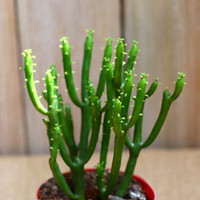
The pencil tree is a succulent plant in the genus Euphorbia of the family Euphorbiaceae, native to arid regions such as eastern Africa, and is often called the green euphorbia or green coral. Its branches are green, round, stick-like, smooth and upright, and its leaves are tiny and drop very early, so the whole plant appears to have almost no leaves, which is how the pencil tree got its name.
This leafless form is actually its skill for adapting to arid environments. In its hot, rain-scarce native habitat, leaves would speed up water evaporation, so the pencil tree hands over the work of photosynthesis to its green branches while minimizing leaf surface to conserve water. It should be noted that when its branches break, they exude a white milky sap, and this kind of sap is somewhat irritating, so when pruning or repotting it is best to wear gloves and avoid contact with skin and eyes, and households with children or pets should also pay attention to where it is placed.
As for care, the pencil tree likes a sunny, warm, dry, well-ventilated environment, and is suited to loose, breathable, well-draining sandy soil. Daily watering should be sparse rather than generous; water only after the potting soil has dried out completely, and never let water accumulate and rot the roots. It is not cold-hardy, so when the temperature drops noticeably it should be moved indoors to a sunny spot, and keeping the potting soil on the dry side in winter helps it overwinter. Propagation is mostly by cuttings: cut a healthy branch, let the wound dry, then insert it into slightly moist sandy soil and keep it in a warm, bright environment, and it will soon take root and survive.
Because of its unusual shape and year-round green color, the pencil tree is often used as an ornamental potted plant on windowsills, balconies or in courtyards, and paired with coarse sand and stones it can also create a distinctive desert landscape atmosphere. As long as you give it enough light and restrained water, this seemingly bare plant is actually especially tough and easy to grow, making it an introductory variety often chosen by many succulent enthusiasts.