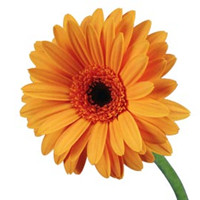
A Detailed Guide to the Characteristics and Daily Care of Gerbera Daisies
The gerbera daisy (Gerbera jamesonii) is a perennial herbaceous plant in the genus Gerbera, family Asteraceae, also known as the Barberton daisy. It originated in southern Africa and is now widely cultivated around the world. Its flowers are borne singly at the top of relatively long scapes, and the capitulum resembles a little sun, with ray florets arranged in one or several whorls. Common flower colors include red, orange, yellow, pink, and white, and the flower form is neat and highly ornamental.
Based on petal form, gerbera daisies can be roughly divided into narrow-petaled, broad-petaled, and double-flowered types, and horticultural cultivars are very abundant. Different cultivars differ in flower color, flower diameter, and plant habit, and in terms of use they are also divided into two major categories: cut-flower types and potted types. When purchasing, you can choose a suitable cultivar according to the display space and intended use.
For care, gerbera daisies prefer a warm, sunny, and well-ventilated environment. They dislike high temperature and high humidity and are sensitive to severe cold, so in winter attention should be paid to keeping them warm and protecting them from freezing. Watering should follow the principle of watering when dry and letting the soil dry between waterings, avoiding water accumulation in the pot or standing water in the leaf crown for long periods, otherwise root rot and crown rot are easily triggered. During the growing season, apply light fertilizer frequently, and appropriately supplement phosphorus and potassium fertilizer during the bud-setting and flowering stage to make flowering last longer and flower colors more vivid.
Gerbera daisies have large, brightly colored flowers and a relatively long flowering period. They are common cut-flower material and are also suitable for pots to accent balconies and windowsills. They last a relatively long time in a vase and are often used in bouquets and ceremonial occasions. If problems such as yellowing leaves or failure to bloom occur in home cultivation, they are mostly related to insufficient light, overwatering, or lack of nutrients, and you can gradually investigate and adjust based on your own environmental conditions.
Related Reading