How to Grow Chinese Lanterns: Light, Water, Fertilizer, and Summer Care Are Key
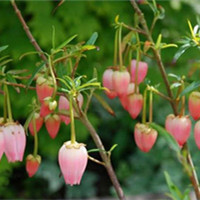
Chinese lantern is a common ornamental flower, and in horticulture it usually refers to the fuchsia, whose flowers hang downward and resemble small lanterns or upside-down bells. The flower colors include red, pink, purple, and others, giving it strong ornamental value, and it is often grown in pots on balconies or indoors. It should be noted that the plants called Chinese lantern differ from place to place; in some regions the groundcherry is also called Chinese lantern, so before planting it is best to confirm the variety first and then care for it according to its corresponding habits.
In terms of light and temperature, the Chinese lantern likes a cool, moist environment and is suitable for a place with soft, diffused light. It dislikes intense direct sunlight. In spring, autumn, and winter it can be placed on a balcony with ample light, while in summer it should be properly shaded. It fears high heat, and when the weather is hot it tends to drop leaves and stop growing, so it should be moved to a cool, ventilated place; in winter it is not cold-hardy, so it needs to be brought indoors for warmth and kept in a relatively mild environment.
For water and fertilizer management, watering should follow the principle of letting the soil dry before watering again, watering thoroughly only after the surface of the potting soil has dried, to avoid long-term waterlogging that causes root rot. During the growing season, apply light fertilizer frequently, mainly diluted liquid fertilizer. Before flowering, supplement with phosphorus and potassium fertilizer to make the flower colors more vivid and increase blooming. When the plant is dormant or growing weakly, reduce or stop fertilizing.
In daily care, pruning and getting through summer also need attention. Proper pinching and topping during the growing season can promote branching, making the plant fuller and increasing the number of flowers. The high temperatures of summer are the most difficult period for the Chinese lantern, so water should be controlled, shade provided, and ventilation strengthened to help the plant get through summer safely. As long as the environment is suitable and management is proper, the Chinese lantern can bloom on schedule year after year.