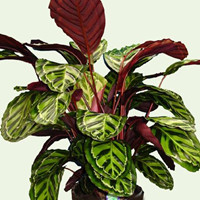
Leopard Plant (Calathea leopardina) Pictures and Care Tips
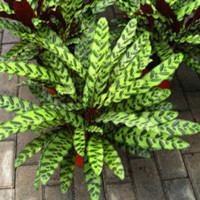
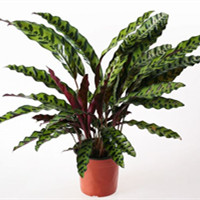
Calathea leopardina is a popular foliage plant in the Marantaceae family, named for the dark patches on its leaves that resemble leopard spots. It has a compact form, and its leaves are mostly long ovals, with a light green base color on the upper surface dotted with dark green or dark brown patches and clear markings, making it very photogenic, so many plant lovers search for its pictures for reference before planting it.
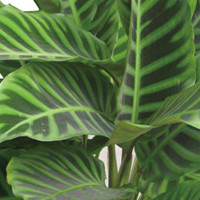
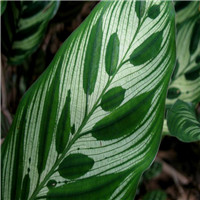
To identify Calathea leopardina from pictures, focus on two points: first, the patches are distributed in an irregular leopard-spot pattern, and second, the leaf surface often has a fine velvety texture. It is clearly different from varieties such as Calathea makoyana and Stromanthe sanguinea in leaf color and markings, and it can also be easily distinguished by leaf shape from Calathea lancifolia, which has slender leaves and also bears spots.
For daily care, Calathea leopardina likes a warm, humid, semi-shaded environment and dislikes direct strong light, so it is suitable for placement indoors in a spot with bright, indirect light. Loose, breathable, well-drained soil is best, and watering should follow the principle of watering when dry and stopping when wet, avoiding long-term water accumulation in the pot that can cause root rot. When the air is dry, mist the leaves and surrounding area to maintain humidity, while in winter pay attention to keeping it warm and reducing watering appropriately.
Common problems are mostly related to humidity and light, such as curled leaf edges and scorched margins, which are usually caused by air that is too dry or by sunburn, and can be gradually relieved by promptly adjusting the placement and increasing ambient humidity. Overall, Calathea leopardina is both easy to grow and attractive, and along with Calathea makoyana, Calathea zebrina and others it belongs to the high-appeal calatheas, making it very suitable for decorating the living room and study.