She grew just 1 kind of flower to perfection, beating other people's 10 gardens!
Introduction: Marguerite daisy is a flower that Huahua especially loves. As long as you prune it carefully, it will easily burst into a big ball of flowers! Want to know how the expert grows such a big flower ball? Keep reading~ 1. Pinching and topping are the key. The expert says that if you want the marguerite daisy to bloom into a round, plump flower ball, you have to pinch and top it before flowering,
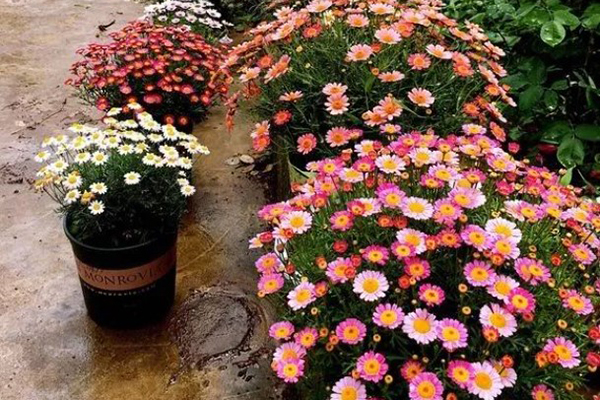
Marguerite daisy
Marguerite daisy is a flower that Huahua especially loves. As long as you prune it carefully, it will easily burst into a big ball of flowers!
Want to know how the expert grows such a big flower ball? Keep reading~
1. Pinching and topping are the key
The expert says that if you want the marguerite daisy to bloom into a round, plump flower ball, you have to pinch and top it before flowering, and rotate the flowerpot at regular intervals, so the flowers can bloom abundantly and well!
2. Soil selection
Loose, breathable, well-draining soil is most suitable for marguerite daisies. The expert generally uses 1 part garden soil plus 1 part peat soil.
Hydrangea
If there is any flower bigger than a face, it must be the hydrangea. Hydrangeas not only bloom abundantly, but can also be color-adjusted according to your own preferences. No wonder so many flower lovers like them!
There must be quite a few flower lovers who want to know how to successfully adjust the color of hydrangeas. Huahua asked the expert for the color-adjusting secrets for you!
1. Turning hydrangeas blue
Before the flower buds form or when the buds appear, mix aluminum sulfate with water at 100 times and pour it into the soil once every 10 days. At other times, add a little white vinegar or ferrous sulfate when watering. Note that these several things cannot be used together!
2. Turning hydrangeas pink
Under normal circumstances, if acidic fertilizer is not deliberately applied, hydrangeas will bloom with pinkish flowers. If you want pure pink, you can mix a small amount of plant ash into the soil.
Kalanchoe
Kalanchoe has a beautiful meaning and is loved by many flower lovers. However, it is really rare to collect so many varieties and grow only Kalanchoe!
Kalanchoe can bloom several times a year, but some flower lovers' Kalanchoe blooms only once and then stops. The expert says that as long as you master her secrets, Kalanchoe can bloom as many times as you want!
1. Pruning after flowering
After Kalanchoe finishes blooming, you must prune it so it can bloom quickly and bloom more. When pruning, count three pairs of leaves from the bottom of the branch upward, and cut from the fourth pair.
2. Secret formula for forcing flowers
The expert reveals that the key to forcing flowers is to put Kalanchoe in a "little dark room"! During the day, place Kalanchoe in the sunlight. After 5 pm, cover it with a black plastic bag and place it indoors. It will bloom in about 15 days!
Rose
Roses not only have brilliant colors and bloom abundantly, but the key is that they can bloom several times a year! So it is not without reason that many flower lovers are devoted to roses.
Although roses are easy to keep alive, roses are famously a "medicine bottle" and often get infected with various diseases, which is really a headache!
1. Eliminating powdery mildew
The expert's miracle cure for eliminating powdery mildew is "baking soda." After powdery mildew breaks out, mix baking soda with water at 1000 times and spray both sides of the leaves. However, the expert says powdery mildew is best prevented in advance by pruning frequently and increasing ventilation.
2. Strangling red spider mites
After red spider mites appear on roses, the expert will spray the leaves with milk mixed with water, which is said to burst the red spider mites. However, if there are many red spider mites, the expert will use duocai myclobutanil mixed with water at 1500 times to spray and kill them.
Succulents
There is a saying that goes well: "Once you enter succulents, the wallet becomes a passerby." If you cannot control your hands that "buy succulents," your home will accidentally become crowded with succulents!
Although succulents are cute, not everyone can grow them well. Many succulent lovers' succulents often die for one reason or another. How does the expert grow them so well?
1. Treating black rot
Black rot is a problem beginners often encounter. If it is early-stage black rot, you can dig out the black rot part and then cuttage again. However, if the black rot is relatively serious, it is best to throw it away to avoid infecting other succulents.
2. Killing small insects
Succulents also often attract insects in summer. If there are a small number of insects, you can directly crush them with your hands. If there are many, you can rinse them with running water.
Cactus
Huahua used to never understand how anyone could like a cactus covered in spines, until Huahua saw what cactus flowers look like, and Huahua was completely conquered by cacti!
Huahua believes that many flower lovers' cacti have been grown for several years without ever blooming. Don't worry, Huahua has already gotten the expert's blooming secrets!
1. Soil preparation
The expert says that only with good soil preparation can cacti grow vigorously and bloom early. The expert generally uses akadama soil, coal cinders, coarse sand, and volcanic rock in a 4:3:1:1 ratio, then mixes in a small amount of plant ash.
2. Sufficient light
Besides soil, light is also a necessary condition for cactus flowers. If it is always placed in a shaded place, don't even think about the cactus blooming! It is best to move it to a south-facing balcony or outdoors.
Growing flowers is not about quantity but about excellence.
Being able to grow one kind of flower to perfection
is enough to be called an expert!
What do flower lovers think?
For more professional agricultural science and technology information, please scan the QR code to follow WeChat: NongXunNET

Please indicate the source when reprinting.