One bonsai, many uses: creative designs worth savoring
Introduction: The goji berry is seen as a treasure of the Chinese New Year. Its white fruit is small, but the plant is of great value, not only medicinal but also good for brewing tea and making wine. But did you know that goji berry bonsai is also very cold-hardy? The goji tree is curved in form, with green leaves, light purple flowers and bright red fruit. This is an elegant, refined bonsai.
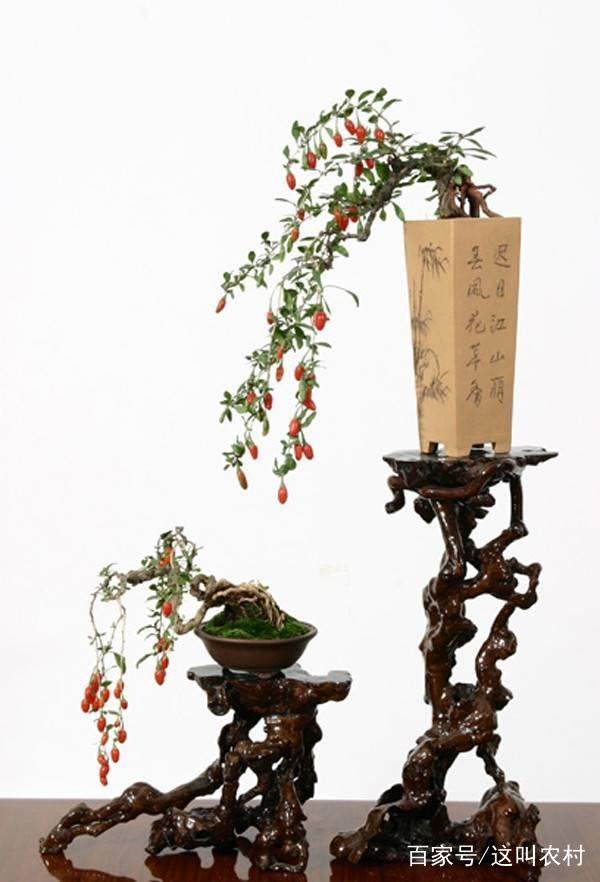
The goji berry is seen as a treasure of the Chinese New Year. Its white fruit is small, but the plant is of great value, not only medicinal but also good for brewing tea and making wine. But did you know that goji berry bonsai is also very cold-hardy.
The goji tree is curved in form, with green leaves, light purple flowers and bright red fruit. This is an elegant, refined bonsai.
The trunk is shaped into a graceful form. The small goji berries hang from the branches like little bells, swaying in the wind and showing delicate, careful love.
The slanting branches let the goji branches droop down like willow wands, drifting with the wind like a string of wind chimes, not inelegant.
A perfect meeting between rockery and plant: the goji branches twist over the rocky mountain, showing tenacious vitality, and looking all the more like rock.
The rockery and the goji are set separately in the pot, one tree, one stone, one world; the branches touch the stone like a harmonious painting of a mountain.
The exception is the combination of rockery and goji, though slightly tilted. Placed at home, they have high ornamental value, and the red fruit draws fond admiration.
For more professional agricultural science and technology information, please scan the QR code to follow WeChat: NongXunNET

Please indicate the source when reprinting.