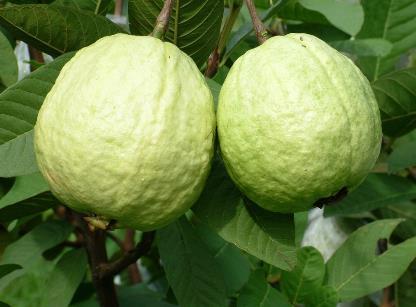
Guava Growth Habits, Characteristics, Cultivation Techniques and Pruning Methods Explained
Guava is a very common fruit in the Guangdong region, but in other regions this fruit is relatively rare. Let's take a look at the growth habits of guava and guava cultivation techniques! It is different from the peach cultivation method!
Guava Growth Habits
Guava is a tropical fruit tree that prefers a warm and humid climate. The suitable temperature for growth is 15-32°C, and the suitable temperature for fruit set is 23-28°C. Guava is not tolerant of low temperatures; when the temperature drops to 5-7°C, red spots appear on the leaves as a sign of cold damage. In summer, if it is hot and rainy, flowers and fruits are prone to dropping. High temperatures cause the fruit to ripen quickly, the flesh softens easily, and the sugar content decreases. Guava is a shallow-rooted crop, and soil with a pH of 5.5-7.5, good drainage and rich organic matter is suitable for its growth.
Guava Cultivation Techniques
Preparation Before Planting: 1. Orchard Land Selection
A good guava orchard should be located in a well-drained and wind-sheltered area. Next, consider whether conditions such as sunlight, water source, level ground and transportation are available. In addition, areas without cold damage, with no soil-borne pests and diseases, and rich in organic matter are preferable, as this can reduce the harm from natural disasters and lower the investment cost of improving the production environment.
2. Orchard Planning
It is advisable to plan the orchard with wide rows and close planting, with a row spacing of 3.5-4 m and a plant spacing of 2.7-3.6 m. The row and plant spacing can be adjusted according to the cultivated area, soil fertility and labor. Where land is cheap and the cultivated area is large, it is recommended to widen the row and plant spacing and reserve paths for machinery, which can increase the convenience of spraying, fertilizing and mechanical operations as well as ventilation.
3. Irrigation and Drainage
Good field water management is beneficial to the growth of guava and should be adjusted according to its growth needs. Therefore, the field should have an adequate water source to supply irrigation during the dry season. A booster pump can be installed together with sprinkler or drip irrigation facilities to supply water evenly throughout the orchard. Guava is a shallow-rooted crop and is not tolerant of flooding. Therefore, in poorly drained areas or orchards converted from paddy fields, raised beds can first be made, and furrows can be opened between rows following the terrain to speed up drainage, so as to prevent water accumulation in the orchard from affecting plant development.
4. Seedling Source and Planting
Guava seedlings are mostly propagated asexually by approach grafting or air layering to maintain the characteristics of excellent varieties. When buying grafted seedlings, attention should be paid to healthy seedlings with pure variety, well-developed root systems and no pests or diseases (especially root-knot nematodes). The planting period should avoid the rainy season. When planting, use a cultivator to open a furrow and plant the tree at the edge of the furrow. A small amount of appropriate chemical fertilizer and organic fertilizer can be applied at the bottom of the planting hole. After planting, stakes should be set up to secure the tree and prevent strong winds from shaking the tree body and damaging the approach-graft union and root system.
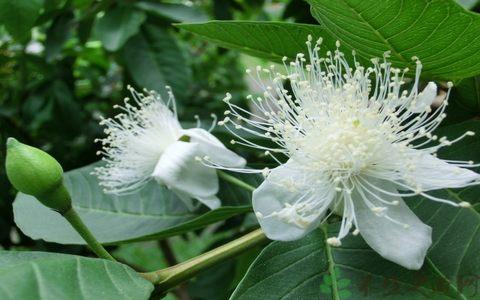
Planting
Guava is usually planted with wide rows and close spacing, with a row spacing of 3.5 to 4.5 m and a plant spacing of 2.7-3.6 m. Wide rows facilitate mechanical operations, and orchard ventilation is also better. If planted too densely, ventilation is poor, pests and diseases occur more seriously, and field management, spraying and other operations are extremely inconvenient.
The seedlings to be planted should be healthy seedlings of pure variety, with well-developed root systems and free of pests and diseases such as root-knot nematodes. In orchards prone to water accumulation, planting during the rainy season should be avoided. When planting, a cultivator can be used to open a furrow, and the seedlings are planted at the edge of the furrow. Planting should not be too deep, and soil should be banked up in stages as the seedlings grow. Fully decomposed compost should be applied to the planting hole. After planting, set up stakes to prevent strong winds from damaging the approach-graft union and root system. If the new shoots of young plants carry flower buds, the buds should be removed as early as possible and not allowed to set fruit, so as not to affect seedling growth. Some time after planting, if the plastic band of the approach graft cannot split open on its own, it should be cut off manually.
Guava Propagation
The core of a guava holds hundreds of seeds. However, after the seeds undergo pollination and fertilization through the ovary and pollen, their genetic factors are already different from the original. So how can a delicious guava retain its variety? Generally speaking, there are three asexual propagation methods that can achieve this:
Approach grafting: This is the propagation method most commonly used by seedling growers. The method is to make partial wounds on both the rootstock (usually a seedling guava seedling) and the scion that has not been detached (commercial varieties such as Pearl Guava), then join the wounded parts of the two. After culturing for one month, callus tissue forms at the joint, which indicates that after the scion is detached it can begin to obtain nutrients and water through the rootstock's vascular bundles.
Cuttage: Cuttage involves taking 2-3 node mature guava branches and inserting them into an airy but water-retentive rooting medium, then culturing them in a high-humidity environment to promote the production of adventitious roots. This method has high production efficiency, but because cutting-propagated seedlings lack a taproot, there is a concern that they may easily lodge, so the market still mainly cultivates approach-grafted seedlings.
Air layering: Air layering involves directly girdling the bark on the trunk, then wrapping the girdled area with moistened sphagnum moss used for orchids, and then wrapping the sphagnum moss with transparent plastic sheeting. After about one month in summer, many adventitious roots can be found growing on the surface of the sphagnum moss and plastic sheeting.
Tree Shape Management and Pruning
Tree Shape Management
Although guava can flower one year after planting, in order to develop the tree shape, fruit thinning must be carried out in the first year and heavy pruning should be avoided. A tree shape with evenly distributed branches and leaves allows guava leaves to intercept sufficient light, improving photosynthetic efficiency and supplying fruit growth. To balance both yield and quality, the guava tree shape is mainly the natural open-center type. After planting, when the trunk grows to 40-50 cm, select and retain 3-4 well-developed main branches spreading out in all directions. Supports and ropes can be used to secure them so that the tree shape opens up and the angle between the main branches and the trunk is maintained at 45-60°. After the shape is set, prune to develop secondary main branches, making the secondary main branches alternate left and right, and then have them bear lateral branches and fruiting branches.
Pruning
The purpose of guava pruning is to dwarf the plant. Pruning can also promote shoot growth and flower bud differentiation, so the production period can be controlled by adjusting the pruning time. The height of guava plants should be controlled at about 2 m to facilitate operations such as fruit thinning and bagging. The principle of pruning is to distribute branches and leaves evenly and avoid overlapping and shading each other. Water shoots, excessively dense, dry, diseased and drooping branches close to the ground should be cut off. After water shoots emerge from secondary main branches, they do not need to be completely removed; some can be left to shade the fruit in the upper layer to avoid sunburn on the fruit.
Do you like eating this fruit? After reading the cultivation methods above, if you want to grow guava trees, then take action now!