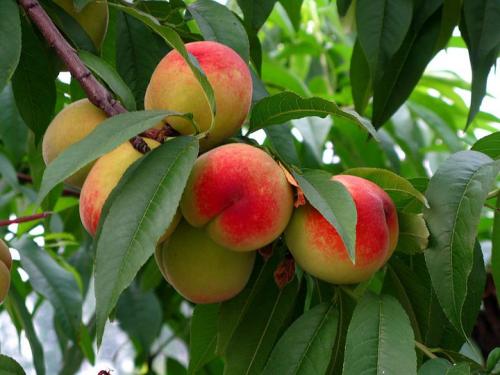
Characteristics and Flavor of the New Peach Variety Taichung No. 9 Hongjin
Peaches are one of the more common fruits in our daily lives, and there are quite a few varieties of them. Peach grafting techniques are also relatively simple, so many people grow them. Today we introduce a new peach variety! The peach is an important fruit tree of the Rosaceae family, and also
Peaches are one of the more common fruits in our daily lives, and there are quite a few varieties of them. Peach grafting techniques are also relatively simple, so many people grow them. Today we introduce a new peach variety!
The peach is an important fruit tree of the Rosaceae family and the sixth largest fruit tree industry in the world, after citrus, grapes, bananas, apples and pears, and is a fruit widely welcomed by consumers. Although Taiwan, China has a tropical and subtropical climate, the Council of Agriculture's Agricultural Research Institute has preserved more than a hundred low-altitude peach varieties (lines), covering rich genetic diversity. Using these abundant germplasm resources, the institute has bred 7 low-chill white-fleshed honey peaches, Taichung No. 1, 2, 3, 4, 6, 7 and 8, and is about to release its 8th new variety, Taichung No. 9 "Hongjin", which differs from the previous white-fleshed types as the first yellow-fleshed honey peach variety to be released.
The peach is an important fruit tree of the Rosaceae family and the sixth largest fruit tree industry in the world, after citrus, grapes, bananas, apples and pears, and is a fruit widely welcomed by consumers. Although Taiwan, China has a tropical and subtropical climate, the Council of Agriculture's Agricultural Research Institute has preserved more than a hundred low-altitude peach varieties (lines), covering rich genetic diversity. Using these abundant germplasm resources, the institute has bred 7 low-chill white-fleshed honey peaches, Taichung No. 1, 2, 3, 4, 6, 7 and 8, and is about to release its 8th new variety, Taichung No. 9 "Hongjin", which differs from the previous white-fleshed types as the first yellow-fleshed honey peach variety to be released.
The Agricultural Research Institute stated that peaches are rich in nutrients. Every 100 grams of white-fleshed peach flesh contains 7-15 grams of sugar, 0.2-0.9 grams of organic acids, 0.4-0.8 grams of protein, 0.1-0.5 grams of fat, as well as 3-5 milligrams of vitamin C and 0.2 milligrams of B2; in addition, yellow-fleshed peach flesh is even richer in carotenoids, with every 100 grams of flesh containing 850-1200 milligrams of carotenoids, making it more nutritious than white-fleshed peaches. The institute explained that after a long process of breeding and selection, in the 97th year of the Republic of China a low-chill yellow-fleshed honey peach was selected from hybrid progeny and named Taichung No. 9 "Hongjin", and its plant variety right application was approved in July of the 107th year of the Republic of China. It will be provided to interested farmers for planting, and it is believed that consumers will soon be able to buy sweet, juicy and more nutritious yellow-fleshed honey peaches on the market.
The Agricultural Research Institute further explained that the "Hongjin" peach has an early flowering period (late January) and requires few low-temperature hours for winter dormancy, making it suitable for planting from central Taiwan, China northward, with winter being the best planting period. The "Hongjin" peach fruit is large and round, with an average fruit weight of 157 grams. When ripe, the skin takes on an even red color. It is an early-maturing yellow-fleshed peach variety that can be planted in low-altitude areas of Taiwan, China, and can also avoid the peak period of fruit fly damage and the decline in fruit quality caused by the plum rain season. In addition, the "Hongjin" peach has a lower damage rate during harvest and transport than white-fleshed peaches, which can improve the previous shortcoming of honey peaches being intolerant of storage and transport, and increase the profits of producers and sellers.