How to plant sugarcane so it easily survives? Planting month and growth period duration
Sugarcane is a fairly common fruit, so would you like to try growing it yourself? If so, let's take a look together! This planting method is similar to moso bamboo planting techniques!
Sugarcane is not very strict about soil choice; it can be planted from loose gravelly soil to heavy clay. Sugarcane is a tropical and subtropical crop; during growth it likes high temperatures, plenty of rain and abundant sunshine, but it should not be waterlogged, and it must only mature at low temperatures, accumulating various carbohydrates that are converted into sucrose.
Sugarcane is a perennial herb. Although it flowers and reproduces sexually, it is mostly propagated and planted by asexual bud seedlings.
The planting period can be divided into 3 types: autumn planting, spring planting and ratoon planting. Autumn planting is done around July to September, with a growth period of about 18 months. Spring planting is done around January to March, with a growth period of about 12 months. Ratoon planting is when, after harvest, the stubble is left to sprout again, and the growth period is also about 12 months. The harvest period is from November to April of the following year.
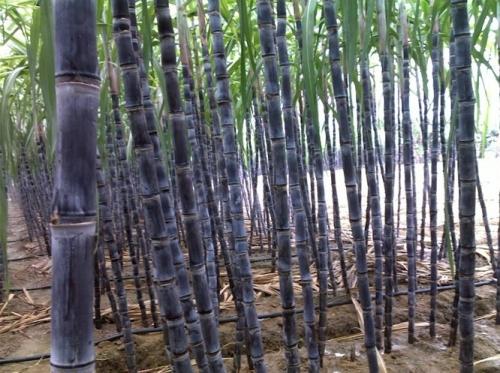
After sugarcane seedlings grow slightly larger, they produce daughter canes, similar to how bamboo and bananas send up seedlings around the mother plant. Immature sugarcane appears deep black, and the leaves wrap around it on top; as it grows, the leaves gradually fall off and receive the baptism of the sun. The stalk turns from deep black to purplish red.
Sugarcane has the effects of relieving fever and quenching thirst, harmonizing the middle and relaxing the diaphragm, promoting body fluid and moistening dryness, helping the spleen and strengthening the stomach, promoting urination, and nourishing. It can be used for dry mouth and tongue, insufficient body fluids, difficult urination, constipation, nausea and vomiting, indigestion, and fever with thirst. For febrile diseases, drinking raw sugarcane juice is best, and it is called the "natural pulse-restoring decoction."
Sugarcane contains carbohydrates, protein, fat, calcium, phosphorus, and iron. The stem nodes contain vitamin B6, and the stem tips contain vitamin B1 and B2. Sucrose mainly contains sucrose, glucose, and fructose. Sugarcane juice contains asparagine, aspartic acid, alanine, valine, serine, malic acid, citric acid and many other amino acids, all of which are quite beneficial to human health.
When sugarcane juice is boiled, its nature turns warm, so it has tonic effects and has the functions of boosting qi and tonifying the spleen, harmonizing the middle and lowering qi, and nourishing and maintaining health.