How Long Does Passion Fruit Take to Bear Fruit After Planting? A Detailed Guide to Management and Pruning Techniques
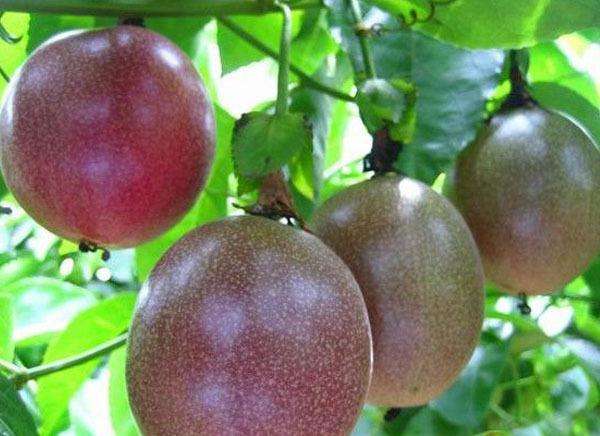
Passion fruit is a very popular fruit nowadays. Do you know how to plant passion fruit? What conditions are needed for growing passion fruit? Let's take a look!
Passion fruit planting methods
Sufficient sunlight, well-developed horizontal roots, requires loose and aerated soil that does not waterlog, and is drought-tolerant. The vines have a continuous growth characteristic; as long as conditions are suitable, such as warm and adequate, they can continuously flower and bear fruit throughout all four seasons.
Passion fruit dislikes heavy pruning; excessive pruning will reduce yield, cause the main stem to wither, and in severe cases the entire plant may die.
Passion fruit is extremely prone to fertilizer burn, even when organic fertilizer is applied, and it is especially obvious with undecomposed organic fertilizer. As for chemical fertilizers, use them as little as possible. If you want passion fruit to grow rapidly in the early stage, dilute urea at 1000 times and use it when watering.
Passion fruit, a vining fruit tree, is quite similar in growth habits to cucurbit vegetables; both are monoecious with unisexual flowers, so there are often cases of not flowering, and also often cases of flowering without fruiting. I myself have also grown passion fruit, and I have encountered all of these situations, and I resolved them all by referring to the solutions for cucurbit vegetables. The results were of course positive, so if you want passion fruit to flower and fruit, fertilizer control and plant management are very important.
Most plant growth has two stages: first, vegetative growth (growing leaves, branches, and roots, and the plant growing larger), and second, reproductive growth (flowering, fruiting, and meristem production). Only after vegetative growth reaches a certain stage does reproductive growth begin, and the key factor affecting the length of the vegetative growth period is the last sentence of the previous paragraph, but the premise is that the plant must also have grown to a certain size.
Another friend mentioned that controlling nitrogen fertilizer is very important. That's right! When the amount of nitrogen fertilizer is high, the plant will continue vegetative growth and temporarily suppress reproductive growth, so nitrogen fertilizer must be controlled. But that alone is not enough; you must also control the plant's growth vigor. When growth vigor is too strong, the same situation as with excessive nitrogen fertilizer will occur. So how should you control plant growth vigor?
Pruning can suppress plant growth vigor and also control plant form, but passion fruit that is about to bear fruit is not suitable for pruning, because when flowering and fruiting begin, the larger the plant, the more flowers and fruits it will produce, so it is not suitable for pruning. But we still need to prune it, and we should carry out the lowest amount of pruning, which is pinching (in agricultural technique, pinching is classified as part of pruning).
What is pinching? It means removing the growth point at the tip of a plant branch so that the auxin in the plant will not be used for vegetative growth, and once a certain level is reached, it will naturally turn into reproductive growth. So how should you pinch? Very simple, no pruning tools are needed, only your fingernails. Those who know how to observe the growth point can simply remove the growth point, but what about those who do not know how to observe the growth point? Let me teach you! At the tip of the plant stem (whether the main stem or a branch), there is always the tenderest place, and the growth point exists within it, so you just remove the tenderest place by hand. The key is that it should break off easily with a gentle pinch of your fingernail.
The control of male and female flowers is also related. I wonder if you can identify female flowers and male flowers? If you can't, that's fine too. On the same plant there are two different types of flowers; one is the male flower and the other is the female flower. Both types of flowers must bloom at the same time for pollination to be possible. Passion fruit is an insect-pollinated flower, so it can be pollinated naturally. If the environment is not suitable for natural pollination, artificial pollination can also be used, with the method just as another friend described. As for if you cannot distinguish male and female flowers, then just do artificial pollination crosswise!
If you can identify male and female flowers, then after the female flower has completed pollination and set fruit, if there are no other female flowers that have not yet been pollinated, remove all the male flowers to promote the differentiation and blooming of other flower buds. Regarding pinching and other knowledge about cucurbit vegetables+, to flower, use phosphorus fertilizer; when fruiting, add potassium fertilizer. Next, the tree vigor must be pruned; too many branches disperse the nutrients. So cut off some leaves and branches, then apply some fertilizer. The average lifespan of passion fruit is 5 years.
The flowering and fruiting period of passion fruit is two periods per year: April to May is the first period, and September to October is the second period. The time required for passion fruit to mature varies depending on the flowering season. Generally, flowers that bloom in May—June mature 40—60 days after flowering; flowers that bloom in July—August need 60—80 days to mature; flowers that bloom in September need 80—90 days to mature; and flowers that bloom in October or later need more than 90 days for the fruit to mature.