The History of Tomato Cultivation and How to Get Lycopene from Tomatoes and What It Does
Have you ever heard the story of the history of tomato cultivation?The most nutritious substance in tomatoes islycopene? Sohow do you get lycopene from tomatoes?
It is generally believed that the Peruvians were the first to cultivate tomatoes. From the 16th to the 17th century, when tomatoes had just been introduced to Europe (Spain), they were treated as food, but the part people ate at the time was not the fruit but the leaves. Because the toxins in tomato leaves poisoned those who ate them, tomatoes were regarded as an ornamental plant for a very long time. From the 18th century onward they began to be grown as a vegetable in Southern Europe.
When the Peruvians first encountered the tomato, they saw it as a poisonous fruit and called it "wolf peach." In the 16th century, the English Duke of Orlando Lari saw how bright and red the tomato's skin was, took it back to England and gave it to his lover, and from then on Europeans called it the "love apple."
In the United States, which has the largest production and sales volume, most people in the early days thought tomatoes were poisonous, and some saw them as having a sexual function and regarded them as the "love apple." By the mid-18th century, some people began to grow them, and those who ate them were naturally people who needed an aphrodisiac, while missionaries were forbidden to eat them. A hundred years later, Americans dared to eat tomatoes, but they had to spend several hours cooking them, believing that long cooking would eliminate the toxicity in tomatoes.
Form
An annual herb, usually divided into five varieties: common, cherry, large-leaf, pear-shaped, and upright tomato. By plant type it is divided into two types: determinate and indeterminate.
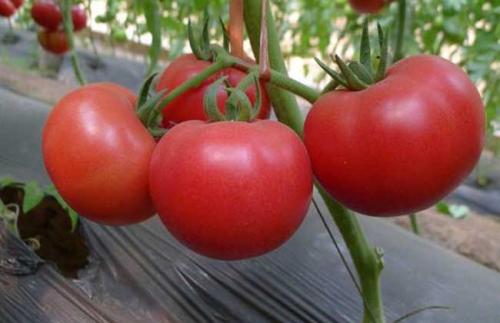
Semi-trailing or semi-upright stems, densely covered with glandular hairs, giving off a distinctive odor; leaves are pinnately compound and deeply lobed; racemose or cymose inflorescences, yellow flowers; flat-round, round or cherry-shaped berries, red, yellow or pink; grayish-yellow kidney-shaped seeds with fine hairs
How do you get lycopene from tomatoes?
The benefit of tomatoes is that they are rich in lycopene. Lycopene is a carotenoid and also an antioxidant nutrient. Research indicates that people with high lycopene levels in their blood are less prone to certain cancers, such as cervical cancer, prostate cancer, and pancreatic cancer. Eating one tomato a day can achieve a protective effect, and processed tomato products such as tomato juice and ketchup also contain lycopene. Lycopene's ability to scavenge free radicals is twice that of other carotenoids and a hundred times that of vitamin E. Lycopene is also found in many other foods, such as grapefruit, watermelon and other fruits. Many golden-yellow fruits also contain lycopene, such as papaya, mango and carrots, though their content is not as high as that of tomatoes, and the redder the tomato the better.
If we want to get lycopene from tomatoes, the way they are prepared matters a great deal. Because lycopene is contained within the cell walls, mechanical breakdown can release the lycopene more easily and make it easier for the human body to absorb; therefore you can eat more canned tomato products or tomato juice from the market, and you will take in several times more lycopene than by eating raw tomatoes. Usually, the lycopene you get from drinking tomato juice is three times that from eating raw tomatoes and five times that from ketchup.
Although drinking tomato juice lets you take in more lycopene, when choosing tomato juice you should grasp three key points: "labeled as original juice, high lycopene content, low sodium content." The sodium content per 100 grams of tomato juice is best kept below 10 mg; because too much sodium raises blood pressure, people with high blood pressure, heart disease and other conditions related to blood pressure should preferably choose salt-free tomato juice. Ketchup also contains sodium, so people with high blood pressure and similar conditions should eat it in moderation.
Because lycopene has anti-cancer and anti-aging effects, many people rush to it, but while supplementing lycopene you should not neglect other fresh vegetables and fruits. Vegetables and fruits contain many other components beneficial to the human body, so it is best to take them in a balanced way rather than focusing on only one or two; unless you are someone under great life stress with high free radicals, or a middle-aged man in his forties or fifties who wants to prevent prostate cancer, or a man with a family history of prostate cancer, in which case you can supplement more lycopene.