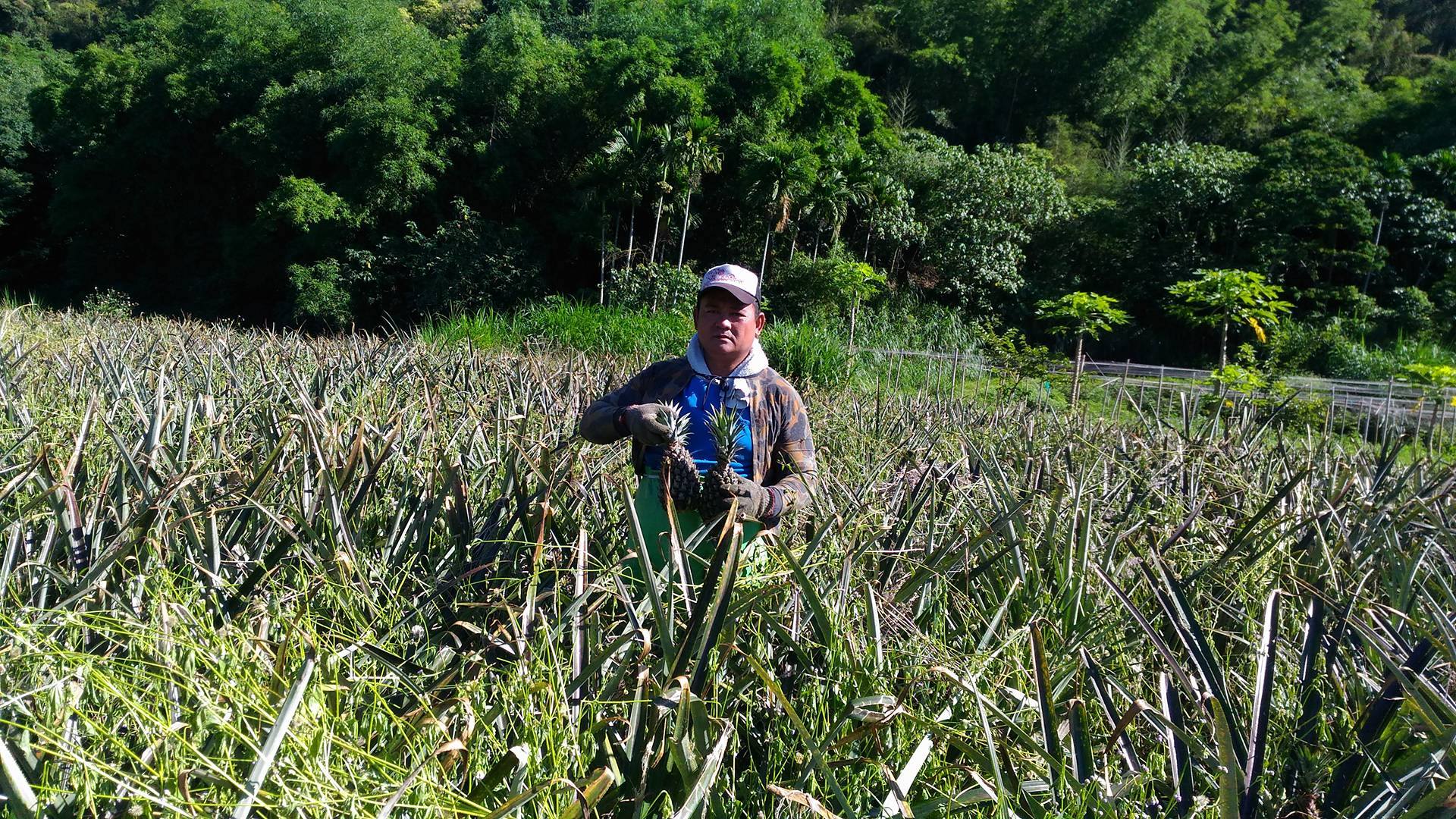
Tai Nong No. 13 Winter Honey Pineapple Variety Introduction: Origin of the Name and Per-Mu Yield and Returns
Tai Nong No. 13 - Winter Honey Pineapple (Sugarcane Pineapple) plants are tall, with long, upright leaves; small scattered spines are commonly found at the leaf tips and bases, and the leaf surface is grass green while the midrib is purplish red, which is its distinguishing feature.
The reason Winter Honey is called Winter Honey
The first successful new variety from the Chiayi Agricultural Experiment Station was Winter Honey Pineapple (Tai Nong No. 13). Because its sweetness is very high and its acidity is relatively low, and it can be produced even in winter, it is called Winter Honey.
Also, because it is extremely sweet, it is called Sugarcane Pineapple. With the appearance of this new variety in the 83rd year of the Republic of China, Taiwan's pineapples could be available as sweet, ripe, fresh fruit all year round. Before that, even though pineapple production-period adjustment was fairly easy, the fruit in autumn and winter tended to be sour and was not favored by Taiwan's sweet-loving market; Winter Honey does not have this problem, and in winter its sweet-and-sour balance is even better.
A promising contender for fresh fruit export
The Council of Agriculture stated that "Tai Nong No. 13" was bred by crossing the Kaiying variety with Tai Nong No. 8. Its high-temperature requirement is low, it tolerates low temperatures, and its winter fruit is also sweet, with better quality than the other varieties currently cultivated. Because cultivation and management of this variety do not require leaf tying for sun protection, production costs can be saved by about 35,000 yuan to 40,000 yuan per hectare.
It has strong resistance to fusarium wilt; the fruit has thin skin, shallow eyes, high sugar content, low acidity, golden-yellow flesh, and the rich aroma of native pineapple. It is refreshingly sweet and has excellent flavor, making it a top-grade fruit. It is more suitable for autumn and winter production than other varieties. It is believed that after promotion and cultivation it will be favored by growers and consumers. In addition to supplying the domestic market, this variety also has potential for fresh fruit export.