Durian Kutejensis: Name Origin, Characteristics, and Why It's So Expensive (With Pictures)
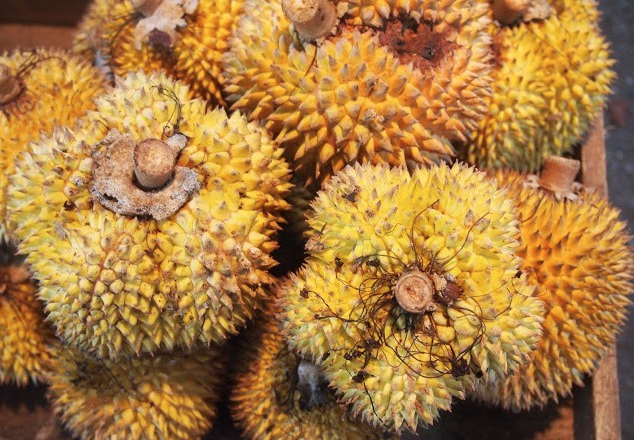
Durian Kutejensis is the most popular durian in Brunei. With its pineapple-cream-colored orange flesh, it's no wonder this is the only wild durian species to be widely cultivated. Its fruit aroma is generally considered pleasant, and local durian authorities consider it possibly the most suitable durian for those who are unfamiliar with durian or who just can't handle regular durian funk.
I think it's really cute. Viewed from the top, it looks like a corn-yellow five-petaled flower, because each seed section is so swollen and distinct. It's usually quite small; the largest fruits weigh less than 1 kg. The thorns are short and rough, and the shell is very thin, which makes it easy to break into with bare hands.
The flesh is dry and somewhat waxy, with color ranging from pale orange-yellow to deep sunset red. In terms of flavor, this is a completely different ball game. It completely lacks the savory, garlicky, oniony element that can drive some people away (and draw others closer). To us, it tasted of a faint strawberry-mango fruitiness, like an avocado infused with the artificial flavoring of tropical gummy bears. One notable detail is that, unlike other durians, the flower stamens remain attached to the fruit when it ripens. When the fruit falls, only five long black stripes of stamens remain attached to the stem. I think this looks rough but cool.
Durian Kutejensis is native to Borneo. It can now be found in other parts of the world, most notably Java, although the trees there don't seem to produce good fruit. The 1983 claim of discovering wild Durio kutejensis in Turkey has been largely dismissed.
This durian is extremely popular in Brunei and commands a high price, while the surrounding areas of the Sultanate are flooded with the fruit. Rob and I saw plenty of Durian Kutejensis in the Miri and Bintulu areas. I've also heard it's common in Balikpapan and Samarinda in East Kalimantan.
“Kutej” this name was given by a German botanist named Justus Carl Hasskarl (I love rhymes! Why don't we do this in America?). Hasskarl was working at the botanical garden in Bogor, Java, reorganizing taxonomic families.
Back in the day, the organization of durian species was an absolute mess. Linnaean taxonomy had just begun to be adopted, and botanists around the world were busy naming things to fit the new rules.
That's why dear Mr. Carl Hasskarl gave our durian the name Lahia kutejensis in 1858. I don't know what “Lahia” means, and apparently neither did anyone else. It was the only plant in a hypothetical genus, and as soon as someone smartly realized that this little durian belonged to Durio, the whole Lahia thing was discarded and disappeared.
Almost. Even today, if you look up Durian Kutejensis on Wikipedia, it will tell you it's a synonym of Lahia kutejensis. Although the name has changed, Mr. Hasskarl continued to receive credit, so all botanical literature lists this durian as: “Durian Kutejensis Hassk). Becc.” That's the title, but this is a very special durian.
The “Becc.” part refers to the second person involved in naming Durian Kutejensis. Odoardo Beccari is considered one of the greatest botanists of the 20th century, and with good reason. This man spent three years searching the jungles of Borneo for new plants. He was responsible for naming eight species of durian, including the reclassification of Durian Kutejensis. Why he kept part of kutejensis, I don't know. Despite my best efforts, I have been unable to discover what “kutejensis” means, or what inspired old Carl Hasskarl to give the durian that name.