Can You Eat the Pit of a Mangosteen? A Detailed Guide to Growing Mangosteen from Seed and Tips for Choosing Them
Do you know how mangosteen is grown? Would you like to learn about it? Growing plants from seed is popular now, so would you like to try growing one yourself? Many people ask whether the pit inside a mangosteen can be eaten. Yes, it can be eaten, since it is the mangosteen's seed, but it is best not to eat it.
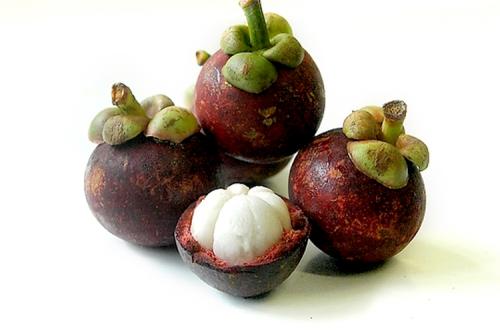
1. Seed preparation: choose good seeds, put them in water to soak for a few days, and once roots have grown, transplant them into soil; they will sprout after a few weeks. Winter temperatures in Taiwan, China are much lower and colder than in Southeast Asia, so the growing environment and soil and water do not adapt well. Therefore, although introduction trials from Southeast Asia began in the early 20th century, successful cultivation has still not been achieved. The key is that high temperature is one of the important growth factors for mangosteen. If the temperature falls below 4°C, the plant will certainly suffer cold damage and die, so at present Taiwan, China maintains only a small amount of mangosteen cultivation and still cannot begin actual economic cultivation.
Mangosteen itself is cooling in nature, so people with a weak and cold constitution should not eat too much of it. Although mangosteen is planted in many tropical regions, its yield was originally not large, so its price is relatively high. In addition, mangosteen fruit spoils easily and is hard to store, so exports are even more limited, which drives the price up even higher.
Mangosteen is a specialty of the Malay Peninsula, and it is also planted in other tropical regions. Because the yield is not large, the price is generally relatively high; moreover, mangosteen fruit spoils easily, so exports are also limited.
When choosing mangosteen, besides checking whether the fruit is intact, what is more important is to touch it with your hand. If, when you press it, yellow juice seeps out of the skin, you can basically be sure that the flesh has already deteriorated and gone bad, so do not choose it.
The sepals near the fruit stalk are also a criterion for choosing good or poor fruit: the more sepals there are, the more flesh there is inside accordingly; and the more flesh there is, the smaller the pit will be, sometimes even small enough to chew.A typical mangosteen has 5 to 6 segments of flesh, and at most 8.