A Detailed Guide to the Growing Conditions and Opening Methods of Thai Fragrant Coconut
Coconut holds an indispensable place in the daily life of Thai people, from the edible coconut water, coconut milk, coconut jelly and coconut oil, to the fiber which can also be used as clothing material or other commonly used materials in daily life. The fragrant coconut, on the other hand, is a variety selected by farmers as suitable for eating, juicy, with a special aroma and relatively soft flesh. Fragrant coconuts can be harvested about 6 to 7 months after pollination.
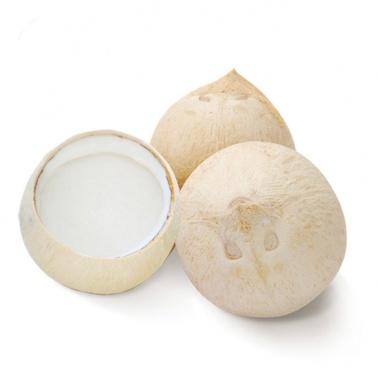
The fragrant coconut is a dwarf variety, reaching a maximum height of about 12 m, and during the fruit ripening period it can produce 15 to 17 suckers, with an average of 7 to 8 fruits per sucker, and up to 15 in the maximum case, while a single fruit weighs about 2 kg on average. The special fragrance of the fragrant coconut comes mainly from 2-Acetyl-1-Pyrroline, the same compound that is also the source of the aroma of fragrant rice.
Propagation
In the past, farmers would plant different varieties of coconut together, so cross-pollination could not be effectively controlled. To this day, farmers hope to produce seedlings that combine type and fruit with a special aroma, but they cannot guarantee whether the quality of the seedlings will meet the requirements, and can only rely on experienced producers to tell them apart.
Fragrant coconuts can be propagated throughout the year in Thailand, and May in particular is the best propagation period for coconuts. Thai producers mostly propagate coconuts by seed, choosing the more mature coconuts located at the top of the plant, soaking them in water for 10 to 15 days, then moving them to a nursery with more than 60% sunlight exposure to germinate, and they will sprout in about 15 to 20 days. The germination rate of fragrant coconut is about 65~70%. When the new shoot emerges 3 to 10 cm, it can be transplanted to a 40X40 cm nursery, and about 3 months after transplanting the seedling can be moved to the orchard for planting; at this time the seedling has about 3 to 5 true leaves and a height of 30 cm. The unit price of seedlings on the market is about 30 Thai baht (about 1 US dollar).
Cultivation
Fragrant coconuts can produce fruit 3 to 4 years after planting, while other taller varieties need 7 years before they can be harvested. Fragrant coconuts can still produce coconuts after growing for as long as 40 years, but in general farmers will replace them with new seedlings around the 30th year. In addition, farmers will use the gaps between the coconuts to grow fruit trees such as bananas, papayas and aloes.
In the fragrant coconut growing areas of central Thailand, the average annual rainfall is 1,500~2,000 mm, and during the dry season from November to May irrigation is needed every week. On the market the price of coconuts depends on size, and although the Thai government is currently actively promoting GAP certification, organic coconuts are still not mainstream on the market.
The ones sold on the market all have a triangular top, and for those you just need to get the angle right and chop at the top. Or use a corkscrew for opening wine bottles and twist it into the top. Use a cleaver. With the corner of the blade near the handle, use some force to chop into the top of the coconut. On this coconut's “crown” we need to chop four cuts around the midpoint, forming a quadrilateral, and then remove the shell of this quadrilateral to drink the coconut water inside.