Where is the authentic place of origin for red-fleshed kiwifruit? What are the suitable growing regions
Do you like eating red-fleshed kiwifruit? Then would you like to know where the most authentic red-fleshed kiwifruit comes from and what the places of origin are? What kind of places is it suitable for growing in?
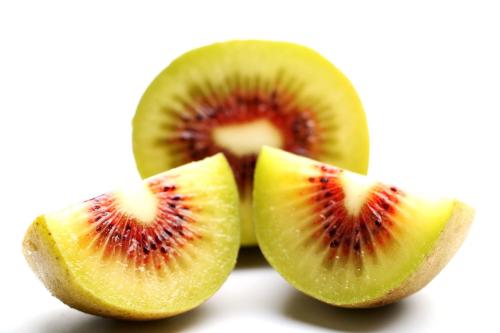
The main places of origin for red-fleshed kiwifruit include Dujiangyan in Sichuan, Shangyu in Zhejiang, Liupanshui in Guizhou, Xixia in Henan, and other places. Among these, Pujiang in Sichuan has the largest planting area and the highest degree of standardized management, and can be said to have caught up from behind; the red-fleshed kiwifruit grown here is relatively authentic.
In Sichuan Province, areas such as Cangxi County and Pujiang County also widely cultivate kiwifruit, mainly yellow-fleshed and red-fleshed varieties.
Where is red-fleshed kiwifruit suitable for growing?
Kiwifruit can generally be grown from 300-1900 m, and whether a site is suitable should be judged according to microclimate characteristics. The soil should preferably be deep, fertile, well aerated sandy soil with the groundwater level below 1 m, high organic matter content, and a pH of 5.5-6.5, slightly acidic. Strongly acidic or alkaline soil needs to be improved before cultivation. Be careful to choose a warm place. Kiwifruit varieties like a semi-shaded environment, but they have different light requirements at different developmental stages. The seedling stage prefers shade and avoids direct strong light, and when transplanting seedlings, shading and moisture conservation are even more necessary (during the seedling stage, corn can be intercropped; although growing corn is not profitable now, the kiwifruit seedlings grow better). Mature trees, especially during the flowering stage, need light. It is a fruit tree with moderate light preference and generally requires 1300-2600 sunshine hours. It likes diffuse light and avoids direct strong light, and the suitable natural light intensity is 42%-45%.