- 网站首页
- Flowers & Gardening
- A handful of clay sold for 300 yuan, and 10 years later it multiplied 120 times
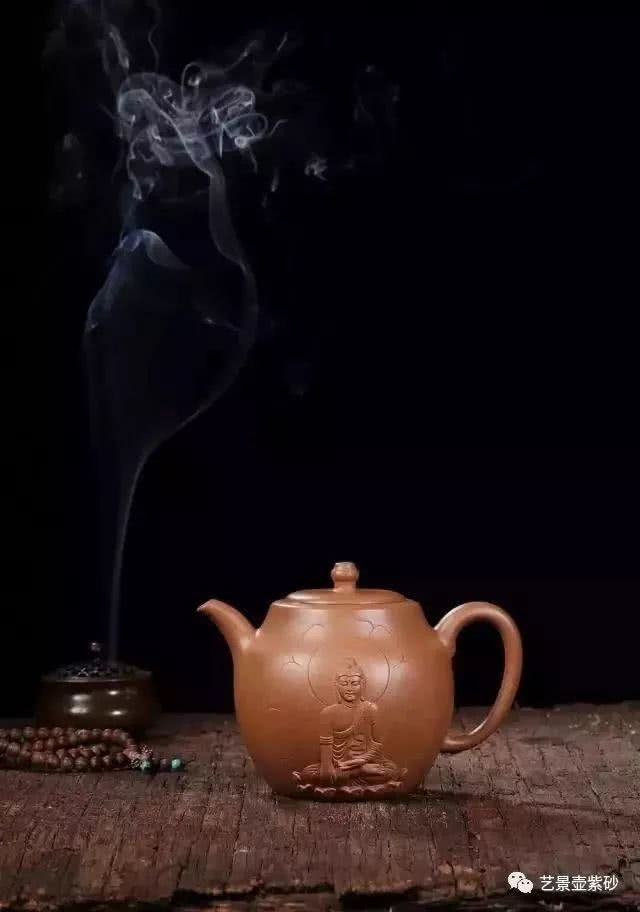
A lump of clay,
a thousand forms.
Zisha
curling sandalwood incense,
a jade Buddha in meditation,
a plump teapot body,
lifelike reliefs.
As if recalling a distant yesterday.
A handful of zisha clay, a bowl of cold clear spring water; then through those artistic hands, refined and carved again and again, delivered to the fierce fire, and transformed into a zisha teapot of flawless natural beauty, as if made by the hand of heaven itself!
Having passed through [metal, wood, water, fire and earth], a simple thing gains life and spirit; a treasure condensing the vicissitudes and hardships of history, culture, and the blood, tears and hearth smoke of the ancients, stands out and comes into being.
[The old shopkeeper's monologue】:
Hello, I am the shopkeeper. I am someone who loves zisha, a craftsman who has made zisha teapots for most of his life.
I am getting on in years and my health is not good, so in recent years I no longer go to the workshop. Now I mainly run a genuine zisha teapot business; the mineral material is processed from authentic zisha from local mines. My children supply some brick-and-mortar stores in Yixing, and also help me sell through WeChat Moments.
I have always firmly believed that helping teapot lovers buy authentic, good zisha teapots is cultivating oneself and the heart, accumulating blessings and virtue. In addition, I hope to help everyone understand zisha and fall in love with it. Whether or not you choose our zisha teapots, I hope the zisha knowledge in the shop can help you choose and distinguish genuine zisha.
In ancient times, zisha was by no means an ordinary craft material; it carries the Chinese tradition of the unity of tea and Zen. Making zisha is not merely a skill, but a blessing and a devotion. Honestly speaking, I hope you choose my zisha works not just because of business, but because I cannot stand the current chaotic zisha market. The market is now flooded with many low-priced chemical teapots and mold-made teapots, which not only disrupt the market but also harm consumers' health. This is simply a desecration of zisha handicraft, a desecration of our ancestors.
Making teapots is for love, selling teapots is for a living. I never force a sale. Here you can buy the most genuine zisha and experience the most value-for-money zisha art!
Persistence: only making genuine Yixing zisha
Persistence: traditional handmade craftsmanship
The beauty of a zisha teapot takes many forms. To appreciate a zisha teapot, one must know how to "read the teapot" - so says the master [Lü Yaochen]. The teapot is like the person, the teapot speaks - the textural beauty of the zisha clay, the practical beauty of its function, the varied beauty of its forms, the unique beauty of its material, and the exquisite beauty of its craftsmanship all let the teapot artisan's temperament and cultivation be reflected in the work.
Each zisha teapot, deep and unsophisticated, elegant as a gentleman. Zisha people clearly treat zisha teapots as people, as old friends to keep company with.
After a thousand cups of tea, as you examine and fondle it, you will slowly discover certain small details you could not see at first, even small flaws revealing themselves. Yet you will not be angry, still less blame it; you will be glad to see that this "old friend" is a being of this world, not a god in the clouds.
As a noun, zisha is not the name of a substance. Unlike gold, silver, copper, iron, tin, wood or stone, there is no substance called zisha. Zisha is a customary term; the material nature of zisha is pottery. A zisha teapot is an old friend.
Everyone has their own tea-drinking habits and tea-drinking experience.
The famous scholar[Lin Yutang]once remarked: "As long as there is a teapot, the Chinese are happy wherever they go." Another of his famous sayings is: "Holding a teapot, the Chinese simmer life down to its most essential essence."
In terms of performance, the benefits of brewing tea in a zisha teapot can be roughly listed as follows:
1. It does not lose the original flavor of the tea; color, aroma and taste are all retained, making the tea leaves ever more mellow and fragrant.
2. The longer a zisha vessel is used, the more lustrous its body becomes, because the tea itself nourishes the teapot during the brewing process.
3. Zisha vessels have good resistance to sudden temperature changes; they can be put on a fire and can also be used in a microwave without cracking.
4. When brewing tea in a zisha teapot, it is not easy to burn your hand when lifting or holding it. The linear expansion coefficient of a zisha teapot is slightly higher than that of a porcelain teapot, and since there is no glaze, there is no problem of body-glaze stress; after firing, a zisha teapot has very little glassy phase and has enough ability to overcome the sudden changes caused by temperature differences, so it conducts heat slowly.
A zisha teapot has excellent ability to adapt to sudden hot and cold changes; even after being steamed at a high temperature of over a hundred degrees and then quickly plunged into sub-zero ice and snow, it will not crack.
5. The body can absorb the aroma of tea. With a zisha teapot that is often used for brewing tea, even if no tea leaves are added occasionally, the water still has a tea fragrance.
6. The clay color of a zisha teapot is related to the tea often brewed in it. When brewing black tea, the teapot will change from reddish-brown to red-brown; when green tea is often brewed, the teapot will change from reddish-brown to brownish-brown. The teapot's color is rich in variation and gives much food for thought.
7. Yixing zisha has very good plasticity and is not easily deformed when fired in the kiln, so it can be freely formed into all kinds of shapes, allowing the flower-ware and ribbed designs of zisha vessels to form systems of their own.
8. When brewing tea in a zisha teapot, the heat is retained for a long time. Because there are many small bubbles inside the teapot wall, and the bubbles are filled with still air, and air is a poor conductor of heat, the zisha teapot has good heat-retention performance.
9. When brewing tea in a zisha teapot, the tea fragrance is rich and lasting. The zisha teapot has a small spout and a tight-fitting lid, and the inner wall of the pot is relatively rough, which can effectively prevent the aroma from escaping too early. A zisha teapot used for a long time has a layer of brownish-red tea scale on its inner wall; the longer it is used, the more tea scale accumulates on the inner wall, so after brewing tea the liquor becomes even more mellow and fragrant. With a long-used zisha teapot, even if no tea leaves are added and only boiling water is poured in, the tea fragrance is still enticing, which ordinary tea utensils cannot achieve.
10. It can preserve the aromatic oils in tea leaves that volatilize when heated to form a fragrant aroma, increase the late-stage acidity of the tea liquor, and play an astringent and sterilizing role. Thus it can slightly delay the tea water from becoming moldy and turning sour, the so-called "keeping overnight in the height of summer without turning sour."
[Zisha teapot culture】
One very important reason why zisha teapot art originated, developed and became famous in Yixing is its unique, high-quality zisha clay, renowned throughout the world.
There are many places that produce zisha, so why are Yixing zisha teapots so famous? It is not only because of exquisite craftsmanship and generations of masters. The real reason is still that the zisha produced in Yixing is of excellent quality with a high iron content; after firing into vessels, it has good water absorption and air permeability, and when used to brew tea, the color, aroma and taste are all excellent.
Therefore, the first criterion for judging whether a teapot is good is to look at the clay material and see whether it is authentic Yixing original-mine zisha.
The beautiful small city of Yixing carries the dreams of teapot makers; it is both livelihood and love. Rather than making teapots, it is passing down a craft...
Thanks to nature's gift, using her countless wounds to create wealth for the human world. The pottery capital is proud because of zisha, and Yixing is proud because of you.
Locally, families of teapot makers all have the habit of storing clay. Because to make a good teapot you need good material, and good material, besides weathering, also needs about 3 years of aging, so our family has always kept a lot of mineral material and many well-aged fine materials. Our teapots are made from these old family-stored materials, guaranteeing genuine zisha and rejecting chemical materials.
I sincerely thank everyone for your continued attention and support. I will certainly dedicate better "zisha teapots" to everyone!
[The old shopkeeper's heartfelt words】
1. Persist in selling genuine zisha
From the day I began learning the craft, I have carefully followed the teachings of my father and ancestors, persisting in selling genuine zisha and never selling fakes to seek exorbitant profits. A craftsman should cherish his reputation as much as he cherishes life.
2. Persist in selling good goods
A good zisha teapot mainly depends on two aspects: first, good material; second, good craftsmanship. And the quality of craftsmanship mainly depends on the craftsman's mindset. "Slow work produces fine results"; slowness is also an attitude. In pursuit of perfect craftsmanship, we must pay more in time costs. I believe people who truly understand zisha will appreciate this attitude.
3. Persist in telling the truth
Regarding the question of products and prices, this old man does not quite agree with the saying "good goods are not cheap," especially in the zisha industry. Many zisha teapots double in price once they are given the titles of "senior craftsman" and "pure handmade," but the fact is that many friends are cheated. The original intention of running this shop is to restore the true price of zisha.
The old shopkeeper's six-step appraisal method. I hope all teapot lovers can buy genuine handmade zisha teapots at fair prices!
Six-step appraisal method
1. Look:
A genuine zisha teapot has fresh, rounded texture, a matte visual effect, and many evenly distributed fine particles resembling metallic luster (zisha particles). Some handmade teapots have radial lines on the inner wall extending from a central dot outward, formed during the processing. Zisha teapots imitated with ordinary pottery clay have dull color and rarely any luster, and the inner wall also has no radial lines (this is called the "pushing the wall and scraping the bottom" technique).
2. Touch:
A genuine zisha teapot feels fine and smooth to the touch but not slippery; a fake zisha teapot feels rough or slippery. For example, ordinary pottery clay feels rough, while porcelain feels slippery at first touch, but if you press and rub with a little force it feels astringent. This is a manifestation of different molecular structures.
3. Turn:
Turn the lid. A genuine zisha teapot's lid turns flexibly and smoothly, emitting a slight "si si" or "sha sha" pleasant sound; a fake "zisha teapot" of pottery clay emits a dull "chi la chi la" sound. Porcelain feels astringent when turned.
4. Listen:
Tap the teapot body lightly with the lid. Although some people disapprove of doing this, it is very effective. A genuine zisha teapot gives a crisp, pleasant sound, brief, and the sound stops immediately when tapping ends; an ordinary pottery-clay fake zisha teapot gives a dull, thick, brief sound; porcelain gives a sound crisper than zisha, a bit like the sound of metal striking, which ordinary people find hard to distinguish. But one very obvious difference is that porcelain's sound wavelength is obvious, and after tapping ends the sound still continues for several milliseconds, whereas genuine zisha stops immediately.
5. Certificate:
Generally, genuine zisha teapots come with a handwritten certificate by the maker. The certificate is usually on xuan paper, written with a brush, with elegant calligraphy, because calligraphy is a required course for a good craftsman. The value appreciation of a good zisha teapot is more reflected in the skills of calligraphy and painting, with a seal affixed. The signature on the seal matches the signature on the bottom of the zisha teapot.
6. Pouring water:
When water is poured onto a genuine zisha teapot, it does not form obvious droplets; the water spreads fairly evenly, and then before long it is gradually absorbed by the zisha. This is related to the porous physical structure of zisha; zisha has a water absorption rate of 2%. But when water is poured onto pottery-clay fake zisha and porcelain, obvious raised droplets remain until they finally air-dry.
Opening and nurturing a zisha teapot
[Opening the teapot]
Rinse the newly bought zisha teapot inside and out once to remove surface dust, then put it into an oil-free pot, add water and tea leaves, bring to a boil over gentle heat, then simmer over low heat for 2 hours. Please note not to use poor-quality tea leaves; it is best to use the same tea you will brew in the future. After slowly cooling for 2 to 3 hours, take it out, rinse with clean water, and place it in a ventilated place to dry in the shade. In this way the teapot initially gains moisture and luster, and the earthy smell and fire qi are removed.
[Nurturing the teapot]
A truly good teapot with only good clay, good craftsmanship and a good mark is still not enough; it must also be "nurtured" and "fondled" so that the teapot's internal structure changes, making the body finer, smoother and softer, glowing with spirit, warm and moist as fine jade.
1. Dedicated teapot for dedicated use, one teapot serving one tea
Because zisha's body structure is rather special (double-pore structure, molecules arranged in scales), it can adsorb the infused substances from tea liquor (the water absorption rate of zisha teaware is 1.6%-7.05%), prompting changes in the body and also releasing the aroma of the tea brewed. After a new zisha teapot has been "opened" and maintained, and its earthy smell removed, try it with several kinds of tea. According to your own preference, finally decide which tea this teapot will brew, and thereafter never change it, achieving "dedicated teapot for dedicated use, one teapot serving one tea."
2. Wipe frequently
During the tea-brewing process, wipe the teapot body with a cotton wet tea towel carrying the brewed tea liquor; this can effectively help the teapot become clean and tidy. Frequently receiving the nourishment of a little tea liquor can prompt changes in the teapot's body material. Note that when wiping with a tea towel, do it carefully and do not rub too hard. For teapots with certain "work" curves and a "drooling" shape, be careful to wipe the tea liquor from the lower part of the spout in time, so as to avoid defects in the overall "patina" of the teapot caused by long-term poor maintenance. Carefully wipe the joints of the spout and handle, the inner rim and outer edge of the lid, the knob and other joints; these "out-of-the-way places" easily accumulate dirt and will affect the overall maintenance effect of the teapot.
Generally speaking, every time we newly open a teapot, we announce it on WeChat, so please pay timely attention. For some special models, we do not make them often, so we cannot guarantee they are in stock in time. If you need one, please consult or reserve in advance by WeChat or phone.
Spring Breeze Ravine Water Art Scenery Teapot, together we drink a cup of hidden-orchid fragrance.
Welcome to follow Yijing Teapot Zisha. We will share zisha information with you as soon as possible (clay material, craftsmanship, teapot shapes, production process). I hope you can add my WeChat to exchange and appreciate together!
Friends are welcome to appreciate teapots and exchange ideas together!
May all teapot lovers find the zisha teapot they love!
The advertising content is provided by the manufacturer, and this platform assumes no responsibility!
- 请使用count标签查询 Industry News
- 请使用count标签查询 Agricultural Machinery
- 请使用count标签查询 Edible Gardening
- 请使用count标签查询 Grain Crops
- 请使用count标签查询 Fruit Tree Cultivation
- 请使用count标签查询 Flower Cultivation
- 请使用count标签查询 Macadamias
- 请使用count标签查询 Agricultural Products
- 请使用count标签查询 Pests & Diseases
- 请使用count标签查询 Flowers & Gardening
- 请使用count标签查询 Soil & Composting
- 请使用count标签查询 Vegetables
- 请使用count标签查询 Agricultural Technology
- 请使用count标签查询 Growing Techniques
- 请使用count标签查询 Succulents
- 请使用count标签查询 Agriculture Encyclopedia
- 请使用count标签查询 Flowers
- 请使用count标签查询 Plants
- 请使用count标签查询 News
- 请使用count标签查询 Birds
- 请使用count标签查询 Policy
- 请使用count标签查询 Fertilizer
- 请使用count标签查询 Pesticides
- 请使用count标签查询 Nursery Stock
- 请使用count标签查询 Mushroom Cultivation
- 请使用count标签查询 Medicinal Herb Cultivation
- 请使用count标签查询 Fodder & Green Manure
- 请使用count标签查询 Livestock Farming
- 请使用count标签查询 Apple Cultivation
- 请使用count标签查询 Coffee Cultivation
- 请使用count标签查询 Organic Farming
- 请使用count标签查询 Avocados
- 请使用count标签查询 Green Manure
- 请使用count标签查询 Orchids
- 请使用count标签查询 Livestock Farming
- 请使用count标签查询 Melons & Fruits
- 请使用count标签查询 General News
- 请使用count标签查询 Watermelons
- 请使用count标签查询 Oranges
- 请使用count标签查询 Wax Apples
- 请使用count标签查询 Tomatoes
- 请使用count标签查询 Strawberries
- 请使用count标签查询 Pears
- 请使用count标签查询 Cherries
- 请使用count标签查询 Passion Fruit
- 请使用count标签查询 Mangoes
- 请使用count标签查询 Dragon Fruit
- 请使用count标签查询 Blueberries
- 请使用count标签查询 Pepino Melons
- 请使用count标签查询 Pomelos
- 请使用count标签查询 Lychees
- 请使用count标签查询 Bird's Nest Fern
- 请使用count标签查询 Bananas
- 请使用count标签查询 Pothos
- 请使用count标签查询 Pineapples
- 请使用count标签查询 Figs
- 请使用count标签查询 Koi
- 请使用count标签查询 Lemons
- 请使用count标签查询 Cacti
- 请使用count标签查询 Muskmelons
- 请使用count标签查询 Goji Berries
- 请使用count标签查询 Sugarcane
- 请使用count标签查询 Soybeans
- 请使用count标签查询 Rice
- 请使用count标签查询 Cyclamen
- 请使用count标签查询 Peaches
- 请使用count标签查询 Jujubes
- 请使用count标签查询 Sugar Apples
- 请使用count标签查询 Plums
- 请使用count标签查询 Wampees
- 请使用count标签查询 Waxberries
- 请使用count标签查询 Longans
- 请使用count标签查询 Custard Apples
- 请使用count标签查询 Guavas
- 请使用count标签查询 Kiwis
- 请使用count标签查询 Grapes
- 请使用count标签查询 Mulberries
- 请使用count标签查询 Plant Pests & Diseases
- 请使用count标签查询 Salaks
- 请使用count标签查询 Persimmons
- 请使用count标签查询 Starfruit
- 请使用count标签查询 Mint
- 请使用count标签查询 Mangosteens
- 请使用count标签查询 Durians
- 请使用count标签查询 Papayas
- 请使用count标签查询 Cilantro
- 请使用count标签查询 Sweet Potatoes
- 请使用count标签查询 Bitter Melons
- 请使用count标签查询 Chili Peppers
- 请使用count标签查询 Ginger
- 请使用count标签查询 Millet
- 请使用count标签查询 Pumpkins
- 请使用count标签查询 Herbs
- 请使用count标签查询 Peanuts
- 请使用count标签查询 Cauliflower
- 请使用count标签查询 Loquats
- 请使用count标签查询 Coffee Cultivation
- 请使用count标签查询 Winemaking
- 请使用count标签查询 Organic Tea Garden
- 请使用count标签查询 Tea
- 请使用count标签查询 Seed Industry
- 请使用count标签查询 Livestock Farming
- 请使用count标签查询 Aquaculture
- 请使用count标签查询 Specialty Farming