Passion Fruit Cultivation Techniques: Open-Field Overwintering and the Impact of Low Temperatures on Production
Do you like eating passion fruit? Want to know some cultivation techniques for it? Let's take a look together.
Sweet and tart with a uniquely distinctive flavor, passion fruit is deeply loved by consumers at home and abroad. Whether eaten fresh, made into juice, or even used in cooking, it is perfectly suited. In Taiwan, China, areas below 800 m in altitude with no frost damage in winter are all suitable for planting passion fruit. Ever-changing ways of eating it have driven market demand, and the production area has expanded accordingly, increasing by about 200 hectares in recent years; the average production area over the nearly 3 years from 104 to 106 (2015 to 2017) reached 663 hectares, with the main cultivation area being Puli in Nantou.
Low Temperatures and Open-Field Cultivation Affect Production
At present, the most common passion fruit variety is Tainung No. 1, whose main production season runs from late May to late January of the following year, so at the turn of spring and summer each year, fresh passion fruit is rarely seen on the market, and people mostly have to rely on jam.
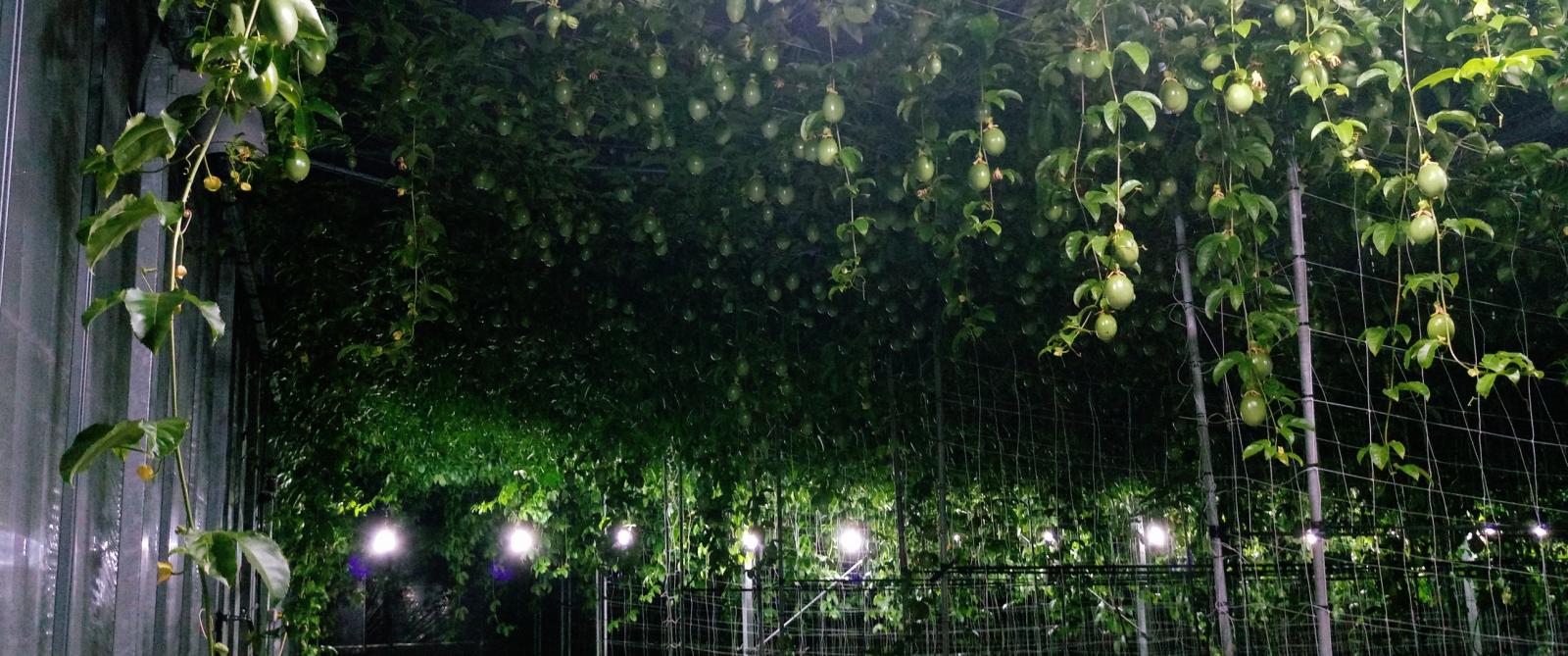
This difference occurs because, during the flowering period of passion fruit, temperatures of 20 to 30 degrees are most suitable, and the light duration is best at 11 hours or more per day. If the plant is affected by short-day conditions and low temperatures during growth, it will be unable to flower and fruit properly. In addition, the rapidly changing climate in recent years has multiplied the difficulty of open-field cultivation, making it not only prone to disease but also harder to manage fertilization.Greenhouse cultivation combined with lighting effectively overcomes the low-temperature obstacle.
Protected Cultivation Spreads Market Risk
The Taiwan Agricultural Research Institute integrated techniques such as lighting, rational fertilization management, pruning, and safe pest and disease control, and successfully developed a "low-temperature-season passion fruit production technique" in protected facilities. It not only overcomes the flowering obstacle caused by low temperatures and short-day conditions, but also reduces pests and diseases, producing safe and high-quality passion fruit.
In addition, more and more farmers are investing in protected cultivation. To avoid farmers concentrating on growing a specific crop item and causing subsequent production and marketing problems, short-term protected crops should pursue diversified crop rotation. Now that passion fruit has been added to greenhouse facility crops, it can help stabilize protected production and income.