How to prevent and control peanut southern blight? What is the best medicine to use
Southern blight, one of the diseases of peanut, causes severely reduced yields in affected peanuts, so how should it be prevented and controlled?
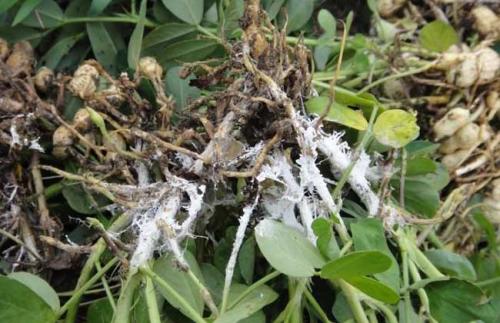
Symptoms: affected plants appear withered as if dehydrated, the stem at the soil line turns brown and necrotic, and is covered with a layer of white silky mycelium that can spread outward, forming radiating mycelial strands on the soil surface, and later forming many round brown sclerotia on the mycelium. Digging into the soil surface reveals that the affected pods have rotted, with white threads also seen twined around them. When southern blight fungus attacks, the mycelium secretes oxalic acid, lowering the surrounding pH to 2-3, and then uses enzymes to break down the host tissue cells, causing them to turn brown.
Disease ecology: this disease often occurs at the end of the spring crop or the beginning of the autumn crop, preferring hot and humid climates, and is less severe when the soil is neutral to alkaline. It often survives as sclerotia or on organic matter, and is not easy to remove.
Control methods: 50% dacronil wettable powder 2 grams; mix with the seed before sowing.
1. Use is limited to mixing with the seed before sowing.
2. Wear protective gloves when mixing the medicine and sowing.