Yuhebao Lychee Management Methods and Post-Harvest Handling Points
Post-Harvest Management Practices for Yuhebao Lychee
How should Yuhebao lychee be maintained after harvest? How can a good tree structure be established, and how should fertilizer be applied? Let's take a look together below.
1. Do a good job of pruning, cultivate strong fruiting branches, and establish a good tree structure.
2. Pay attention to fertilizer and water management, and suppress the sprouting of late shoots in autumn and winter.
3. Strengthen pest and disease control, protect the integrity of new shoot leaves to maintain tree vigor, etc.;
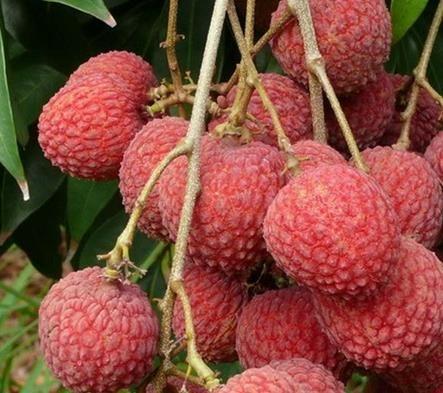
Three post-harvest management practices. The key points of the above management practices are briefly explained below.
1. Do a good job of pruning
The purpose of pruning Yuhebao lychee is to control tree height, adjust tree structure, improve the photosynthetic efficiency of leaves, avoid excessive vegetative growth caused by overly dense canopy branches shading each other, and improve the ventilation and light penetration of the plant, reducing the occurrence of pests and diseases.
If Yuhebao lychee is pruned early after harvest, new shoots will sprout earlier. By the low-temperature period in winter, because the growth period is longer, the branches are more mature and it is easier to suppress late shoot sprouting and produce flower spikes. Therefore, pruning work after harvest should be carried out early.
The amount of branch and shoot pruning can be adjusted according to the strength of tree vigor and the number of branches and shoots. Overly dense branches, pest- and disease-damaged branches, dead branches, crossing branches, and thin weak branches should be cut off, while overly long fruiting branches can be shortened to reduce unnecessary nutrient consumption. Branches near the center of the plant that are too upright or too high easily cause the canopy to rise, which is unfavorable for future management work, so the main branches in the central part can be sawed off to dwarf the tree structure.
2. Pay attention to fertilizer and water management
After the Yuhebao fruit is harvested, in order to restore tree vigor and promote rapid sprouting of new shoots to serve as fruiting branches for the following year, organic fertilizer can be applied as a gift fertilizer. After pruning, in order to promote the maturity of the third flush of new shoots between October and November and effectively suppress the sprouting of late shoots, as the number of shoot flushes increases, nitrogen fertilizer application should be reduced and phosphorus and potassium fertilizer application increased, so as to avoid stimulating late shoot sprouting in winter and affecting flower bud differentiation.
During the summer branch and shoot growth period, Yuhebao lychee needs a relatively moist soil environment to promote branch and leaf growth, while during the winter flower bud differentiation period it needs relatively dry soil conditions to suppress new shoot growth and promote flower bud formation. If soil moisture is too high, it will affect flower bud differentiation. Therefore, during the new shoot growth period after pruning, appropriate irrigation should be given. During the autumn and winter flower bud differentiation period, irrigation should be reduced, and water should be supplemented again only after flowering.
3. Strengthen pest and disease control
Because the inflorescences of Yuhebao lychee mostly emerge from the apex or leaf axils of mature branches produced in the previous year, during the summer new shoot sprouting period, the integrity of new shoot leaves should be protected, and lychee pest and disease control work should be monitored at all times to avoid damage to lychee new shoots, tender leaves, or trunks, which would affect nutrient accumulation in the plant, lead to weakened tree vigor, and result in poor flowering and fruiting. Common pests and diseases include lychee leaf miner, lychee erinose mite, leaf roller, lac insect, and citrus longhorned beetle, etc.
Now that so much information has been introduced, you should know what to do, right?