How to Grow Aloe Vera_Aloe Vera Growing Methods and Precautions
Detailed Care Methods for Aloe Vera:
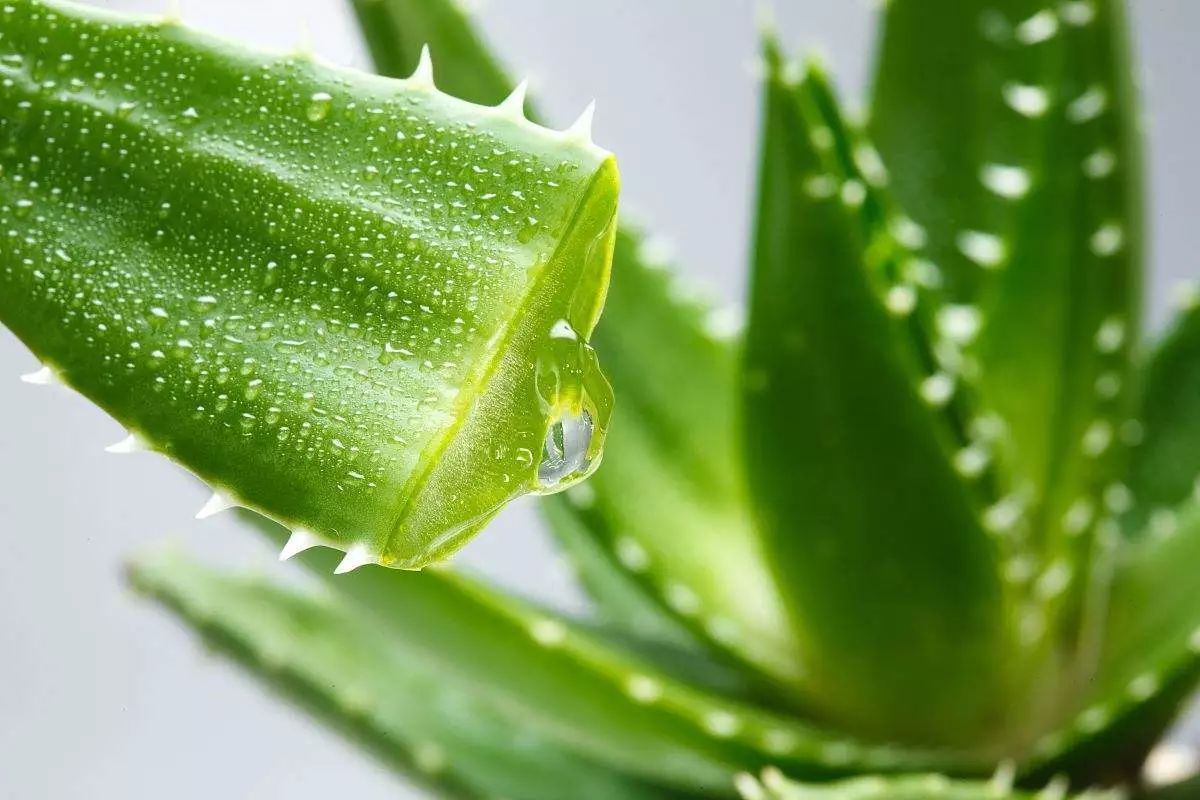
Aloe vera leaves are thick and fleshy, pure green or with markings, long and lance-shaped, with pointed tips, spiny or entire leaf margins, clustered on the stem in a spiral arrangement. Racemes emerge from the leaf rosette, growing upright, with pedicels taller than the leaves; the flowers are orange-red and very beautiful. Potted plants mostly bloom in autumn and winter. The capsule is triangular, splitting open when mature to reveal the seeds.
Aloe vera is native to South Africa and other places; it also grows wild in the Yuanjiang area of southern Yunnan in China. It likes warm, humid, sunny environments, and prefers loose, fertile, well-drained soil; it is tolerant of saline-alkali conditions. It is not cold-hardy; the indoor temperature in winter must not fall below 5°C, and the optimal growing temperature is 20-30°C. It has strong drought tolerance; during the growing period it should be kept slightly moist, and during dormancy it should be kept dry. It does not tolerate shade; in shaded environments it mostly will not bloom, while in full sunlight the leaves are beautiful and the flowers are abundant. Next, let us learn about how to grow aloe vera.
1. Choosing Flower Pots for Growing Aloe Vera
(1) Pot material requirements: Clay pots, plastic pots, porcelain pots, and ceramic pots can all be used.
(2) Pot size: Aloe vera can be planted in pots with a diameter of 14-20 cm.
2. Potting Soil Mix for Growing Aloe Vera
Aloe vera likes fertile, well-drained sandy soil and is relatively tolerant of saline-alkali conditions. At home, the following formulas can be used: garden soil : leaf mold : sand = 4:4:2; peat soil : leaf mold : sand : perlite = 4:3:2:1.
(1) Pot material requirements: Clay pots, plastic pots, porcelain pots, and ceramic pots can all be used.
(2) Pot size: Aloe vera can be planted in pots with a diameter of 14-20 cm.
3. Watering Methods for Growing Aloe Vera
Because aloe vera stems and leaves are rich in water, it does not have high water requirements. Aloe vera likes relatively dry soil, is drought-tolerant, dislikes waterlogging, and likes a dry air environment. After temperatures rise in spring, aloe vera resumes growth, and the water supply can be slightly increased; the potting soil should preferably be moist but leaning dry. In summer, keep the potting soil moist, and water alternately dry and wet; at the same time, because aloe vera likes a dry air environment, it should be placed separately from other plants that like humid air.
In autumn, keep the potting soil on the dry side; as temperatures gradually cool in autumn, reduce the water supply until it remains dry but not parched. In winter and early spring, when temperatures are relatively low (above 5°C), aloe vera is in a semi-dormant state, so it should not be watered much; it is best for the potting soil to be dry but not parched, and only water lightly after it has dried out completely.
4. Fertilizing Methods for Growing Aloe Vera
Aloe vera does not have high fertilizer requirements, but a lack of fertilizer is also not good for its growth.
During the peak growing season, apply 4-5 rounds of decomposed 20-fold liquid fertilizer, or 1 application of 1000-fold "Huaduoduo" general-purpose fertilizer.
If a sufficient amount of base fertilizer is applied at planting time, no fertilizing may be needed during the growing season. Decomposed soybean cake fertilizer and other organic fertilizers can be used as base fertilizer. The application rate of base fertilizer is 1/10 of the potting soil.
In the warm spring growing season each year, apply liquid fertilizer 3-4 times; do not fertilize in summer and autumn, otherwise the stem nodes will become too long, the leaves will be sparse, and the plant will easily lodge.
5. Light Requirements for Growing Aloe Vera
Aloe vera likes light; in spring and autumn, receiving more direct sunlight makes it grow robustly. In summer, placing it in a well-ventilated semi-shaded spot is more favorable for its growth. In the north, after autumn it should be moved indoors for care, placed in a sunny spot on the windowsill; in winter, place it indoors in a well-lit place with a room temperature not lower than 10°C.
6. Precautions for Growing Aloe Vera
(1) Aloe vera grows relatively quickly, so it should be repotted once every year in spring when it is moved outdoors. The potting soil can be a growing medium mixed from 3 parts leaf mold, 3 parts garden soil, and 4 parts river sand, or 3 parts leaf mold, 2 parts garden soil, 3 parts river sand, and 2 parts perlite, with a small amount of fully decomposed chicken manure, bone meal, oil residue, and other organic fertilizers added as base fertilizer.
(2) If the growing medium is changed once a year, when nutrients are sufficient, no topdressing or only a small amount of topdressing may be needed during the growing period. Growth is fastest in summer and autumn, so a thin liquid fertilizer can be applied once every 15-20 days. For example, apply 10%-15% fully fermented and decomposed cake fertilizer water, or 0.1% urea fertilizer water plus 0.1% potassium dihydrogen phosphate fertilizer water, etc. No fertilizing is needed in winter and spring.
(3) Summer is the peak growing season for aloe vera, so attention should be paid to the supply of water and fertilizer. When sunlight is strong, the midday light should be appropriately shaded. Aloe vera should not be grown together with moisture-loving plants. When it is blooming, it is enough just not to let the soil become overly dry.
(4) In autumn, ensure sufficient light and water appropriately. Aloe vera is not cold-hardy; after temperatures drop, it should be moved in time to a sealed balcony or room with light, and attention should be paid to controlling water so that the potting soil remains dry but not parched.
(5) Aloe vera needs sufficient sunlight to grow; note that newly planted aloe vera should not be exposed to the sun, and it is best to let it see sunlight only in the morning, then gradually increase the light after 10 days. For home potted plants, placing them on a balcony or outdoor windowsill in spring and autumn to receive direct sunlight makes them grow robustly; in summer, move them to a well-ventilated semi-shaded spot; in winter, place them indoors in a place with sufficient light, preferably with a room temperature not lower than 10°C.
(6) Aloe vera requires sufficient sunlight year-round. In spring, it is best to move it outdoors, place it on a south-facing balcony, or put it on a south-facing windowsill, but avoid rain. Although aloe vera does not like being too wet, during the growing period, especially under strong light, it needs sufficient water. If you want to encourage the plant to spread out in all directions, you can evenly cut away some of the leaves that are too densely packed in the center; doing so also prevents the plant from developing mildew and rot under strong light due to excessive leaf density.
7. Propagation Methods for Growing Aloe Vera
Aloe vera can be propagated by division or cuttings.
Division propagation can be carried out together with repotting in early spring. The method is to knock the plant out of the pot, remove the old plant, and select small offsets growing from the base to pot separately; the planting depth should be just enough to stabilize the seedling, water sparingly, and place the divided seedlings in a warm, humid place. On the premise of ensuring the plant does not wilt, spray water on the leaf surface and the surface of the potting soil after 4-5 days, then water thoroughly after another 10-15 days.
Cuttings can be taken between April and May. Cut a leaf about 8-10 cm long from the top of the old plant as a cutting, coat the cut end with plant ash, let it dry for 1-2 days, then insert it into plain sand after the cut end has shrunk and dried, keep the potting soil moist, and it will root in about 20-30 days.