-

How to Grow Crown of Thorns (Euphorbia milii) for Thriving Growth: A Detailed Guide to Planting Methods
A detailed introduction to the planting methods and care techniques for Crown of Thorns (Euphorbia milii), including how to grow it, soil mix, light and watering, propagation methods, fertilizing and pruning, pest and disease control, and other practical information.
-
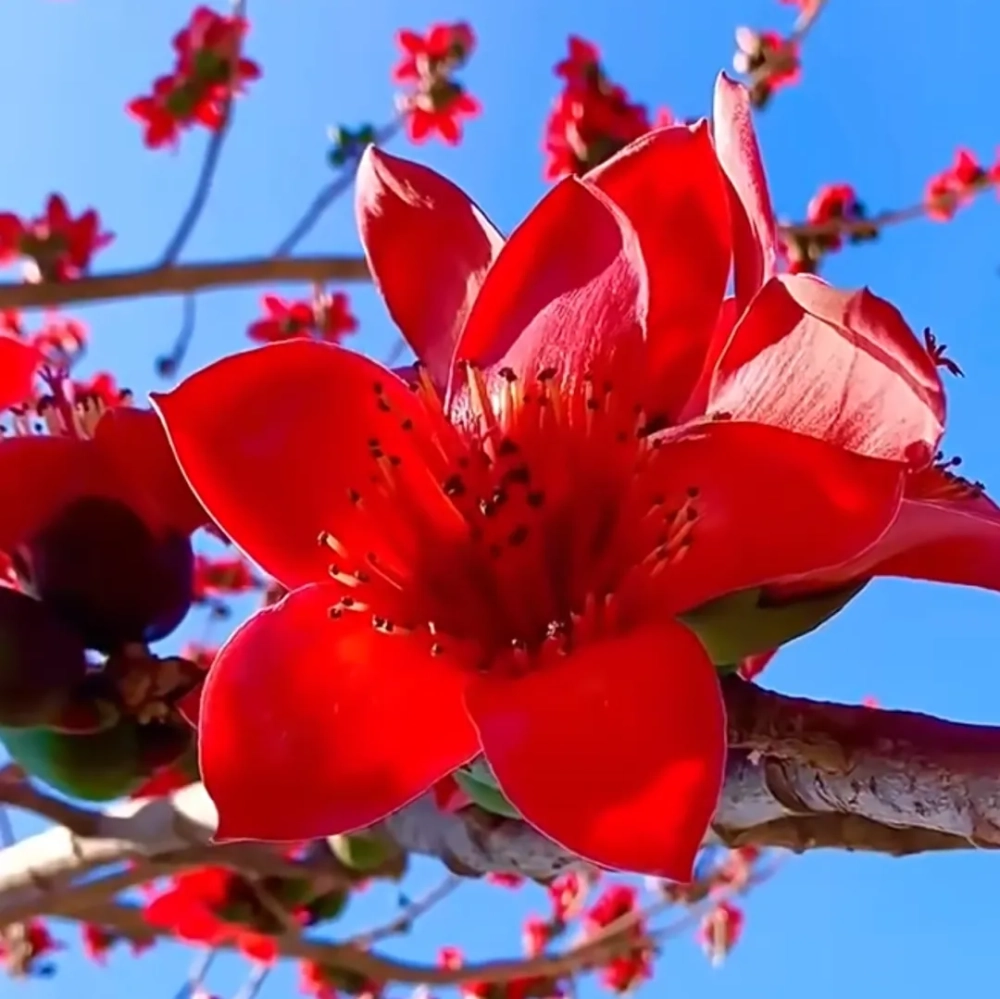
Why does the Chorisia speciosa have thorns?
Hello everyone. Today, I'm going to introduce the Chorisia speciosa in detail. The Chorisia speciosa, also known as Ceiba speciosa, is a deciduous tree in the
-

Detailed Explanation of Why the Silk Floss Tree Has Thorns and Its Blooming Time
Hello everyone, today I will give you a thorough introduction to the silk floss tree. The silk floss tree, also known as the beautiful silk floss tree, beauty tree, or wine bottle silk floss tree, is a deciduous tree in the Malvaceae family, genus Ceiba. It is native to Brazil and Argentina in South America, and later widely cultivated around the world, especially in Guangdong, Guangxi, Fujian, Hainan and other places in our country. The silk
-

Can Crown of Thorns be kept indoors? Master these methods and it will be easy to grow
Among the vast sea of flowers, one evergreen herbaceous plant is undoubtedly the most popular, and that is Crown of Thorns, also called Christ Thorn by some flower shop owners. After it blooms, the flowers are small and exquisite; as for flower color, most of the time it has bright red bracts and small yellow flowers, like gems set among green leaves, making people fall in love with it. In addition,
-

When is the best time to propagate Crown of Thorns by cuttings for a high survival rate? A detailed explanation of its flower meaning
Crown of Thorns (Euphorbia milii) is a sprawling shrub native to Madagascar, Africa, and is now widely cultivated in tropical and temperate regions. Its stems are much branched, with longitudinal ridges, densely covered with hard, sharp, cone-shaped spines. The leaves are alternate, usually clustered on young shoots, obovate or oblong-spatulate. Its flowers are small and brightly colored, commonly red
-
Is Crown of Thorns (Euphorbia milii) Poisonous? Can You Grow It Indoors? Growing Methods and Precautions
Crown of Thorns, also known as Iron Begonia, Qilin Thorn, and Qilin Flower, is a sprawling shrub plant. Crown of Thorns is a common plant for decorating the home. It is easy to care for, and in winter and spring it blooms with small flowers. Although the flowers are small, their colors are brilliant. Below, the editor will introduce
-
Golden Euphorbia (Crown of Thorns) Market Potted Plant Prices, Feng Shui Placement, and Quick-Growing Care Tips
Golden Euphorbia is a thick succulent plant and one of the most primitive groups among cactus plants, native to the Americas. Because it closely resembles the kylin of ancient Chinese legend, we Chinese call it Jade Kylin. Because the thorns on the plant reflect
-
Is Crown of Thorns Poisonous or Carcinogenic? A Detailed Guide to Household Care Precautions
Crown of Thorns (Euphorbia milii), also commonly known as iron begonia, has both the resilience of plum blossom and the charm of begonia. Its flowering period is very long, and with proper care it can basically stay in bloom all year round, making it a relatively popular flower in recent years. However, there is also quite a bit of controversy surrounding
-
Is the Crown of Thorns (Euphorbia milii) Poisonous? Causes of Yellow Leaves and How to Fix Them
Green plants have always been common in our lives, and every variety has its own fans. The Crown of Thorns (Euphorbia milii) is also quite distinctive. As a shrub native to the tropics, the Crown of Thorns has a lot of character both when it is not blooming and when it is in flower, with strong ornamental value, and unlike other green plants,
-
How to Grow and Care for Crown of Thorns
Plum blossoms are divided into many kinds; today we would like to introduce the crown of thorns. Let us take a look at how to grow the crown of thorns! 1. How to grow the crown of thorns When growing the crown of thorns, sandy loam is the best choice; it can be made by mixing leaf mold or peat soil with sand and fertilizer. Giving it enough light conditions is the only way for it to grow better, especially during the flowering period, when the light conditions must be maintained well. Watering and fertilizing do not need to be too much. Note that the whole plant is poisonous, so avoid eating it by mistake.
条件筛选