-

-
High-yield cultivation technique for three successive crops intercropped in jujube orchards
The jujube tree (Ziziphus jujuba) has relatively strong growth adaptability and is a tree species that prefers warmth and light. When the spring temperature reaches 13-15°C, it begins to sprout branches; when the monthly average temperature is above 17°C, flower buds begin to differentiate; when it is above 2O°C, it flowers; the suitable temperature for fruit ripening is 18-22°C; when the temperature drops to 15°C, it begins to shed leaves. Because of its characteristics of late sprouting, early leaf fall, and little shading, it is suitable for intercropping with grain, cotton, and vegetables, and the economic benefits are very considerable. The following introduces the high-yield technique for interplanting three successive crops in one year in a jujube orchard. 1. Key points of jujube cultivation techniques
-
Key Production Technology Points for Flat-Bed Cultivation and Successive-Generation Cultivation of the Elm Oyster Mushroom (Pleurotus citrinopileatus)
The elm oyster mushroom (Pleurotus citrinopileatus), due to its strong growth vigor, good stress resistance, ease of cultivation and promotion, and high biological efficiency, has very broad development prospects in Shandong Province. Shandong Province is a major cotton-growing province, and in recent years the cotton planting area has risen sharply, with cottonseed hulls being of high quality and low price. The following is an introduction to the production technology for cultivating the elm oyster mushroom using cottonseed hulls as the main substrate, employing fermented substrate flat-bed cultivation and successive-generation cultivation. I. Spawn Production 1. Spawn Selection Select strains with strong growth vigor, good stress resistance, high and stable yields, and a broad temperature adaptation range, such as Yuhuang-1 and Yuhuang-2. The mycelial growth temperature is 5-35 degrees, with 20-30 degrees being suitable; the fruiting body differentiation and growth temperature is 10-30 degrees, with the optimum temperature being 8-25 degrees. It is tolerant to carbon dioxide. Under conventional cultivation, the biological yield can reach 150%, and under successive-generation cultivation, the conversion rate can reach 200%. It is an excellent strain suitable for cultivation in Shandong Province.
-
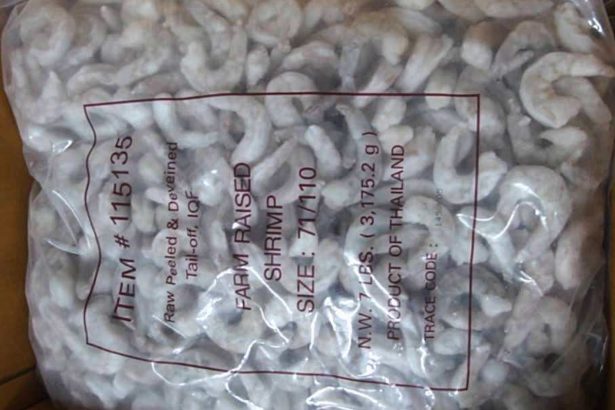
Raw shrimp, avocados, strawberries, blueberries: Costco hit by successive findings of carcinogens and cadmium and pesticide levels exceeding limits
Costco keeps slipping up! Raw shrimp test positive for carcinogens, avocados exceed cadmium heavy metal limits, strawberries and blueberries exceed pesticide limits
-
Nine Major Trends of the New Land Reform in the Context of Urbanization
Every successive land reform has had a significant and far-reaching impact on China. The "new land reform" can be said to be difficult to understand and equally difficult to carry out. The existing land system has already formed a self-circulating, self-reinforcing pattern of interests and development inertia. Breaking this cycle is by no means the work of a single day. It requires both
-
Extreme weather strikes multiple regions in succession, threatening food security
El Nino continues to wreak havoc. Frequent extreme weather events in many places have already begun to affect grain production and sales. Reporters learned that due to drought or flooding, several major staple crops have been affected to varying degrees in various producing areas. In western Hunan and areas south of central Hunan
条件筛选