-

What to Do About White Fruit Disease in Mulberries? A Detailed Guide to Prevention and Control Methods
Mulberry white fruit disease is the common name for sclerotinia disease and is the main disease of mulberry fruit. When the disease is severe, it can cause a complete loss of the mulberry fruit harvest. The pathogen is Sclerotinia sclerotiorum. The primary sources of infection for sclerotinia disease are mainly soil mixed with sclerotia, diseased residual branches and fallen leaves, and compost. Under suitable temperature and humidity
-
What are the control methods for sclerotium disease in hyacinths?
[Symptoms] It affects leaves and bulbs and is a common disease of hyacinths. Infected plants are stunted and slow to develop. The leaves of diseased plants are grayish yellow; as the disease progresses, the leaves gradually wither and detach very easily from the bulb; the interior of affected bulbs becomes discolored and rots to varying degrees, with white mycelium forming inside
-
Symptoms and Control Methods of Tulip Bulb Rot Caused by Sclerotium tuliparum
Symptoms: The disease affects tulip seedlings and bulbs. In the early stage of the disease, the outer scales of the infected bulbs develop soft rot, and many white silky mycelial strands grow on the diseased parts and the nearby soil surface. In the later stage of the disease, many sclerotia form. The sclerotia are round or irregular in shape, initially white, later turning brown to black, with a lighter interior color and tightly packed tissue. After seedlings are infected, the small leaves die as soon as they emerge. Pathogen: The pathogen is Sclerotium tuliparum Kleb, belonging to the Deuteromycotina, Hyphomycetes.
-
Symptoms of Tulip Sclerotium Rot and Its Control Methods
Tulip Sclerotium Rot, caused by a pathogen belonging to the genus Sclerotium of the fungi imperfecti, mainly affects seedlings and bulbs. After seedlings are infected, the leaflets wither and die as soon as they emerge. When bulbs are affected, the outer scales develop soft rot, and many white silky hyphae appear on the diseased parts and the nearby soil surface, later forming many rapeseed-like sclerotia. Subsequently many sclerotia form; the sclerotia are initially white and later turn brown. Disease pattern: This disease spreads via hyphae and sclerotia; the sclerotia overwinter in the soil, and under conditions of high temperature and high humidity, the disease occurs severely. Control: a. Storage
-
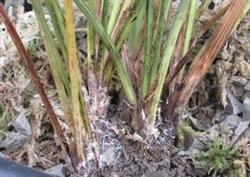
How to prevent and control orchid sclerotium disease (southern blight)
[Symptoms] The disease starts near the soil line of the orchid plant, initially appearing as water-soaked wet rot, then turning brown to dark brown rot, spreading to the middle and upper parts of the leaves, which also turn brown or grayish-brown and necrotic; in severe cases, the entire plant's leaves wither and die. Once one orchid clump is infected, all the tiller plants in the same pot are affected. When examining the necrotic surface of diseased plants and the soil surface, white...
-

-
条件筛选