-
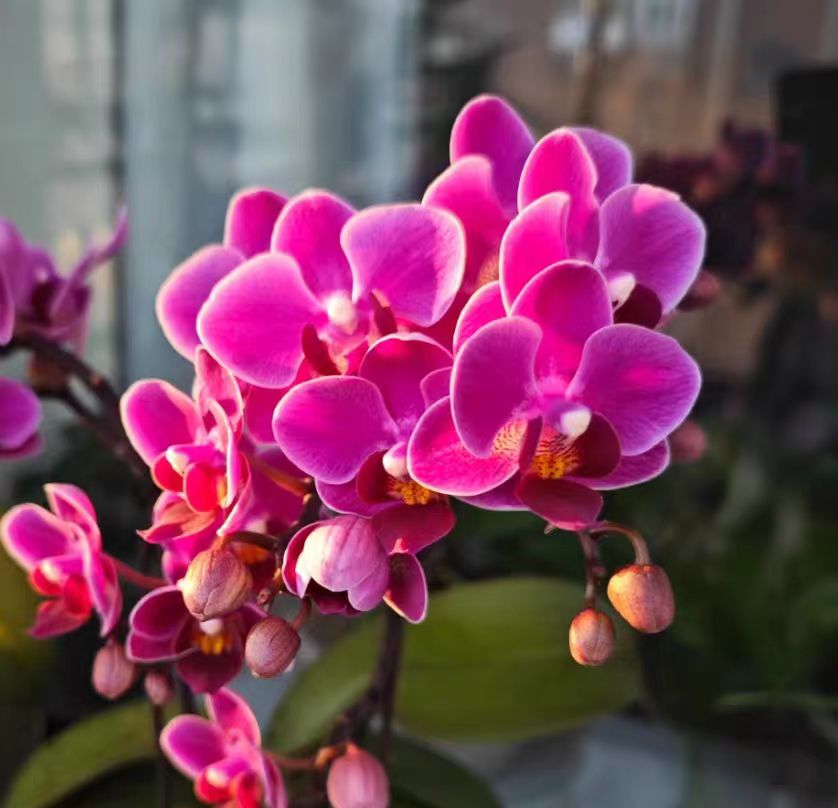
How should Phalaenopsis be pruned when it is replanted?
When it is necessary to replant Phalaenopsis or when you expect it to bloom again, proper pruning is of vital importance. This is not only related to the
-

The Latest Cultivation Technique and Method Tutorial for Replanting Welsh Onions after Spring Wheat
Yield and output value Welsh onions generally yield 2000-4000 kg per mu, with an output value of 400-800 yuan per mu. Main cultivars Zhangqiu onion, Linbang onion. Cultivation points ①Select fertile soil with irrigation and drainage conditions on high, dry plots for raising seedlings. ②Raise strong seedlings and transplant at the right time. Sow and raise seedlings in early to mid-March, with a sowing rate of
-
Detailed Explanation of the Causes and Control Measures of Replant Disease in Orchards
In orchard cultivation, pest and disease control is one of the most critical aspects, and a common disease in orchards is replant disease, which refers to the phenomenon where the same piece of land is planted with fruit trees and then continuously planted with the same type of fruit trees, causing the growth of replanted fruit trees to be inhibited or pests and diseases to recur. So how should replant disease in orchards be controlled? Let's take a look together.
-
Are narcissus flowers and their bulbs toxic, can they be grown indoors, and can they be replanted after blooming?
Narcissus is one of China's top ten famous flowers, a fine offering in Chinese folk tradition, popularly known as the "fairy on the waves." Every New Year, people like to display narcissus in clean water as a festive holiday flower. So, are narcissus flowers and their bulbs toxic? Can they be grown indoors? Can they still be planted after blooming?
-
Detailed Explanation of Corn Replanting Methods and Precautions
Missing corn seedlings is a very common phenomenon, and many farmers choose to replant their corn. So, how is corn replanted? What are the corn replanting methods and precautions? Let's take a look together! 1. How is corn replanted? 1. Variety selection:
-
How to replant corn when seedlings emerge poorly? Find the remedy here
There are many factors that affect the corn emergence rate. If you want a high yield, emergence is crucial. How do you replant when corn seedlings emerge poorly? Let's take a look together. 1. How to replant when corn seedlings emerge poorly? 1. For those showing yellowing above ground, and when you pull up a corn seedling you find no root hairs, showing phytotoxicity, spray a plant growth regulator containing trace elements; after three days most of the yellowed corn seedlings can turn green.
-
Key Management Techniques After Top Grafting and Replanting of Lychee
After top grafting of lychee, sun protection and ant prevention work must be done well, and new shoots on the original rootstock and water-drawing branches should be removed promptly and regularly so that nutrients are concentrated in the scion, facilitating the sprouting of new shoots and growth and development. After the graft has survived, cut off the water-drawing branches in stages and batches. After the first flush of shoots has completely turned green, cut off part of the water-drawing branches; after the second flush of shoots has fully matured, cut off part of the water-drawing branches; in the spring and summer of the second year after grafting, cut off all water-drawing branches.
-
What are the field management measures for Coptis chinensis cultivation?
1. Replanting: In the first 3 years after planting, replanting should be done promptly. Generally, replanting is done 2 times: the 1st time in the autumn of the same year, and the 2nd time after the snow melts the following year but before new leaves emerge. 2. Weeding: In the year of planting and the following year, weed promptly and loosen the surface soil, weeding 4-5 times each year; chemical herbicides can also be used.
-
Mango Top Grafting and Replanting: Operation Methods and Key Technical Points
Over the past decade, mangoes have been planted in contiguous orchards on hillsides throughout the south, and production has developed rapidly. However, large trees and new trees that have been planted for many years need top grafting and replanting due to poor quality or mixed varieties and low yields. The methods are: 1. Preparation before grafting. Before replanting, strengthen fertilizer and water management for the trees to be replanted. Prune the aboveground parts appropriately, removing diseased branches, dead branches, shaded branches, overly dense branches, and crossing branches; for perennial large trees, in spring and autumn, saw off the main and lateral branches at 1.2-1.5 m above the ground (saw in spring and graft in autumn, or saw in autumn and graft the following spring), leaving some small branches. After new shoots emerge from the saw cuts, keep only 2-3 evenly distributed new shoots per cut. After the new shoots mature and their diameter reaches 0.5-0.8 cm or more, grafting can be done on the new shoots. Stop fertilizing 15 days before grafting, which can slow sap flow and benefit grafting.
-
How to solve peach tree replant problems: choose the right fertilizer and pay attention to watering
Summary Pay attention to watering: replanting causes replant disease, and replant disease inhibits the sprouting and growth of the peach tree root system. Rising temperatures in June can easily cause the peach tree to dehydrate and die, so watering before June must be taken seriously. This allows water to be transported through the stomata of the peach tree's roots and stems
条件筛选