-
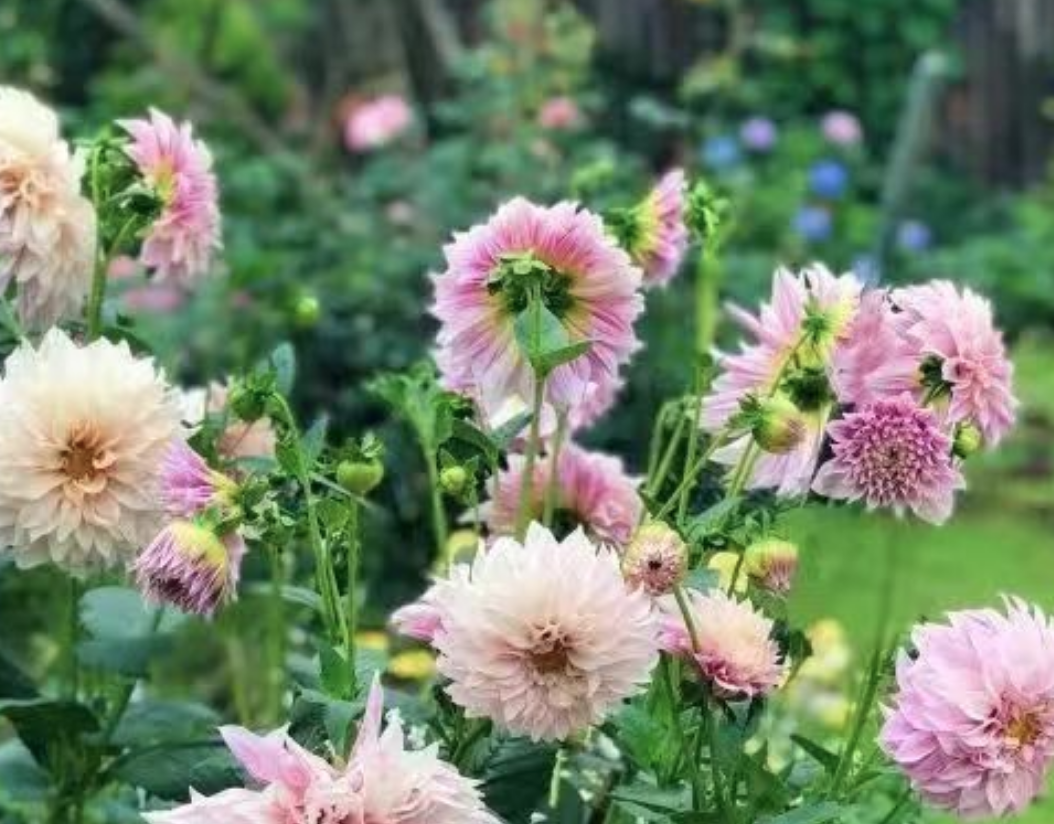
What are some rather rustic names of flowers?
Many office beauties or housewives who like to grow flowers are willing to look for potted flowers that are easy to raise and have auspicious names at the same
-

Is a soft-shelled turtle a fish? Let's get to know the true identity of the soft-shelled turtle
The soft-shelled turtle is not a fish, but an aquatic and terrestrial amphibious reptile, and is the general term for soft-shelled aquatic turtles of the family Trionychidae in the order Testudines. Soft-shelled turtle is the common name for the soft-shelled turtle, also called tuanyu or shuiyu, and in some southern places it is called tanyu or jiayu. Its head resembles that of a turtle, but its carapace lacks the stripes of a turtle, and its shell is softer than
-
Is the Qingjiang fish a saltwater fish or a freshwater fish?
The Qingjiang fish is not a saltwater fish, but a kind of river fish. This fish is quite abundant in the middle and upper reaches of the Yangtze River. Unlike other fish, the Qingjiang fish has a particularly strong reproductive capacity. Every autumn, fishermen along the Yangtze River only need to cast their nets to catch them, and because the
-
How to Raise a Temple Turtle? Detailed Guide to Care Methods and Precautions
The temple turtle has a rather strange appearance, and most of its head is yellow, so some people also call it the ugly turtle or yellow-headed turtle. Below, let us learn about temple turtle care techniques. Environment: a small 55*40*15 storage box, an amphibious environment, with a few small fry placed inside (they can play the role of cleaner fish).
-
Understanding that aquatic products may be contaminated with, rather than infected by, the novel coronavirus, and the characteristics of food contamination
Previously, the detection of the novel coronavirus on a salmon cutting board at the Beijing Xinfadi wholesale market drew widespread attention, and according to experts, how is it that aquatic products may be contaminated with the novel coronavirus rather than infected? What are the characteristics of virus-contaminated food? Below
-
What are the latest uses of cactus? Read this one article to understand
Cactus is a fairly common plant, but do you know what the uses of cactus are? Cactus is bitter and cold in nature, non-toxic, and can be both eaten and used as medicine. It mainly has functions such as clearing heat and detoxifying, dissipating blood stasis and reducing swelling, promoting the movement of qi and invigorating blood, and strengthening the stomach and relieving pain. In addition, cac
-
Is nori a plant? The latest answer is here
Nori is not a plant, but rather a general term for certain mutually beneficial algae in the sea. There are very many species, the common ones being Porphyra yezoensis, Porphyra haitanensis, Porphyra tenera, etc. Artificial cultivation has already been carried out in China's coastal areas. At the beginning of the 21st century, China's nori production jumped to first place in the world. It is rich in
-
What to do when bitter gourd yields are low? The latest solutions are here
Bitter gourd tastes rather bitter, but its heat-clearing and summer-heat-relieving effects are extremely powerful. It is generally eaten in summer, which means it is planted in spring and comes onto the market right in summer, creating relatively high economic value. However, many farmers report that their bitter gourd yields are relatively low, so what should be
-
How many stalks of lucky bamboo should you keep, and what should you do if the leaves turn yellow?
Lucky bamboo (Dracaena sanderiana) is a perennial evergreen foliage plant of the Asparagaceae family, usually grown in a vase or as a potted plant, symbolizing prosperity in bloom, bamboo bringing peace, great fortune and good luck, and a life of wealth and honor. So, how many stalks of lucky bamboo is it better to keep? What should you do if the leaves turn yellow? 1. How many stalks of lucky bamboo is it better to keep?
-
What are the characteristics of the pomegranate tree? A complete guide
The pomegranate tree is rather tall, generally 3-4 m high, and well-grown ones can reach about 6-7 m; it is a deciduous shrub or small tree. When it blooms, the flowers are red, with 5-7 lobes at the tip. In the early fruiting stage the fruit is unripe and slightly sour; once ripe it is sweet and juicy.
条件筛选