-

What technical measures are there for post-disaster production recovery of forest specialty seedlings and flower nurseries?
Technical Measures for Post-Disaster Production Recovery of Forest Specialty Seedlings and Flower Nurseries
-
Technical Guidelines for Post-Typhoon Lekima Recovery for Rice, Soybean and Corn Growers
Recently, due to the impact of Typhoon Lekima, rainfall in Northeast China has brought severe damage to crops. In response, the expert steering group of the Ministry of Agriculture and Rural Affairs, together with the National Agricultural Technology Extension and Service Center, has put forward technical guidelines for production to combat waterlogging and prevent low-temperature damage.
-
Ensuring post-disaster vegetable supply requires a coordinated mix of measures
Ensuring post-disaster vegetable supply requires a well-coordinated "combination punch"
-
Post-disaster soil salinization recovery production technology achieves results in Hainan
Hainan's post-disaster soil salinization recovery production technology achieves results
-
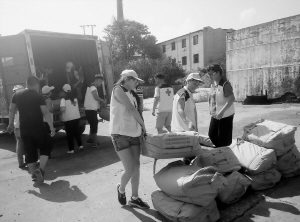
Jingxing County's Red Detachment of Women Supports Post-Disaster Reconstruction
Jingxing "Red Detachment of Women" Supports Post-Disaster Reconstruction
-
Potato Frost Protection and Post-Disaster Mitigation Measures After Snow and Ice Damage
(1) Functions and Uses 1. The effects of low temperatures on seed potatoes during storage and on seed potatoes and young sprouts (seedlings) after sowing. 2. Reduce the severity of snow and ice damage; promote the recovery of potato growth. (2) Technical Measures 1. Preventive measures against frost damage (1) During the storage of seed potatoes, pay attention to keeping them warm. Before low temperatures arrive, take preventive measures: place a straw mat under the seed pile and cover the top of the seed pile with straw mats or other coverings to prevent frost damage. (2) Adjust the sowing period appropriately to prevent frost damage. For
-
Technical Service Information for Tea Plant Frost Resistance and Post-Disaster Recovery
I. Remedial measures for tea plants after a disaster: 1. Scientific pruning: Because tea gardens with different varieties, different altitudes, and different slope aspects have different degrees of frost damage to their tea plants, generally tea gardens with large-leaf varieties, high altitude, and north-facing slopes suffer more severe frost damage to the tea plants. Timely and reasonable pruning should be carried out according to the degree of frost damage. After the temperature rises and stabilizes, observe the frost damage to the tea plants. For lighter frost damage, use light pruning, that is, cut about 3 cm below the leaf surface. For more severe frost damage, carry out deep pruning, cutting off 1/2-1/3 of the plant. For particularly severe frost damage
-
What to Do When Cotton Is Killed by Rainwater? A Detailed Guide to Post-Disaster Remedial Measures
Drain waterlogging and clear silted ditches in time. After a cotton field is flooded, the soil's physical and chemical properties change, humidity becomes too high, and air is lacking, which can suffocate the cotton plants to death. Even if they do not die, they are prone to disease, and root penetration is hindered. The waterlogging must be drained as quickly as possible, and at the same time the clogged perimeter ditches, waist ditches and bed ditches should be cleared to lower the groundwater level and create a good ecological environment for the cotton seedlings so they can resume growth. Straighten and wash the seedlings in time, washing them as the water recedes. Clean the silt off the cotton leaves and stems so the leaves can quickly recover
-
Guidance on Post-Disaster Production Recovery for Edible Fungi, Please Check
Guidance on Post-Disaster Production Recovery for Edible Fungi
-
Key technical points for restoring flood-damaged farmland to help post-disaster production recovery
Flood-damaged farmland restoration techniques
条件筛选