-

Why Is Gastrodia Low-Yielding? Latest Cause Analysis
Gastrodia is a valuable medicinal herb unique to China, with powerful medicinal effects. It can not only be used as medicine, but is also an important ingredient commonly used in daily life to make medicinal cuisine. The scarcity of wild resources has led to the rise of its artificial cultivation, but many medicinal herb growers experience extremely low yields when planting it, resulting in relatively low returns.
-
Summary of Experience in Renovating Low-Yielding Bayberry Trees
Low-yielding bayberry trees mainly include: stunted young trees, excessively vigorous trees, aging trees, low-yielding trees in mixed forests, and trees of poor-quality varieties. Their causes of low yield differ, so renovation should be carried out according to specific circumstances. 1. Stunted young trees: Because the amount of base fertilizer applied at planting of the seedlings was small, or even nonexistent, and the planting holes were small, the root system grew poorly; or because of damage from pests and diseases and the climatic effects of natural disasters, tree growth became weak, the canopy was short and small, and the branching ability was extremely poor, so the number of flowers and fruits was low. Trees showing this phenomenon are called stunted young trees.
-
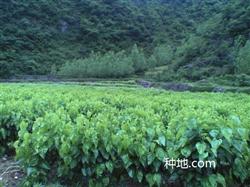
What to do about low-yielding mulberry orchards? Find the cause and improve them scientifically
The mulberry orchard has been planted for many years and the yield has never been high. How should it be renovated? Please advise. A low-yielding mulberry orchard can be renovated by the following methods: 1. Thickening and replanting 1. Layering to fill in plants 2. Filling gaps with strong seedlings: in mulberry orchards with wider row and plant spacing, healthy mulberry seedlings can be replanted between plants or rows. 2. Interplanting for renewal...
条件筛选