-
What causes yellowing and drying leaves on boxwood bonsai? Care methods and precautions
As a common ornamental plant, boxwood (Buxus) is deeply loved for its graceful form and evergreen foliage in all four seasons. However, during care, boxwood leaves sometimes turn yellow and dry up. What exactly causes this? First, unsuitable lighting is one of the common causes. Boxwood likes plenty of indirect light.
-
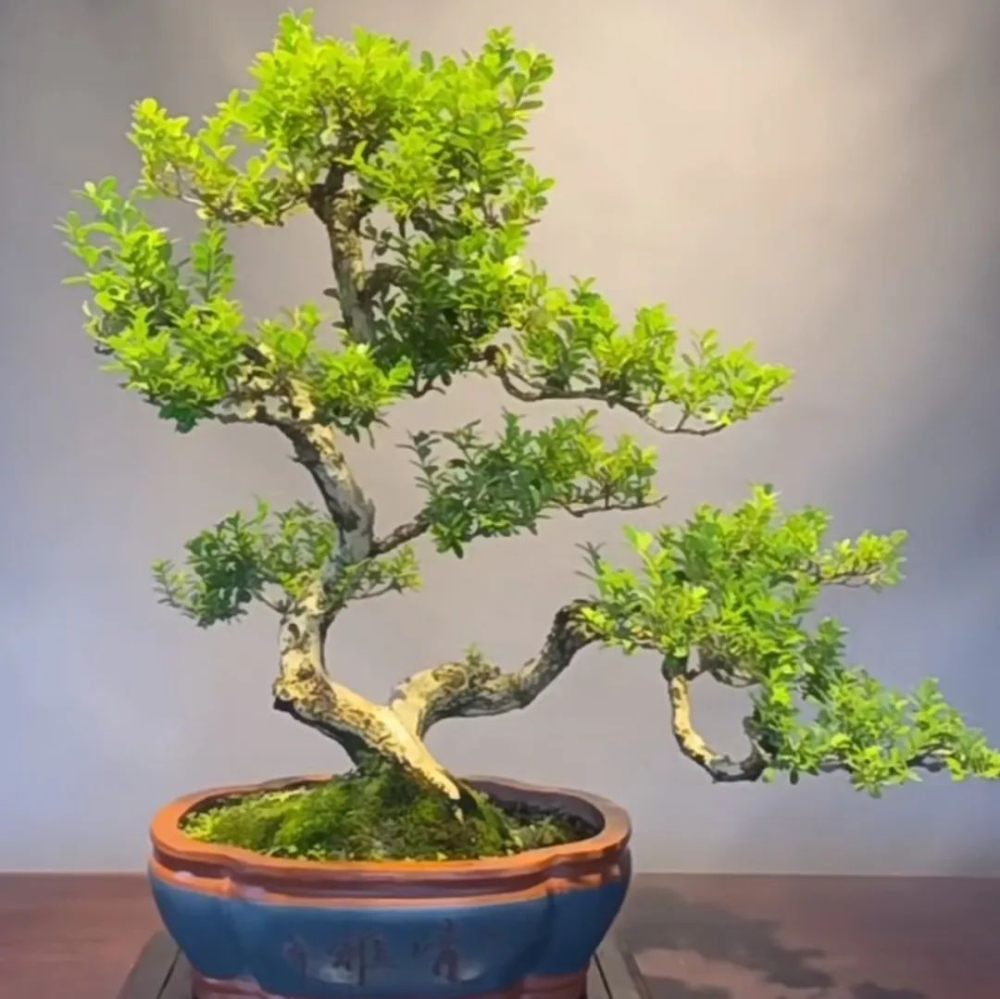
What are the reasons for the yellowing and drying of the leaves of the boxwood bonsai?
Boxwood, as a common ornamental plant, is deeply loved by people for its graceful posture and evergreen characteristics throughout the four seasons. However,
-

A Detailed Guide to the Latest Methods for Creating Littleleaf Boxwood Bonsai
Littleleaf boxwood (Buxus sinica var. parvifolia), an evergreen shrub or small tree of the Buxaceae family, prefers a warm, semi-shaded, humid climate and is drought-tolerant, cold-tolerant and tolerant of pruning. It is a shallow-rooted tree species with slow growth and a long lifespan, making it an excellent tree material for bonsai. For bonsai material, one option is to use sowing or cutting propagation
-
The Latest Methods for Identifying Genuine and Fake Boxwood
Appreciating boxwood as a material: boxwood timber comes in small pieces, yet its texture is tough and fine, and its color is a pale, warm yellow. Finished boxwood carvings have a pleasing, even color with an ivory-like luster, commonly known as "ivory yellow." As time passes, the color of carved pieces deepens year by year, giving them an antique, elegant feel.
-
The Latest Cultivation Techniques and Methods Tutorial for Boxwood Trees
Boxwood trees are not strict about soil requirements. Sandy soil, loam soil, and brown soil can all be used for planting, but loam soil rich in organic matter is best. When preparing the land, the terrain is required to be level. In combination with deep plowing, apply organic fertilizer, about 2000 kg per mu. When applying base fertilizer, note that the organic fertilizer must
-
The Latest Care and Management Methods for Boxwood Bonsai
Boxwood bonsai has become an artistic treasure for its small evergreen leaves and slow growth that makes it hard to lose its shape. Generally speaking, boxwood bonsai material is mostly taken from wild old stumps growing by the water. Boxwood bonsai is rather delicate, and achieving success in growing it involves a certain degree of difficulty. The editor will now introduce the care and management methods for boxwood bonsai
-
Why is boxwood so expensive? Latest market analysis
Why is boxwood so expensive? 1. Because boxwood grows extremely slowly; a tree with a diameter of 15 cm must grow for at least 150~200 years, so top-grade raw timber is very scarce, mainly produced in the deep mountains of Hubei, Guizhou, Sichuan and other places. Other places also have small-leaf boxwood production areas, such as Shuyang in Jiangsu, Henan, Hebei, Shandong and other places, but the yield is extremely low, and it is very difficult to grow into usable timber.
-
What are the propagation methods for boxwood? A detailed explanation of the latest practical techniques
Boxwood is also called boxwood wood, Chinese boxwood, common box, etc. It is mainly produced in Shaanxi, Gansu, Hubei, Sichuan, Guizhou, Guangxi, Guangdong, Jiangxi, Zhejiang, Anhui, Jiangsu, Shandong and other places in China. The main propagation methods are seed propagation and cutting propagation. Below
-
Boxwood Carving: Identification Methods and Maintenance Tips
Boxwood carving is one of the folk carving arts of the Han Chinese, using boxwood as the carving material, drawing on its natural forms with smooth wood, delicate grain and dignified color; the process is complex, and the fineness and technical requirements of each step are difficult for other carvings to match.
-
The Latest Cultivation Methods for Potted Boxwood
Boxwood is also known as boxwood wood, small-leaved boxwood, common box and so on. It is a shrub or small tree of the genus Buxus in the family Buxaceae. It has a graceful tree form, with small leaves like broad bean petals, thick and glossy, and stays green all year round. In gardens it is often used as hedges, edging for large flower beds, pruned into spheres or other topiary shapes.
条件筛选