-

Detailed explanation of large-mouth catfish farming technology, master the methods of catfish farming
I. Biological characteristics The large-mouth catfish is one of the fastest-growing and largest species among fish of the order Siluriformes, family Siluridae. Common individuals weigh 5-10KG, and the largest individuals reach 60KG. Its head is wide and somewhat flat, its eyes are small and its mouth is large, hence the name large-mouth catfish. Its upper and lower jaws are densely covered with fine teeth that curve inward like barbs, making it extremely difficult for prey to escape once bitten. Adult fish have two pairs of barbels, of which one pair of maxillary barbels is very long, while the other pair of mandibular barbels is very short and often hard to notice, but in the juvenile stage there are 3 pairs of barbels. Its dorsal fin is short and small, clustered, with no hard spines; the pectoral fin has a thick, sturdy hard spine with no obvious serrations on the outer side, but it feels rough to the touch; the anal fin is extremely long and connected to the caudal fin; the caudal fin is small, concave in the middle, and the upper lobe is longer than the lower lobe. The body color of the large-mouth catfish varies with the environment and the type of food. The back and sides of the body are mostly yellowish brown, bluish gray, or yellow-green, while the belly is grayish white, mixed with black spots, but without cloud-like patterns, and all fins are grayish black.</p><p></p><p>I. Pond main culture</p><p>1. Fingerling stocking To increase the survival rate and improve farming benefits, the large-mouth catfish fingerlings stocked must be above 8cm and uniform in size. For stocking density, stock 1000-1500 fish per mu at the 8cm-10cm size; stock 800-1200 fish per mu at the 10cm-12cm size, and polyculture 100-120 large-size silver carp and bighead carp fingerlings of 150g-250g in the pond to regulate water quality. 2. Feed feeding The large-mouth catfish is a carnivorous fish, mainly using live fish or chilled fresh fish and animal viscera as bait, but it can also be trained artificially to eat artificial compound feed. (1) Carnivorous bait: when stocking large-mouth catfish fingerlings, correspondingly stock slightly smaller carp, crucian carp and other fingerlings. Each day, still mainly use chilled fresh fish chunks, and pig lungs, cattle lungs and other animal viscera can also be fed. When these animal feeds cannot be guaranteed, artificial taming for feeding can be used to make them eat artificial compound feed, which can achieve relatively good results. (2) Artificial compound feed: the protein content of the compound feed is 41%-50%. When feeding, set up (2-4) feeding tables in each pond to make it easier to observe feeding conditions. 3. Daily management Patrol the pond 3 times a day in the morning, noon and evening to observe fish feeding and growth conditions, change the water once every 5d-7d, strictly prevent the large-mouth catfish from floating to the surface, and take corresponding preventive measures. II. Pond polyculture In adult fish ponds, broodstock ponds, or large lakes and reservoirs with abundant wild trash fish, depending on the abundance of forage fish, polyculture 15-30 large-size large-mouth catfish fingerlings of 8cm-10cm per mu. Without increasing feed input, without requiring special management, and without affecting the main cultured fish, 30kg-50kg of marketable large-mouth catfish (individual weight 1.5kg-3.5kg) can be produced in the same year. The technology for polyculturing large-mouth catfish in adult fish ponds is simple, with low input and high returns, but in production attention should be paid to: large-mouth catfish cannot be polycultured in the same pond with carnivorous fish such as mandarin fish and snakehead, and smaller-size large-mouth catfish cannot be stocked for polyculture; the size is best above 8cm.</p><p>III. Cage culture</p><p>1. Cages According to fingerling size, equip three types of cages with different mesh sizes: first-level fingerling cages, second-level fingerling cages, and adult fish cages. First-level fingerling cage: mesh 0.6cm-0.8cm, size 4mx4mx2m or 5mx5mx2m, single-layer warp-knitted knotless polyethylene open-top cage; second-level fingerling cage: polyethylene knotted open-top cage with mesh 1cm—1.5cm, size 4mx4mx3m or 5mx5mx3m; adult fish cage: mesh 2.5cm-4cm, size 4mx4mx3m or 5mx5mx3m double-layer polyethylene knotted closed cage. 2. Fingerling stocking Large-mouth catfish used for first-level stocking are most suitably stocked in early to mid-May each year. For stocking density, stock 500-600 large-mouth catfish fingerlings per m2 at the 4cm-5cm size. After 15d-20d of rearing, divide them by size into separate cages for rearing. At the 8cm-10cm size, stock 350-450 fish per m2. When they reach above 15cm, promptly transfer them to second-level cages and stock 250-300 fish per m2. When the fingerlings reach about 25g, transfer them to adult fish cages and stock 40-60 fish per m20.</p><p>3. Feed feeding In cages, feeding tables are set up to make it easier to observe fish feeding conditions and ensure full use of the feed. Generally, set up 1 feeding table per 1Om2, suspended inside the cage 20cm—30cm above the cage bottom. When the total length of the large-mouth catfish is 5cm-10cm, the daily feeding rate is 8%-10% of fish body weight; at total length 10cm-20cm, it can be adjusted to 4%-6%; when total length is above 20cm, the feeding rate is 1%-3%. Feed three times daily in the morning, afternoon and evening. Among these, slightly increase the feeding amount in the evening. The bait can mainly be wild trash fish, chilled fresh fish, and animal viscera, and artificial compound feed can also be fed through artificial taming. The method is: after the fingerlings enter the cage, first stop feeding for 1d-2d to make them feel slightly hungry, then each day place a small amount of attractant on the feeding table and slowly feed artificial compound feed. As the fish adapt to the artificial compound feed, correspondingly reduce the amount of attractant until the large-mouth catfish completely adapts to eating artificial compound feed. (1) Fingerling-stage feed formula: fish meal 42%, a-starch 15%, soybean meal 10.9%, peanut kernel meal 18%, yeast powder 3.3%, scallop powder 5.2%, fish oil 3.1%, premix 2.5%, crude protein content 35%. (2) Adult-fish-stage feed formula: fish meal 25%, wheat middlings 18%, soybean meal 18%, peanut kernel meal 18%, yeast powder 5%, fish oil 1.1%, corn 10.4%, compound amino acids 2%, premix 2.5%, crude protein content 35%. 4. Rearing management During the fingerling cultivation stage, cage sorting and screening should be done well. Regular cage sorting is a key measure to increase fingerling survival rate. Generally, during the fingerling stage, sieve all fish once every 15d-20d and rear them in separate cages by size. At 8cm-10cm, transfer them to second-level fingerling cages; when they reach about 25g, they can be put into adult fish cages for rearing. In daily rearing, the large-mouth catfish has sharp mouth teeth. When bait is insufficient or when it feeds on bait beside the cage, it easily bites through the netting. Usually, regularly check the cages for damage, regularly clean the feeding tables, ensure unobstructed water flow inside and outside the cages, regularly check the bait condition on the feeding tables, remove spoiled and deteriorated residual bait, and appropriately increase or decrease the feeding amount according to how much bait remains.</p>
-
Experience and Technical Key Points in Grasshopper Rearing and Management
1) Biological Characteristics of Grasshoppers. Grasshoppers are insects used both as medicine and food. They are oviparous and belong to the class Insecta, order Orthoptera, family Acrididae. According to statistics, the family Acrididae contains a total of 859 species of grasshoppers, but only two can be used medicinally and for food, namely the East Asian migratory locust grasshopper and the rice migratory locust grasshopper. Grasshoppers are rich in protein
-

Let the world see Formosa! He Hsuan-Ching's team at the National Museum of Marine Biology and Aquarium publishes 20 new species of eels, and Taiwan's eel diversity ranks first in the world!
Let the world see Formosa! He Hsuan-Ching's team at the National Museum of Marine Biology and Aquarium publishes 20 new species of eels, and Taiwan's eel diversity ranks first in the world!
-
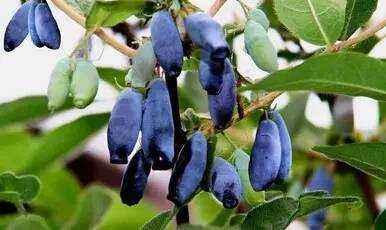
A Detailed Explanation of the Conservation Biology Characteristics and Asexual Propagation Techniques of Lonicera caerulea
Conservation Biology Characteristics and Asexual Propagation Techniques of Lonicera caerulea 1. Bioecological Characteristics of the Lonicera caerulea Plant. In accordance with the spirit of Document No. 13 of the State Council (1981) and the deployment of the Jilin Provincial Zoning Committee, from June 1982 to 1990, ...
-
What plant is Iris lactea? Introducing the herbaceous plant Iris lactea
Iris lactea is also called Iris lactea, Iris lactea, Iris lactea flower, Hanpu, Lishi, Licao, Jucao, Shishou, Sanjian, and Iris lactea. The flower language of Iris lactea is "messenger of love." As a perennial herbaceous plant, Iris lactea has unique ecological and biological characteristics and utilization value.
-
条件筛选