-

Can Jiulong worms be eaten raw? Understand the safety first before deciding
The Jiulong worm is a rather unusual insect, also known as the foreign worm. This insect is edible, and its nutritional value is also relatively high. So can Jiulong worms be eaten raw? Can Jiulong worms be eaten raw? Jiulong worms can be eaten raw. The Jiulong worm itself is rich in protein
-
Tea-growing success story: 35 households in Jiulong Mountain tell it with flair
35 households in Jiulong Mountain make a success of tea growing
-
Misi jujube becomes the fruit of prosperity for industrial transformation in Jiulong Town, Yingde City, Guangdong
Industrial transformation in Jiulong Town, Yingde City, Guangdong: Misi jujube bears the "fruit of prosperity"
-
What kind of tea is Jiulong Dabai tea? An introduction to its variety characteristics
A new clonal variety selected by the Tea Management General Station of Songxi County, Fujian Province, through single-plant selection from the sexually propagated tea plant population at Jiulonggang in Shuangyuan Village, Zhengdun Town. Small tree type, large-leaf class, early-budding variety. The plant is tall, the tree posture is semi-spreading, and the branches are relatively dense. The leaves are dark green and glossy, elliptical, with obvious serrations and gradually pointed tips. Spring buds sprout in late February to early March, and the one-bud-three-leaves stage occurs from late March to early April. The young shoots are yellow-green, the buds and leaves are plump and strong, with exceptionally abundant white down; they retain tenderness well, have a relatively strong bud-growing capacity, and the new shoots sprout uniformly, with medium flowering and fruit-setting rates.
-
Detailed Explanation of Main Cultivation Techniques for Jiulong Dabai Tea
Jiulong Dabai tea has a well-developed root system, vigorous tree growth, high yield, and excellent quality. In cultivation and management, it is necessary to establish high-standard tea gardens, contour terraces, dig trenches and apply organic fertilizer, and return topsoil to the trenches (dig planting trenches 60cm wide and 50cm deep), applying more than 100 loads of base fertilizer per 666.7 sq m. Reasonable close planting should be adopted, using double-row double-plant triangular planting, with a large row spacing of 150cm, a small row spacing of 30cm, and a plant spacing of 30cm, planting about 4000-6000 tea seedlings per 666.7 sq m. This is conducive to early garden formation and early
-
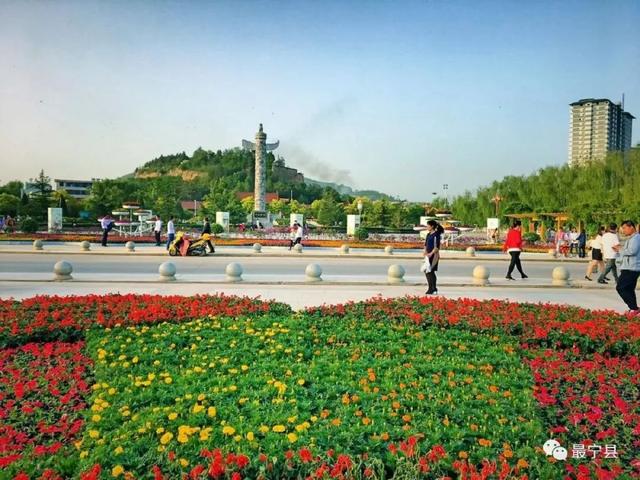
The bonsai at Jiulong Square belongs to everyone. Please admire them civilly and do not pick them.
For this issue of [Exposure Platform] Photography: Shao Jianshe Editor: Hou Lidong Recently, while passing by Jiu...
-
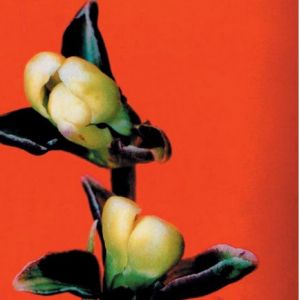
Introduction to the Characteristics of the Jiulong Xizhu Chun Jian Orchid Variety
Chun Jian Jiulong Xizhu
-
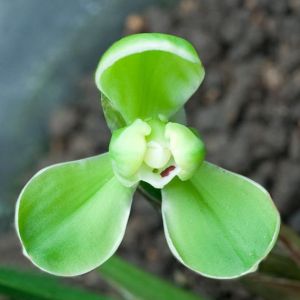
Introduction to the Jiulong Mei Chunlan Variety and Key Care Points
Jiulong Mei, discovered in Jiande, stands out among the newly discovered plum-petal orchids from Jiangsu and Zhejiang. Jiulong Mei: discovered in Jiande, Hangzhou, it is the most perfect among the new plum-petal flowers, with outer petals that are rounded and closed, a fine constricted base, and good color. In 2000, Xu Zhan and Fang Jun found it on Jiulongyuan Mountain within Jiande City, Zhejiang Province, hence the name Jiulong Mei. It is a treasure discovered in Jiande in recent years. The plant...
-
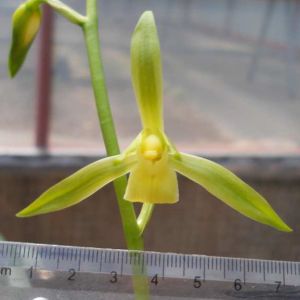
What variety of orchid is the Jiulong White Flower Cymbidium sinense?
The Jiulong White Flower Cymbidium sinense has leaves with silver on both sides, and it is a plain-flower variety that excels in both foliage and flowers.
条件筛选