-

How to grow Chaenomeles speciosa? Planting methods and care guide for healthy growth
Detailed introduction to the planting methods and care techniques of Chaenomeles speciosa, including how to grow Chaenomeles speciosa, soil preparation, light and watering, propagation methods, fertilizing and pruning, pest and disease control, and other practical content.
-
How to make a bonsai from Chaenomeles cathayensis? A detailed guide to the latest methods
1. Pot and soil selection When making a Chaenomeles cathayensis bonsai, it is generally more suitable to choose purple clay ceramic pots, and the pot shape can be round, square, or rectangular. The pot color is best if it contrasts with the flower color. Chaenomeles cathayensis likes fertilizer and
-
How to Make a Chaenomeles speciosa Bonsai and Key Care Points
Bonsai Making. Old Stump Propagation. Old stumps that have grown for many years, with exposed roots and claw-like roots, ancient and uniquely shaped, can be propagated to make bonsai. Transplant from after leaf fall in autumn to before bud break in spring. When transplanting, keep more of the original soil, cut off the main root, keep more lateral roots and fibrous roots, and prune the branches and trunk.
-
When do Chaenomeles cathayensis (flowering quince) fruits ripen? What are its main values?
Chaenomeles cathayensis is a deciduous shrub belonging to the Rosaceae family. With the development of landscaping, it has gradually begun to step into the realm of garden ornamentation. Its faint fragrance and elegance without being unrefined, its low-key simplicity and understated luxury without being gaudy - these are the unique characteristics of Chaenomeles cathayensis. In addition
-
What are the cultivation methods for Chaenomeles speciosa?
Chaenomeles speciosa, also known as Chaenomeles lagenaria (wrinkled papaya), is an ornamental flowering plant with very beautiful blooms, and many people like to keep a pot of it at home, so what are the cultivation methods for Chaenomeles speciosa? 1. Soil: Chaenomeles speciosa has low soil requirements, generally only needing well-drained, fertile
-
Key Points and Detailed Methods of Papaya (Chaenomeles) Seedling Raising Techniques
Papaya is the dried near-ripe fruit of the rose family plant Chaenomeles speciosa (Sweet) Nakai, also known as wrinkled-skinned papaya, mainly produced in Shandong, Anhui, Sichuan, Hubei, Yunnan, Shaanxi and other provinces, with functions of relieving cough and spasms, clearing summer heat and promoting diuresis, relaxing muscles and activating collaterals, and harmonizing the stomach and
-
How to Grow Chaenomeles speciosa (Flowering Quince)? Growing Methods and Precautions
Chaenomeles speciosa is also known as wrinkled-skinned papaya. The plant has a distinctive shape, beautiful flowers and a rich variety of cultivars, and holds high ornamental value. In spring you can enjoy the delicate and graceful flowers of Chaenomeles speciosa, and in summer and autumn you can taste its abundant fruit. This plant, which combines both
-
What to Do When Chaenomeles speciosa Leaves Turn Yellow and Drop? Plus Growing Methods
Chaenomeles speciosa, also known as wrinkled-skinned papaya, has beautiful flowers and high ornamental value, and is deeply loved by many people. However, if its leaves turn yellow, it not only affects its health but also its appearance. So how should we solve this problem?
-
How to prune Chaenomeles japonica? Master the correct pruning method
Chaenomeles japonica is a relatively well-known bonsai plant belonging to the genus Chaenomeles in the rose family, so what is the pruning method for Chaenomeles japonica? 1. Growth habits of Chaenomeles japonica. The Chinese scientific name of Chaenomeles japonica is Japanese quince, native to Japan. In China it is commonly cultivated in gardens in Shaanxi, Jiangsu and Zhe
-
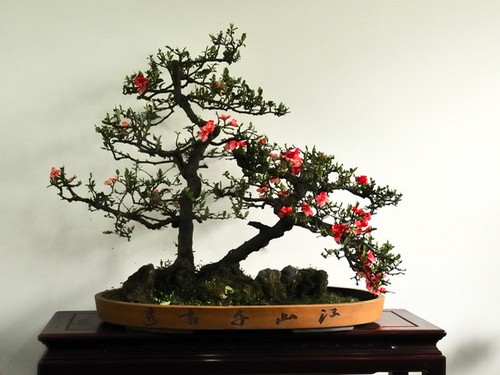
How to water a Chaenomeles speciosa (flowering quince) bonsai? Master these tips for vigorous growth
Chaenomeles speciosa is drought-tolerant and, although it fears waterlogging, it still quite likes a humid environment, so you must not water it sparingly or skip watering just because it fears waterlogging. Chaenomeles speciosa is fairly drought-tolerant, and during the growing season it is generally watered thoroughly once the soil has dried out. In summer, spraying and watering should avoid midday. Although Chaenomeles speciosa fears waterlogging
条件筛选