-

Why soybeans should not be grown in continuous or alternate-year cropping
Soybean continuous and alternate-year cropping control techniques can reduce the impact on yield. Impact on soybean yield. Different environments have different effects on soybean yield. ①Continuous cropping is severe, alternate-year cropping is mild; ②severe in the west and southwest, mild in the north and east; ③severe on poor land, mild on fertile land; ④severe on ridge slopes, mild in low-lying wet areas; ⑤severe in dry years, mild in rainy years; ⑥severe with no or little fertilizer, mild with more fertilizer; ⑦severe with original-ridge sowing, mild with plowed new ridges; ⑧severe with many soil-borne diseases and pests, mild with few diseases and pests; ⑨severe on long-cultivated land, mild on newly reclaimed land; ⑩severe under drought, mild with irrigation. The four eastern leagues of the Inner Mongolia Autonomous Region are each similar to their adjacent provinces, among which the Hulunbuir League area is similar to the northern part of Heilongjiang Province, and the continuous cropping phenomenon is also very severe. Today I want to discuss three issues: first, the impact of continuous and alternate-year soybean cropping on soybean yield and quality; second, the reasons for continuous and alternate-year soybean cropping; third, control techniques.
-
What are the reasons why oyster mushrooms do not fruit or fruit abnormally?
During oyster mushroom cultivation, it is fairly common for a fully colonized, mature mushroom bed to delay fruiting, or for a bed that has already produced 1 to 2 flushes to stop fruiting normally. The reasons include the following: 1. Substrate temperature too high. In a mushroom bed with mature mycelium, if there is no influence of lower temperatures, the substrate temperature drops very slowly. If the substrate temperature is above the fruiting temperature range, primordia are not easily formed; this phenomenon is most common in low-temperature strains planted in autumn. 2. Unsuitable environment. The ambient temperature where the mushroom bed is located is higher than the fruiting temperature range of the planted strain,
-
Why should cattle and sheep not be fed rice water after giving birth?
A farmer fed rice water to a cow after it gave birth to a calf, which caused rumen acidosis in the cow. Fortunately, the veterinarian treated it in time, so no loss was caused. According to the veterinarian, livestock are weak after giving birth, and feeding a moderate amount of rice water can supplement nutrition, strengthen the bones and muscles, and help cattle and sheep produce more milk. However, this is not the case for ruminant livestock such as cattle and sheep; drinking rice water after giving birth can easily cause rumen acidosis. After cattle and sheep develop this disease, for milder cases, sodium bicarbonate (cattle 60-100 grams, sheep 15-30 grams) and ginger tincture (cattle 80-100 milliliters,
-
Why Reasonable Water Intake for Pigs Cannot Be Ignored
1. The Harms of Insufficient Drinking Water for Pigs Currently, in pig raising, there is a widespread phenomenon of only valuing feeding while neglecting drinking water, not realizing that drinking water for pigs is equally important as feeding, or even more important. The main harms of insufficient drinking water are: 1. Insufficient drinking water leads to an increased incidence of intestinal diseases in pigs. In rural household pig farming, most use the traditional feeding method of supplying water and feed all at once, and between meals, regardless of weather conditions or feed type, no drinking water is provided. After pigs become thirsty due to insufficient drinking water, especially in hot summers, they often drink dirty water and similar things.
-
Reasons why pigs eat but do not put on fat, and how to solve it
During the growth process of pig farming, some pigs eat but do not put on fat. What is the reason? The causes and treatment methods are described below: Look for causes. First, check for congenital causes, such as inbreeding or breeding a young sow too early. Second, check for acquired causes: insufficient mother's milk, unreasonable grouping after weaning, with the big bullying the small; chronic diseases, such as anemia, white scour of piglets, and internal and external parasitic diseases; surgical diseases, such as intestinal adhesions after castration; unreasonable feed formulation, such as protein deficiency and trace element deficiency, etc., all of which can cause slow or stopped growth in pigs.
-
Why does jasmine only grow leaves and not bloom?
The main reasons for jasmine producing few flowers are as follows: 1. Insufficient light. Jasmine is a sun-loving, light-demanding plant, and its growth and development require ample light. If light is insufficient, photosynthesis is inadequate, organic matter accumulates little, branches and leaves grow leggy, leaves are thin and large, few flowers form, the fragrance is faint, and it may even fail to bloom or drop buds
-
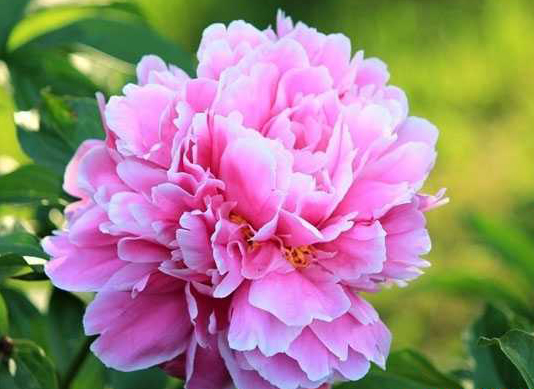
Reasons Why Peonies Do Not Bloom and How to Prevent It
Chinese flower growers have long had the saying, "Plant peonies at the spring equinox, and they will never bloom." The saying tells people: peonies are different from other flowers and should not be divided and replanted at the spring equinox. Because at this time the temperature gradually rises, the above-ground buds will soon sprout and grow, but the roots injured by division and replanting have not yet healed.
-
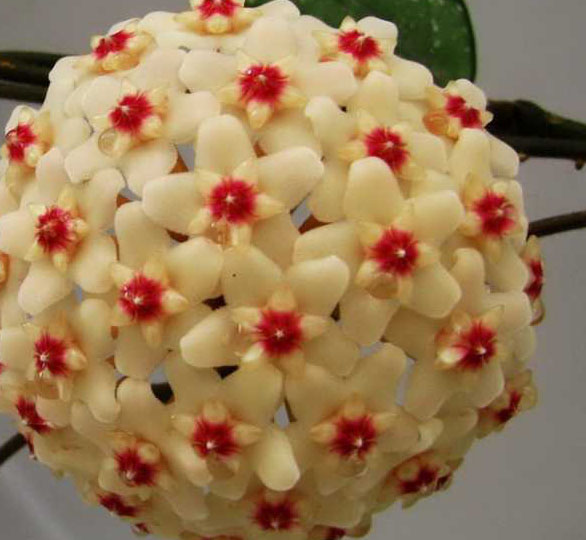
What are the reasons why a wax plant (Hoya) does not bloom?
For a potted wax plant, in spring and autumn it is best placed on an outdoor south-facing windowsill or near a south-facing window indoors, which keeps the leaves emerald green and glossy and produces good blooms. In summer it needs to be moved to a shaded spot to prevent direct strong sunlight, otherwise the leaves easily turn yellow. If it is kept in a place with insufficient light for a long time, the leaf color becomes pale and the flowers are few and not vivid.
-

Why does a potted kumquat only bloom but not bear fruit?
When a potted kumquat only blooms but does not bear fruit, or sets fruit that drops early, the cause, besides changes in conditions such as environment, water and light, lies mainly in insufficient fertilizer, especially insufficient phosphorus during the fruit-retention period after fruit set. For home potted kumquats, fertilizing can be done as follows: after Qingming, use nitrogen and phosphorus fertilizer combined with fermented, fully rotted concentrated organic fertilizer as a base fertilizer
-
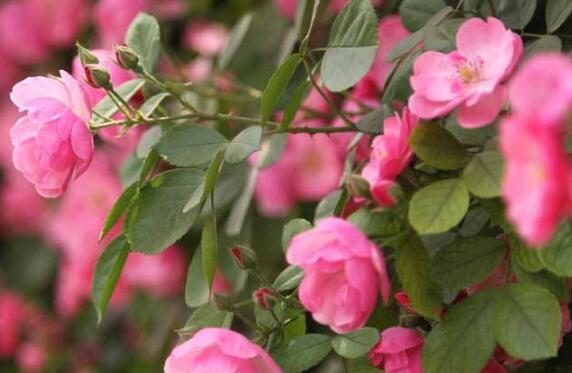
Can Rose be Grown in Water? Hydroponic Methods, Precautions, and Why It Should Not Be Grown in Water for Long
As an excellent choice for home cultivation, roses are often grown in yards because of their large size. But many flower lovers want to grow them indoors. What should they do then? Many people think of hydroponics. So can roses be grown in water? It is said that roses have extremely strong vitality and strong resistance
条件筛选