-
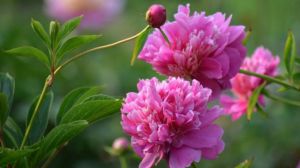
What exactly are the medicinal values of peony?
Nourishing the liver and brightening the eyes: Peony has a health-preserving effect on the liver and also offers some protection for the eyes. Brewing it as tea can effectively relieve eye fatigue. Firming the skin: Peony has a very good health-preserving effect for women, can regulate the endocrine system, and makes the skin firmer. Relieving kidney deficiency: It also has the effect of tonifying the kidneys and alleviating kidney deficiency.
-
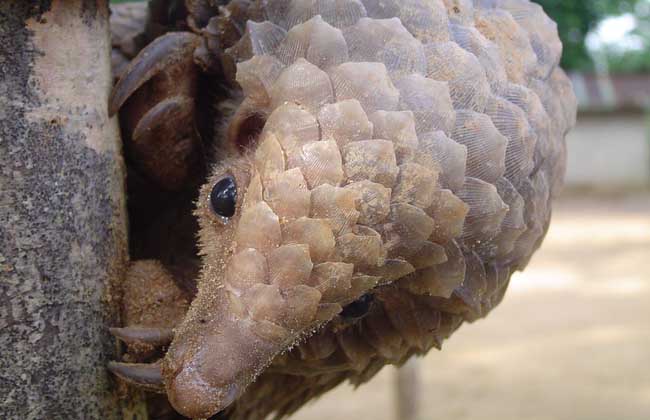
What are the medicinal values of pangolin? Detailed explanation of its effects and actions
The medicinal value of pangolin
-

Did you understand the values in "Animal World"?
Written by: DaDaLately there have been so many great movies to watch, like "Dying to Survive" starring Xu Zheng, which has already broken two billion (the editor cried her eyes out by the end), "iPartment" coming out on August 10th, and Huang...
-

The warmest protagonist of "X-Change" battles his parents for 300 rounds, and the details are praised for his right values
The "warmest" protagonist of "X-Change", battling his parents for 300 rounds, with details praised for his right values. "X-Change" has always been a very popular reality show, and many viewers feel very gratified after seeing city teenagers become kind...
-

What are the medicinal values and benefits of Cordyceps flower?
Improving disease resistance Because Cordyceps flower contains cordycepic acid and cordycepin, it can comprehensively regulate human body functions and enhance the phagocytic ability of macrophages, so Cordyceps flower can strengthen human immunity and improve the body's disease resistance. That is all for today's introduction to ways of eating Cordyceps flower.
-
What are the medicinal values of Codonopsis pilosula? A detailed explanation of its effects and functions
The root of Codonopsis pilosula (poor man's ginseng) is used as medicine; it is sweet in taste and neutral in nature. It has the functions of tonifying the spleen and replenishing qi, quenching thirst and promoting fluid production, and is used to treat weakness of the spleen and stomach, insufficiency of lung qi, fatigue and weakness, shortness of breath with wheezing and coughing, weak voice, dizziness and palpitations due to blood deficiency, dry tongue due to depletion of fluids, thirst, and other conditions. The cultivation history of Codonopsis pilosula is relatively short, and no record of cultivated Codonopsis pilosula has been seen in the materia medica of past dynasties. Shanxi Province was the earliest to cultivate Codonopsis pilosula artificially. Changzhi County, Shanxi Province, is the "hometown of Codonopsis pilosula" in China.
-
What are the values and uses of the yew? A comprehensive guide
Diuresis and reduction of swelling, treating kidney disease, diabetes, nephritic edema, difficult urination, gonorrhea, and so on. Warming the kidney and promoting menstruation, treating irregular menstruation, postpartum blood stasis, dysmenorrhea, and other effective benefits. Landscaping value: suitable for planting in front of and behind houses, on barren slopes and vacant land, and along roadsides; plant once and benefit for many years, with remarkable returns. The yew has a beautiful tree form, and the color combination of red and green contrasting during the fruit ripening period is intoxicating; it can be widely used for soil and water conservation and for forestry and horticultural ornamental forests, and is an excellent tree species for improving the ecological environment and building beautiful mountains and rivers in the new century.
-
What are the values and uses of golden privet?
Widely used in landscaping. Throughout the entire growing season, the leaves of golden privet are golden yellow, beautiful and distinctive. Therefore, in landscape design it can be combined with plants such as golden boxwood, Japanese barberry, purple-leaf sand cherry, prostrate Chinese juniper, wintercreeper, and Sichuan juniper seedlings, planted in groups and in broad masses. In "street green displays" or around sculptures, planting broad masses of golden privet, with its striking color, plays a role of adding beauty to beauty, both enriching the colors of the landscape and enlivening the garden atmosphere.
-
What are the values and uses of the glossy privet tree? Read this article to understand
Landscaping uses: The glossy privet (Ligustrum lucidum) sways in all four seasons, with well-spaced branches, dense foliage and a neat tree shape. It is a commonly used ornamental tree species in gardens, and can be planted alone or in clusters in courtyards, or used as a street tree. Because of its strong adaptability, fast growth and tolerance to pruning, it is also used as a hedge. It generally takes 3 to 4 years to take shape and achieve a screening effect. It is easy to propagate and raise seedlings from seed, and can also serve as a rootstock for grafting and propagating osmanthus, lilac, and the colored-leaf plant golden-leaf privet. Medical uses of glossy privet leaves: The leaves are opposite, leathery, ovate or ovate-lanceolate, 5-14 cm long,
-
What are the values and uses of oleander?
The oleander has a rounded, neat plant form, with leaves like bamboo and willow, and flowers that resemble peach blossoms yet are not peach blossoms. Its flower colors are fresh and lovely, and it stays evergreen all year round, giving it considerable ornamental value. "Its leaves are sparse like bamboo, its blossoms tender like peach; the country folk never tire of looking at it, facing the tree with a cup of wine." From this ancient poem it can be seen that the oleander has been an ornamental flower deeply loved by people since ancient times. The oleander is now grown in nearly 90 countries, and because it grows quickly it is regarded as a fast-growing landscaping tree species. Algeria has even designated it as its national flower. The stems and leaves of the oleander contain oleander cardiac glycosides, organic substances from which cardiotonic agents can be extracted, with diuretic, analgesic, and phlegm-clearing and asthma-relieving effects
条件筛选