-
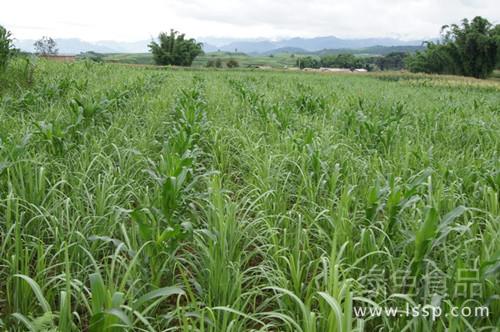
Key technical points for intercropping sugarcane with corn: improving land, moisture and light use efficiency
Improving land, moisture and light use efficiency: key technical points for intercropping sugarcane with corn
-

How to Grow Strawberries in a Greenhouse? A Detailed Guide to High-Efficiency Cultivation Techniques
High-Efficiency Cultivation Techniques for Greenhouse Strawberries
-
What are the technical paths for reducing chemical fertilizer use and increasing its efficiency?
On March 17 this year, the Ministry of Agriculture proposed striving to achieve zero growth in the use of chemical fertilizers and pesticides on major crops by 2020. The key to achieving this goal is to grasp well the "precision, adjustment, improvement and substitution": advancing precision fertilization, adjusting the structure of chemical fertilizer application, improving fertilization methods
-
Why does reducing fertilizer use and increasing efficiency in agriculture not affect food security?
Chemical fertilizers have made an indelible contribution to China's consecutive years of agricultural harvests, but as chemical fertilizer use in China has increased, its efficiency in boosting crop yields has been declining, and it has even brought impacts on the ecological environment. In fact, reducing fertilizer use, especially for cash crops such as vegetables and fruits,
-
Agricultural product price reform requires reforming subsidy policies to boost competitiveness through high efficiency
The "Several Opinions on Advancing Price Mechanism Reform" (hereinafter referred to as the "Opinions") proposes to improve the price formation mechanism for agricultural products, with agricultural product prices mainly determined by the market. The "Opinions" make clear that China will adjust and improve "amber box" (under the Agreement on Agriculture, policies that distort production and trade are called "amber box" policies) support policies, gradually expand the scale and scope of "green box" support policies, continue to implement and improve the minimum purchase price policy for rice and wheat, reform and improve the corn purchase and storage system, continue to implement the pilot reform of target prices for cotton and soybeans, and improve the methods for distributing subsidies.<br /> <br /> For many years, the agricultural sector has been exploring agricultural support policies that do not distort the market and are more efficient, with more "green box" and less "amber box." An official from the Ministry of Agriculture told a reporter from the Daily Economic News, "What is being carried out now is the target price pilot for soybeans and cotton, which also represents the direction of reform for most agricultural products in the future, including grain varieties. The current agricultural subsidy measures are relatively inefficient and in fact have caused a certain degree of market distortion, the so-called 'foreign goods' entering the market and 'domestic goods' entering warehouses."<br /> <br /> <strong> The juncture for shifting from "amber box" to "green box" has arrived</strong><br /> <br /> According to the commitments China made when joining the WTO, agricultural subsidies cannot exceed 8.5% of agricultural output value, and as agricultural production costs gradually rise, the current agricultural subsidy policy is approaching the "amber box" ceiling.<br /> <br /> At present, the prices of the vast majority of China's agricultural products are already formed by market supply and demand, while the measures through which the government truly intervenes in prices mainly include the minimum purchase price policy implemented respectively for rice and wheat, the two key staple grain varieties, in the main producing areas starting in 2004 and 2006, as well as the temporary purchase and storage of bulk agricultural products such as corn, rapeseed, and cotton since 2008.<br /> <br /> Supported by market-support purchase prices and temporary storage prices that have risen almost year by year, domestic agricultural product prices have become "inverted" relative to international prices. At present, international soybean, corn, and wheat prices are 1,175 yuan, 923 yuan, and 626 yuan per ton lower than domestic prices, respectively. "When China joined the WTO, it promised that agricultural subsidies could not exceed 8.5% of agricultural output value. This is a restriction on government subsidies that distort production and trade, and now subsidies for some of our products have already crossed that limit." Han Jun, deputy director of the Office of the Central Leading Group for Financial and Economic Affairs, said recently that as the squeezing effect of the rising "floor" of domestic grain production costs becomes more and more obvious, part of the "amber box" subsidies must now be shifted to the "green box."<br /> <br /> Strengthen monitoring of agricultural product prices<br /> <br /> "Although the intensity of protection for agricultural products has not diminished, countries such as those in Europe, the United States, Japan, and South Korea have shown a trend of reducing the intensity of agricultural subsidy support, paying more attention to enhancing their own agricultural industry competitiveness." Zhang Hongyu, director of the Department of Rural Economic Management of the Ministry of Agriculture, said in an exclusive interview with a reporter from the Daily Economic News, "China must also focus on considering the 'transformation of methods and adjustment of structure' of agriculture from the perspective of improving agriculture's capacity for sustainable development, and take an intensive modern agricultural development path featuring an efficient agricultural industry, safe products, resource conservation, and environmental friendliness."<br /> <br /> According to the "Opinions," China will also strengthen the investigation of agricultural product costs and price monitoring, accelerate the establishment of a global agricultural data investigation and analysis system, and provide important support for the government in formulating policies on agricultural product prices and agricultural subsidies. "Agricultural product cost survey data are an effective basis for scientifically formulating a series of policies benefiting farmers, and under the current situation of continuously rising agricultural production costs, they are especially important." A person engaged in local statistical work told the reporter, "It is necessary to understand local farmers' planting and breeding habits and grasp information such as farmers' preferences in using chemical fertilizers and pesticides, land transfer prices, and the marketing costs of agricultural products." "Considering it along the lines of Internet Plus, if big data on agricultural product production costs, market price fluctuations, international price references, and even comparisons of foreign agricultural product costs can be formed, it will have a profound impact on China's agricultural development." Li Guoxiang, a researcher at the Rural Development Institute of the Chinese Academy of Social Sciences, believes that "this can not only help solve the prominent problems existing in China's agriculture, but can also bring broad application prospects in areas such as agricultural socialized services and agricultural science and technology."
条件筛选