-

Detailed Explanation of Points to Note When Mixing Substrate for Substitute-Material Cultivation of Shiitake Mushrooms
Substitute-material cultivation of shiitake mushrooms is another cultivation method following log or round-wood cultivation. Its cultivation forms are diverse, mainly designed according to differences in cultivation conditions, cultivation materials and cultivation containers. It has developed rapidly in recent years and now accounts for more than 95% of the cultivation area. In its medium, materials rich in cellulose, lignin and hemicellulose, such as wood chips, crop straw and wild grasses, are used as the main components of the cultivation material, appropriately supplemented with auxiliary materials such as wheat bran and rice bran rich in organic matter and vitamins, as well as gypsum, calcium carbonate and similar substances containing inorganic salts. The water content is adjusted to around 60%, and after sterilization it is inoculated and cultivated.
-
4 Things to Note When Introducing Pet Rabbits
As the pet rabbit market grows increasingly prosperous, more and more people are introducing pet rabbits, but all kinds of problems have followed. Some people spend a lot of money to buy so-called pet rabbit breeding stock, only to find that when the breeding season arrives, the rabbits do not come into heat. After inquiring carefully, they learn that the rabbits have been sterilized and simply cannot reproduce, so half a year has been wasted for nothing. Some buy rabbits home but the rabbits cannot survive at all, because no breeding techniques were provided, and they just feed them like ordinary rabbits. The result is that the sudden change in living conditions, combined with the abrupt switch in feed, causes the young rabbits to fall ill and die one after another.
-
Eight requirements to note when using a precision dibble seeder on cotton mulched film
In 2005, our regiment introduced 1 unit of the 2BMJ-12 precision dibble seeder on cotton mulched film produced by the Shihezi Agricultural Machinery Research Institute, and that year trial-sowed 30 hectares. The application of precision dibble sowing technology on cotton mulched film saved costs on seed and manual thinning, and at the same time had advantages such as simple mechanical adjustment and operation, stable performance; and after sowing, the cotton seedlings grew uniformly and neatly. The eight requirements to note when using this machine are introduced below. 1. Requirements for land plowing quality: plow when soil moisture is suitable, plowing depth reaching 28-30 cm, with consistent plowing depth;
-
How to fertilize rhododendrons? Five key points to note
Rhododendron roots are delicate, so fertilizer must be fully composted before use. Generally, fertilizer that has been composted for more than one year and fully fermented is most suitable. When fertilizing, pay attention to the following five key points: Feed according to the seedling. Seedlings cannot be fertilized; after 4 months, a well-composted, extremely dilute liquid manure may be applied. After the plants are set out and transplanted separately in the following spring, more nitrogen and potassium fertilizer should be applied to speed up vegetative growth. At 2 to 3 years, during the mature stage, more phosphorus fertilizer should be added to achieve a high flowering rate and large, brightly colored flowers. In the old stage, more nitrogen fertilizer may be applied to promote renewal of branches and leaves and rejuvenate the tree
-
Several key technical points to note in rural electric goose incubation
Because goose farming can make full use of the abundant pasture resources in rural areas, consumes little concentrated feed, grows quickly, is easy to manage, and yields good rearing benefits, rural goose farming is currently showing a momentum of vigorous development. Correspondingly, the incubation of goslings has gradually developed from the traditional kerosene lamp and beach-bed incubation of the past to electric incubation in household workshop-style incubation rooms. However, because most incubation rooms do not have a good grasp of incubation techniques, the incubation results are not very ideal, and some incubation rooms even have lower hatch rates than traditional incubation methods. In response to this situation, the author specifically proposes the following
-
Six points to note when injecting a sick turtle
In recent years, artificial turtle farming has gradually gained popularity, but diseases have also shown a trend of local spread. There are many ways to administer medication to prevent and treat turtle diseases, such as oral medication, applying medication, injections, and medicated baths. Once a turtle becomes ill, the treatment work is very different from that for other animals, mainly because turtles have a very hard shell. According to the author's more than ten years of breeding and production practice, the injection method is the most effective, because the medicinal liquid is injected directly into the turtle's body and absorbed quickly. However, the author reminds the majority of turtle farmers that when injecting turtles, the following points should be noted: 1. Never use
-
Key points to note during jujube storage
1. Thoroughly disinfect the storage room with CT storage-room disinfectant. 2. Lower the storage temperature to 0°C within 2 days before loading. 3. Jujubes should be harvested at the white-ripe stage, that is, when the fruit turns from green to white and the surface is slightly tinged with red. 4. Harvest with the fruit stalk attached; jujubes that have been knocked down with sticks must never be put into storage. 5. Jujubes sprayed with hormones such as ripening accelerators before harvest are not suitable for storage. 6. After harvesting, sort the jujube fruit, dip it in CT liquid preservative specially for jujubes, and pre-cool at 0°C while draining until the fruit temperature is 0
-
Points to note when raising pigs in summer: do not throw cold water on the pigs
In summer, when the temperature is high, pigs often pant loudly from the heat. Some farmers, worried that the pigs will fall ill from the heat, throw cold water on the pigs, hoping to cool them down and make them feel more comfortable, not realizing that this is harmful and does no good. Pigs pant from the heat because their sweating is poor, so the heat in their bodies cannot be released for the time being. If cold water is thrown on a pig at this time, the strong cold stimulation makes the sweat pores all over the pig's body contract sharply, the release of body heat is blocked, and the body temperature instead rises abruptly; in mild cases the pig develops a high fever and inflammation of the lungs, and in severe cases it
-
Several key points to note when grazing sheep in early spring
1. Choice of grazing land. It should be chosen in sunny slope areas close to the winter grazing land, where grass sprouts earlier, so that when the weather changes suddenly the sheep can be driven back to the pen in time to take shelter. When the amount of green grass is not yet enough for the sheep to eat half their fill, each day the sheep should first be driven to shady slopes with more dry grass, and after the sheep have eaten some dry grass, they should then be driven to the green grass on the sunny slopes. 2. Prevent "running after green". When green grass has just begun to sprout, it looks present from afar but absent up close, and the sheep tend to run around everywhere, commonly known as "running after green". Not only do they fail to eat their fill, but they also use up their strength. They should be grazed on shady slopes with plenty of dry grass, and
-
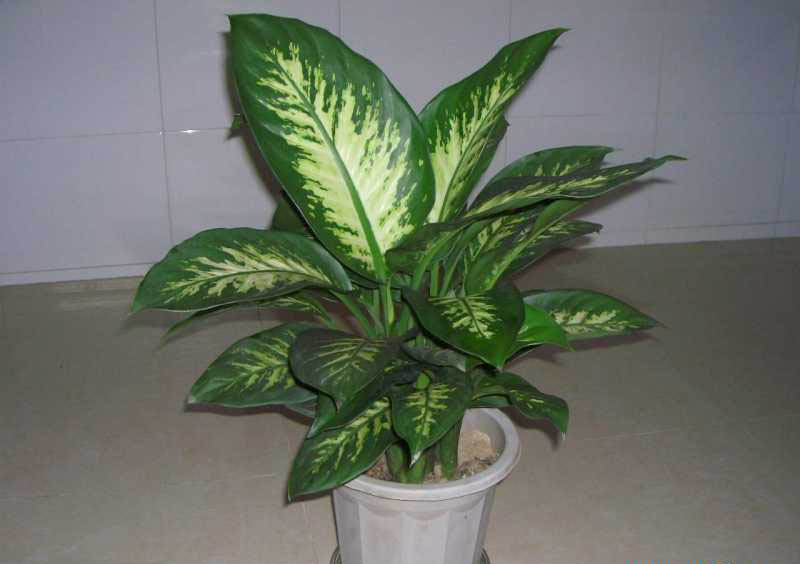
How to Care for Aglaonema 'Silver Queen' and Key Points to Note
Aglaonema 'Silver Queen' is also known as Silver Queen Chinese Evergreen. Its leaves are pale silver-gray, dotted with dark green markings. It likes a warm, humid environment and bright, indirect light, and it also tolerates shade. The optimum growing temperature is 20-30°C, and the wintering temperature should not fall below 12°C. A fertile soil rich in humus is ideal.
条件筛选