-

What are the key technical points for orchid care in summer and autumn?
Orchids originate from under the trees in mountain valleys; they are shade-loving and afraid of strong sun. They dislike intense heat and dryness, and require a well-ventilated environment. According to this growth habit, orchid care in summer and autumn must pay attention to four points: shading and ventilation. From early summer to the end of September, orchids all need shading, and the shade level must not be less than 70%. When shading
-

What are the key technical points for controlling rust disease in Chaenomeles speciosa (flowering quince)?
Symptoms: On infected leaves, small yellow-green spots first appear on the upper surface, gradually expanding into orange-yellow patches. By mid-June, yellow powdery black dots form on the lesions, which are the spermogonia (pycnia). Later, yellow powdery material appears on the underside, which are the aecia, producing aeciospores. In autumn and winter, it harms pines and cypresses.
-

How to grow a money tree hydroponically? The key technical points explained in one go
1. Money trees can be propagated into hydroponic plantlets using the water-cutting method or the root-washing method. The former involves selecting good-quality shoot tips and inserting them into water; they root and survive easily, but the base will not swell, so the ornamental value is not high, and therefore it is rarely used. For the root-washing method, select a soil-grown plant that is robust, free of pests and diseases, and compact in shape.
-
Disease Prevention and Control Methods and Technical Key Points for Hamelia patens
First, the most common sooty mold on Hamelia patens is caused by aphids and scale insects, so once we find the root cause we can first carry out pest control, and then prune the plant; second, for the treatment of leaf spot disease and brown spot disease, we can spray carbendazim and chlorothalonil in the early stage of the disease
-
What are the key technical points for growing organic cauliflower?
Land preparation and planting: In the field where organic cauliflower is to be grown, apply 5000 kg of decomposed organic fertilizer per mu, then deep-plough and rake the soil level to make beds. The beds should be 140-150 cm wide, with two rows of cauliflower planted per bed. The planting spacing varies depending on the variety.
-
Peanut Pest and Disease Control Methods and Key Technical Points
1. For peanut viral diseases, use seeds that are virus-free or low in virus content to cut off or reduce the initial source of infection. Virus-free seeds can be obtained through isolated propagation. Choose plump, large seeds. Promote a technique in planting areas - plastic film mulching - which can reduce the damage of viral diseases.
-
A Detailed Guide to the Planting Methods and Key Technical Points for Sichuan Pepper
Sowing time and method: Sowing is generally carried out before the Start of Spring (Lichun); the sowing method is usually bed sowing, and the seeding rate is generally about 20 kg per mu. Seed treatment: Because there are many varieties of Sichuan pepper trees
-
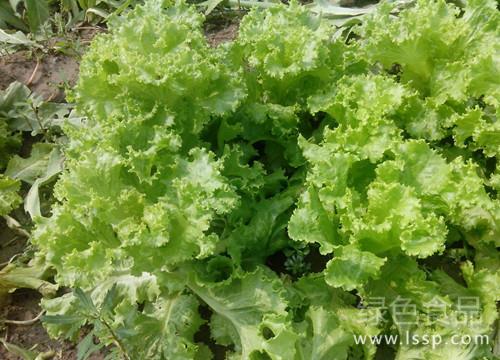
Easy to grow, large consumer market: key technical points for lettuce cultivation
Easy to grow, large consumer market: key technical points for lettuce cultivation
-
Jerusalem Artichoke Red Spot Disease: Control Methods and Key Technical Points
In prevention and control, the key lies first of all in prevention, to strangle the pathogen in the cradle. This requires us to improve the disease resistance of Jerusalem artichoke, for example: fertilize the Jerusalem artichoke, because only with sufficient nutrition will the Jerusalem artichoke grow strong and have strong resistance. In addition, a ventilated and sunny environment is essential
-
Jerusalem artichoke cultivation methods and key technical points
Because Jerusalem artichoke has excellent cold and drought tolerance, you do not need to be too picky when choosing soil; wasteland and sandy land can be used. The dead stems and leaves of Jerusalem artichoke can also decompose into nutrients and improve the soil. Once the soil is chosen, you can sow. The sowing depth is about 10 cm, and weeds must be removed during the seedling stage of Jerusalem artichoke.
条件筛选