-
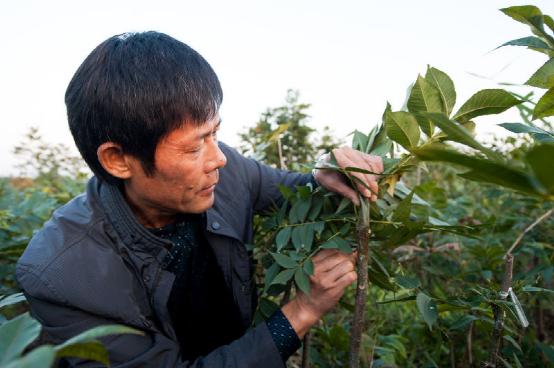
Changfeng, Anhui Develops Eco-Agriculture to Help Targeted Poverty Alleviation
Changfeng, Anhui: Eco-Agriculture Helps Targeted Poverty Alleviation
-

How can targeted poverty alleviation reach the point and the root
Targeted poverty alleviation must reach the point and the root
-
The key to targeted poverty alleviation lies in doing the mass work well
Poverty alleviation requires targeted, well-executed mass work
-
Target of 300 kg per mu for seawater rice: Yuan Longping to tackle high salt tolerance within three years
Yuan Longping: Tackling high-salt-tolerant seawater rice with a yield of 300 kg per mu within three years
-
Yao Huaqing: Discussion on Chinese bee (Apis cerana) keeping and the targeted poverty alleviation model
Yao Huaqing: Discussion on Chinese bee (Apis cerana) keeping and the targeted poverty alleviation model
-
Why exactly is agricultural insurance being targeted for exploitation?
Agricultural insurance targeted for "exploitation"
-
What to Do About Rotted Peppers? Targeted Control Is Key
The rainy season has arrived, and under the influence of high temperature and high humidity, pepper vegetables (both greenhouse and open-field types) in the fruiting stage are suffering severe outbreaks of phytophthora blight, along with many other fruit rot and fruit drop problems caused by other pathogens. Regarding this situation, the author consulted relevant vegetable experts in Shouguang City. According to their analysis, rotten fruit in hot (sweet) peppers is a common symptom of multiple diseases, but the pathogens differ, the symptoms vary, and the control methods are also different. Sunscald fruit rot: In high-temperature weather, the sun-facing part of the fruit is exposed to direct sunlight, causing the skin to fade and harden, producing grayish-white
-
What to Do About Cotton Plant Death? A Detailed Guide to Targeted Control Techniques
In recent years, in some old cotton-growing areas, the problem of cotton "plant death" has become increasingly serious, causing losses for many cotton farmers. Although control measures have been applied, the situation has worsened year after year, with unsatisfactory results. Therefore, cotton disease control should follow the principle of "prevention first, treatment second" to reduce the incidence of cotton disease. 1 Control of oomycete diseases. In recent years, the promotion of disease-resistant and pest-resistant cotton varieties has changed the diseases causing cotton "plant death," with oomycete diseases being the most important, 60%-70% of which are caused by oomycetes such as Phytophthora or Pythium.
-
Detailed Classification of Wheat Seedlings: Targeted Management Is Key
After wheat seedlings emerge, various types of weak seedlings often form due to the influence of natural conditions and cultivation practices. To prevent weak seedlings and manage them according to their specific symptoms, the details are introduced below: Weak seedlings caused by soil drought mostly occur in wheat fields with insufficient subsoil moisture or where moisture escapes through cracks. Their characteristics are: slow tillering, grayish-green leaf color, short and small heart leaves, slow or stagnant growth (known among farmers as "shrinking-heart seedlings"), gradual yellowing and drying of the middle and lower leaves, and few and thin roots. Key management points: combined with irrigation, apply 15 kg of ammonium bicarbonate per mu.
-
Targeted measures should be taken for cotton management in the middle and late stages
This year, cotton was affected by unfavorable weather such as low temperatures, cloudy and rainy days, and insufficient sunlight in the early stage, resulting in weak growth and delayed development of plants over large areas. In addition, severe natural disaster weather such as heavy rain and typhoons has occurred frequently recently, making the cotton production situation very serious. Cotton is currently in a critical growth period, and all localities should adopt targeted technical measures, strengthen cotton field management, promote the transformation of seedling conditions, and strive to achieve a bumper cotton harvest. 1. Fertilizer management. Focus on the application of topdressing fertilizer and the mixed spraying of pesticides and fertilizers in the later stage. Generally, apply 5-7.5 kg of urea per mu to increase bolls and boll weight and prevent premature senescence. For cotton fields with late boll setting, few bolls in the middle and lower parts, or sufficient flower and boll fertilizer with late application timing, where cotton plants are still growing vigorously at the Beginning of Autumn, fertilizer should mainly be applied by spraying, with supplementary application in fertilizer-deficient areas. For cotton fields deficient in potassium and boron, promptly spray potassium fertilizer and boron fertilizer in combination with pest and disease control.
条件筛选